Trump’s two-week gambit: A thaw in the Tehran Tundra or a prelude to permanent war?
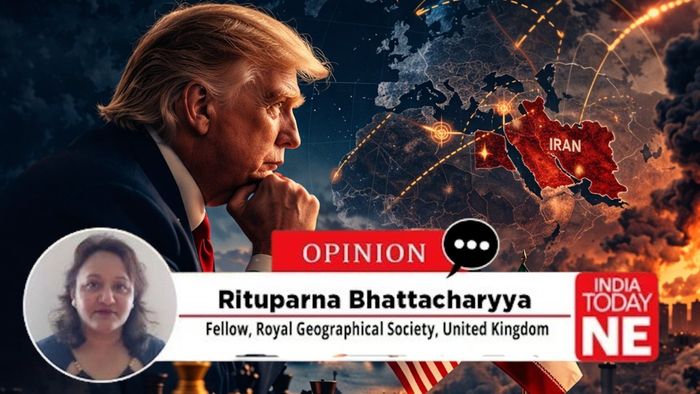
In the high-stakes theatre of global geopolitics, few actors command the stage with as much unpredictability as Donald J. Trump. Late on Tuesday, just ninety minutes before a self-imposed deadline to unleash what he termed 'the final destructive force' against Iranian civilisation, the 47th President of the United States pivoted. Through a characteristic flurry of Truth Social posts, Trump announced a two-week ceasefire—a 'pause for peace'—that has sent shockwaves from the Potomac to the Indus.
- Apr 11, 2026,
- Updated Apr 11, 2026, 1:15 PM IST
In the high-stakes theatre of global geopolitics, few actors command the stage with as much unpredictability as Donald J. Trump. Late on Tuesday, just ninety minutes before a self-imposed deadline to unleash what he termed "the final destructive force" against Iranian civilisation, the 47th President of the United States pivoted. Through a characteristic flurry of Truth Social posts, Trump announced a two-week ceasefire—a "pause for peace"—that has sent shockwaves from the Potomac to the Indus.
But as the dust settles over the initial relief, a darker reality is emerging. While the world welcomed the reprieve, the "peace" is already fracturing. Israel has excluded Lebanon from the truce, launching its most devastating strikes to date, and a defiant Tehran has once again slammed shut the Strait of Hormuz.
The Art of the Temporary Deal
Why did the man who spent weeks threatening to "obliterate" Iranian infrastructure suddenly pull back? The answer lies in a cocktail of economic desperation, backchannel diplomacy, and the looming shadow of a domestic crisis.
Trump’s decision was not a sudden onset of pacifism; it was a pragmatic retreat. The war, which began in late February 2026 under Operation Epic Fury, had reached a tipping point. While the U.S. and Israel succeeded in decapitating much of Iran’s leadership, the retaliatory strikes on Gulf energy infrastructure created a "forever war" scenario that Trump’s base—and his donors—simply could not stomach.
The Economic Haemorrhage: Oil and Wall Street
For Trump, the "America First" doctrine has always been inextricably linked to "America’s Wallet." By early April, the war’s toll on the U.S. economy had become a political liability he could no longer ignore.
• The Oil Spike: National gasoline averages surged to $4.14 per gallon, a staggering leap from under $3 just months prior. In a nation where the price at the pump often dictates the President's popularity, this was a flashing red light for the administration.
• The Market Meltdown: Wall Street responded to the escalation with visceral fear. The S&P 500 and the Dow Jones Industrial Average saw consistent losses, with the Dow shedding nearly 400 points in a single session as the April 7 deadline approached.
• The Energy Crisis: Crude prices jumped to $116.72 per barrel. Investors realized that a total war with Iran meant a total disruption of the global energy supply, threatening a recession that would dwarf the 2008 crash.
Trump needed a win, or at least a breather, to stabilize the markets and cool the domestic heat.
The Islamabad Connection: Pakistan’s Diplomatic Coup
In a surprising twist, the primary architect of this truce was not a European ally or a UN envoy, but Pakistan. Prime Minister Shehbaz Sharif and military chief Asim Munir emerged as the "essential intermediaries" that neither side could afford to ignore.
Trump explicitly credited his decision to "lengthy and intense conversations" with the Pakistani leadership. Islamabad’s role was born out of necessity: a regional war threatened to drag Pakistan into a sectarian and economic abyss. By leveraging their unique position—maintaining ties with Tehran while remaining a critical strategic partner for Washington—Pakistan managed to "shape the sequencing" of the ceasefire.
The offer to host formal talks in Islamabad this Friday provided Trump with a "diplomatic exit" from his own deadline. It allowed him to frame the ceasefire not as a retreat, but as a magnanimous gesture of leadership.
The Lebanon Loophole: Israel’s Defiance
However, the ink on the agreement was barely dry before the "ceasefire" was exposed as a half-measure. Israeli Prime Minister Benjamin Netanyahu’s government made its position clear: the truce with Iran does not apply to Hezbollah in Lebanon.
On Wednesday, April 8, even as the U.S.-Iran ceasefire officially commenced, Israel launched what it called its "largest coordinated strike" of the conflict.
• The Scale: 50 fighter jets dropped 160 bombs on 100 targets within 10 minutes.
• The Toll: Over 112 people were killed in Beirut, the Bekaa Valley, and southern Lebanon.
Trump, for his part, supported this distinction, calling the Lebanon conflict a "separate skirmish." This "Lebanon Loophole" has effectively sabotaged the very peace Pakistan sought to broker.
The Strait of Hormuz: The Chokepoint Tightens
Iran’s response to the continued bombardment of its ally, Hezbollah, was swift and predictable. Accusing Israel of violating the spirit of the truce, the Islamic Revolutionary Guard Corps (IRGC) has once again closed the Strait of Hormuz.
This maritime chokepoint, which carries 20% of the world’s oil and LNG, is now a dead zone. Iran has deployed:
1. Physical Blockades: Missiles and drone swarms targeting any vessel attempting passage.
2. Hidden Threats: Sea mines that make navigation a suicidal endeavour.
3. Electronic Warfare: GNSS jamming and satellite spoofing to blind commercial shipping.
"The Strait will not open if the Israeli attacks in Lebanon continue," a senior Iranian official warned via Pakistan.
What Happens Next?
The world now looks toward Friday’s talks in Islamabad. A high-level U.S. delegation, potentially led by Vice President JD Vance and Jared Kushner, is expected to land in Pakistan to salvage the deal.
But with Israel refusing to stop its campaign in the north and Iran holding the world’s energy supply hostage in the south, the "two-week ceasefire" feels less like a path to peace and more like a tactical regrouping. Trump has bought himself fourteen days of market stability, but unless he can rein in his closest ally or persuade Tehran to decouple Lebanon from the deal, the "civilizational war" he threatened may only be delayed, not averted.
For now, the world waits, oil prices hover at the breaking point, and the people of Lebanon continue to pay the price for a peace that exists only on paper.