What Manipur crisis reveals about power, neglect and prolonged unrest
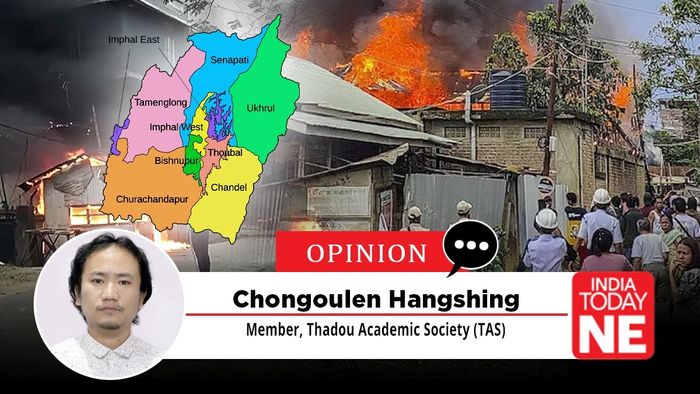
Manipur did not descend into chaos overnight; it slid there through decades of unresolved history, selective governance and political convenience. What is most disturbing today is not only the persistence of violence, but the quiet normalisation of displacement, neglect and profit built on other people’s loss.
- Dec 30, 2025,
- Updated Dec 30, 2025, 1:59 PM IST
Manipur is a land of contrasts, geographically and socially. The valley is predominantly inhabited by Hindu Meitei, while the surrounding hills are home to various tribal communities, primarily the Zo ethnic groups and Nagas, most of whom practice Christianity. The historical divide between hills and valley dates back to colonial times, when the Meitei kings ruled the valley with centralised authority, while the British administered the hill areas, granting autonomy to Zo ethnic chiefs and other tribal leaders. The adjoining Naga Hills and Lushai Hills remained largely self-governed by their respective tribal groups, further reinforcing the socio-political divide.
Today, Manipur is home to three major communities: the Hindu Meitei, and the tribals, Zo ethnic groups and the Nagas. While India’s democratic framework prevails on paper, the state often functions as a “wild west” in practice, where competing demands and historical grievances drive tensions. The Nagas continue to assert claims for a separate Nagalim encompassing several districts of Manipur, while sections of Zo ethnic groups advocate for a distinct Kukiland (Kuki homeland). The Meiteis, meanwhile, have voiced secessionist aspirations, and they remain the primary group advocating for the territorial integrity of Manipur.
As political analyst Phanjoubam Tarapot has noted, if proposals for Kukiland and Greater Nagalim were implemented, the state of Manipur, currently spanning 22,327 square kilometres, would be reduced to less than 2,238 square kilometres. This stark scenario underscores not only the fragility of the state’s territorial integrity but also the complexity of its social and political landscape.
The Looming Darkness
In a democracy like India, demands, no matter how complex, inconvenient, or controversial, are an intrinsic part of political life. The Meitei community’s demand for Scheduled Tribe (ST) status, however, was perceived as a direct threat by the hill tribes, who opposed it vigorously to safeguard their lands, customary rights, and political representation.
Against this backdrop, the Hill Area Committee (HAC) introduced the Autonomous District Council (ADC) Bill, 2021, in the Manipur State Assembly. The All Tribal Students’ Union Manipur (ATSUM) fully supported the bill and demanded a separate budget for the hill areas, citing disproportionate allocation and utilisation of sanctioned funds, a concern underscored by Alfred Arthur, former MLA of Ukhrul and current outer Member of Parliament.
It is crucial to note that ATSUM represents both the Zo ethnic groups and the Nagas. On 3 May 2023, it organised a tribal solidarity march opposing the inclusion of the Meitei community in the ST category. Tribals rallied across district headquarters throughout the state. What began as a Meitei-tribal dispute quickly escalated in Churachandpur, which became the epicentre of the ensuing violence. Over time, the conflict evolved into a full-fledged Kuki-Meitei ethnic clash, effectively sidelining the Nagas.
It’s pertinent to point out that Zo ethnic groups are blanketed as ‘Kuki’ in the state of Manipur by others, which is often pointed out and rejected openly by the Thadou Inpi Manipur (TIM).
Contributing to the volatility was the Manipur Cabinet’s decision on 10 March 2023 to withdraw the Suspension of Operations (SoO) against the Kuki National Army (KNA) and the Zomi Revolutionary Army (ZRA). The then Chief Minister, N. Biren Singh, stated that the KNA was headed by a Haokip from Nagaland and the ZRA by a Myanmarese, implying that this leadership composition influenced the Manipur government’s decision.
The Initial Stage of the Violence and Religion Misperception
On the evening of 3 May 2023, the Tribal Solidarity March organised by ATSUM in Torbung, Churachandpur district, escalated into violence. The situation reached a flashpoint at Kangvai, where members of both communities not only hurled stones but also began setting houses ablaze. Had the state’s political leadership and bureaucrats acted decisively, much of the ensuing destruction could have been prevented.
At the time, the Chief Minister was a Meitei and the Director General of Police a Kuki. Yet questions remain: was there an ethnic divide among officials, or a lack of genuine concern for civilian safety? The failure to contain what began as a localised unrest highlights a troubling dereliction of duty.
By contrast, a far more severe incident occurred in December 2016 during the tenure of then Chief Minister O. Ibobi Singh, when over 20 vehicles bound for Ukhrul were completely burnt and vandalised. Prompt deployment of security forces in mixed-population areas successfully de-escalated tensions and prevented further destruction. This comparison underscores the gravity of the state’s failure on 3 May 2023, as similar, even larger-scale unrest had been effectively managed in the past.
Many early observers initially framed the Manipur conflict as a religious clash between Hindu Meitei and Christian tribals. This perception was reinforced on the night of 3 May, when Christian churches in Imphal were among the first structures set ablaze, illuminating the night sky, while a handful of Zo ethnic homes were also attacked and burnt.
Although it was evident that the Meitei were in conflict with another community, the exact target was initially unclear, as the solidarity march had been organised by ATSUM, which includes both Zo ethnic and Naga tribals. By dawn on 4 May, the pattern became evident: Christian churches bore the brunt of the destruction, while comparatively fewer Zo ethnic homes were affected.
It is crucial to recognise that, on the night of 3 May, churches were the primary targets, not individual homes. The focus on religious structures led many unfamiliar with Manipur’s complex political and ethnic landscape to misinterpret the conflict as purely religious. In reality, the violence was deeply intertwined with longstanding ethnic tensions, political grievances, and territorial disputes, rather than faith alone.
The Role of Media
As the capital city, Imphal concentrates political, economic, and cultural power, largely dominated by one community. This dominance extends to the media, which has played a contentious role during the Manipur conflict. The Editor Guild of India (EGI) rightly termed much of the local press the “Meitei Media,” highlighting its partisan coverage and the absence of impartial reporting during the crisis. Official statements from the State have, at times, mirrored this bias, a trend documented in EGI reports published on September 2, 2023. The filing of First Information Reports (FIRs) against the EGI, coupled with statements from the Chief Minister at the time, revealed a pattern of suppressing dissenting voices, curtailing free speech, and penalising views that did not align with the narrative of the dominant regime.
In the academic sphere and any further writings, references made from such publications solely altered the truth since the ethnic line has swept away ethical journalism and, unfortunate as it was, the fourth pillar of a democratic state did not just lose credibility but has fuelled the ethnic divide in Manipur.
The Administrative Neglect: Internally Displaced Persons of Manipur
The Internally Displaced Persons (IDPs) of Manipur, regardless of the communities they belong to did not choose their fate. They abandoned their homes, livelihoods, and possessions only to seek safety within the State, often in areas dominated by their own community. Yet, despite being the most affected victims of the conflict, they remain neglected not only by the State authorities but, at times, even by their own people. More than two years since the violence began, the government still lacks accurate data on the number of citizens displaced. This silence is not just administrative failure; it is moral abdication.
For the IDPs, the government’s approach has been consistently described as insensitive and unresponsive. Their experiences reveal a troubling pattern of neglect. In several relief camps, names of displaced persons have been deleted from official records, with officials claiming that they are “not residents” of the camps even when they are physically living there. On paper, the government claims to have sanctioned hundreds of crores of rupees for the welfare of IDPs: school fees, transportation costs, medical assistance, and other essential support. Yet not a single committee has been constituted to verify whether these funds have reached those they were meant to assist. According to the displaced, they have received virtually none of it.
Irregularities in the distribution of financial assistance and basic relief materials further deepen their hardship. The problem is compounded by the exclusion of many IDPs from official lists, some because they fled outside the State, others because they took shelter with relatives and are therefore deemed “unregistered.” Many have never received a single benefit, not even an acknowledgement of their displacement. Reports of high-handed behaviour by officials in charge of relief only worsen the climate of distrust.
This neglect extends to even the most basic entitlements. Many IDPs are deemed ineligible for the Direct Benefit Transfer (DBT) of Rs 84 per person per day. This exclusion applies particularly to those who leave relief camps temporarily for studies, employment, or other survival needs. Such reasoning reflects a fundamental misunderstanding: displacement does not cease simply because a person steps outside a camp or the State. Their homes remain unsafe; their status as IDPs remains unchanged. The State, having failed to protect them at the onset of the conflict, continues to fail them in its aftermath.
The bureaucratic hurdles imposed on IDPs further reveal the system’s insensitivity. Accessing government schemes requires innumerable documents, photocopies, repeated submissions, and multiple visits to district offices. For many, these demands consume more money than the benefits they are supposed to receive. As several displaced persons put it, “We have spent more on photocopying and travelling to government offices than on any assistance we may or may not have received.” A single identity proof, such as a PAN card and a bank account, should suffice. Instead, the administrative process has become another burden on those who have already lost everything.
In this environment of neglect, the IDPs of both the Meitei and Zo ethnic communities must recognise a shared struggle that transcends ethnic boundaries. Their rights, dignity, and survival cannot be reduced to political bargaining or ethnic rivalry. In the present scenario, they are treated as a “cash cow” invoked for political gain but denied the benefits allotted to them. It would not be an exaggeration to say that they receive barely half of what is officially sanctioned.
Manipur’s displaced citizens deserve better. They deserve recognition, transparency, and humane governance. More importantly, they deserve a State that accepts responsibility for protecting its most vulnerable and honours that responsibility with action, not rhetoric.
The Emergence of a New Class
The conflict in Manipur has not only displaced thousands and deepened ethnic divides; it has also sprouted a new class. This emergent class draws members from both of the rival communities as well as from individuals, organisations, and even government officials who had no direct involvement in the conflict but discovered shared interests in exploiting it. Far from being victims, they are beneficiaries of instability.
During the height of violence, this new class accumulated wealth, influence, and public recognition by actively fuelling hate campaigns, spreading misinformation, and aligning tactically with whichever side served their ambitions. Their allegiance is not rooted in community, justice, or principle; it is tied solely to opportunity. As long as the conflict provides visibility, resources, and bargaining power, they remain invested in maintaining its intensity.
What distinguishes this class is its strategic moderation. They do not want the violence to end because peace would strip them of relevance but neither do they want it to escalate beyond control, for that would invite accountability and scrutiny. Instead, they sustain a delicate loop of tension and uncertainty. By ensuring that fear, resentment, and division linger just beneath the surface, they guarantee themselves uninterrupted access to influence, funding channels, and political leverage.
The existence of this class has profound consequences for genuine victims. The internally displaced persons (IDPs), who have lost their homes, livelihoods, and sense of security through no fault of their own, have been reduced to mere instruments within this ecosystem of opportunism. Their suffering becomes currency. Their numbers, stories, and struggles are invoked selectively, when it is convenient to justify demands, secure funds, or amplify political narratives. Yet rarely do these benefits reach the displaced themselves.
While the IDPs endure physical hardship, emotional trauma, and prolonged uncertainty, others profit from their misery. The gap between sanctioned relief and actual assistance widens in such an environment, as middlemen, brokers, and opportunistic actors position themselves as indispensable intermediaries. The IDPs, meanwhile, are denied recognition, dignity, and effective representation.
This emergent class poses a direct threat to long-term peace and reconciliation. As long as instability remains profitable for some, there will be little incentive to pursue meaningful dialogue, transparent governance, or a structured rehabilitation process. The conflict becomes not merely a tragedy, but an industry.
To address this, the State must acknowledge the political economy of conflict that has taken root. It must prioritise transparency, close loopholes that enable exploitation, and ensure that relief and rehabilitation efforts reach those for whom they are intended. Most importantly, it must restore decision-making power and visibility to the displaced themselves, who have been overshadowed by louder, more influential voices acting in their name.
Unless this new class is confronted and its influence curtailed, peace in Manipur will remain precarious, and the suffering of the displaced will continue to be commodified for the benefit of a few.
The Way Forward
The politics surrounding the Manipur conflict may drag on indefinitely, but to ignore the suffering of innocent IDPs reduced to rubble through no fault of their own is unconscionable. The first and most urgent priority must be the welfare of the Internally Displaced Persons. The State must undertake a thorough and credible identification of all IDPs, including those who are unregistered, those who fled outside the State, and those sheltering with relatives. They must be rehabilitated without delay and fully compensated for their losses.
Equally urgent is the need for accountability. A time-bound and impartial inquiry must be initiated to investigate government officials, non-governmental organisations, intermediaries, and private individuals who have embezzled funds or diverted essential items meant for IDPs. The absence of such scrutiny has allowed corruption to flourish while displaced families continue to suffer in silence.
The inability of the Union and State governments to bring an end to the violence, even after more than two years, reflects not merely administrative weakness, but a troubling willingness to remain mute spectators to the continued suffering of thousands. The State is answerable for why it failed to contain the violence in its initial stages, why it allowed the situation to spread and deepen, and why it permitted its own security forces to fracture along ethnic lines. These failures demand explanation and correction, not complacency.
For peace, normalcy, and stability to return, the government must also confront the emergence of the opportunistic “new class” that has profited from instability. As previously highlighted, these individuals and groups have thrived on tension, misinformation, and the misery of the displaced. Identifying them and taking a resolute stand against those who feed off conflict while ordinary citizens bleed is essential. Without curbing their influence, any attempt at reconciliation or reconstruction will remain superficial and vulnerable to sabotage.
The path forward must therefore rest on transparency, justice, and an unwavering commitment to restoring dignity to those who have suffered the most. Only then can Manipur hope to rebuild a society grounded not in fear or opportunism, but in equality, accountability, and peace.