When a Child is Left Behind, Society Is Wounded
Manipur's government schools face significant challenges in providing inclusive education amid resource constraints and social issues. Teachers' attitudes towards struggling students are crucial in shaping the future of education and society in the state.
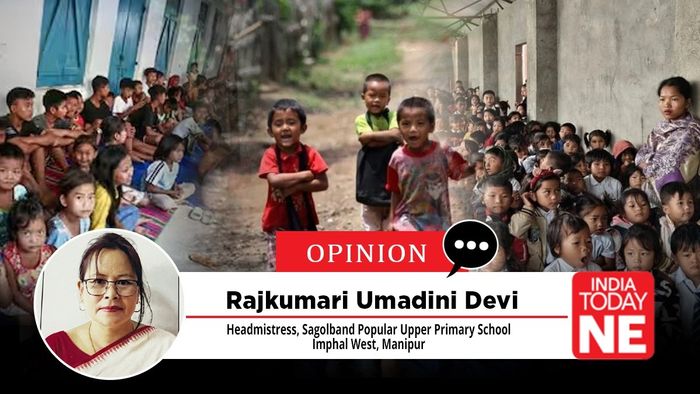
- Aug 23, 2026,
- Updated Aug 23, 2026, 3:45 PM IST
In recent times, I have often reflected deeply on the condition of many government schools in Manipur and the challenges faced by school heads and teachers who sincerely try to uphold the true spirit of education. As a headmistress, I do not write this article to criticize anyone personally, but to express a concern that comes from the heart of a teacher who believes that every child matters.
A government school is not merely a building where lessons are delivered. It is a place where children from different social, economic, cultural, and emotional backgrounds come together with hope. Some children are brilliant in academics, some are slow learners, some are emotionally disturbed, some come from broken families, some are orphaned, and some carry burdens that adults may never fully understand. In today’s era of inclusive education, our responsibility is not to select only the best students; our responsibility is to support every child who enters the school gate.
As a school head, I face many challenges every day—limited resources, infrastructure issues, irregular attendance, social problems affecting children, pressure from different directions, and the constant effort to maintain a healthy learning environment. Yet, among all these difficulties, the most painful experience is when I hear that some teachers develop a mentality that difficult or problematic children should be excluded, ignored, or indirectly pushed away from school.
This deeply hurts me.
A child who reacts differently in the classroom is not a burden. A child who is restless, weak in studies, or difficult to manage is not a child to be abandoned. Different pupils react in different ways. That is the reality of education. If every child were easy to teach, the role of a teacher would require no patience, no creativity, and no compassion.
The true test of a teacher is not how well we teach the bright child, but how sincerely we try to uplift the struggling child.
If a teacher says, “I cannot control this child,” then perhaps we must ask ourselves whether we have tried enough methods, enough understanding, enough love, and enough professional effort. Classroom management is part of teaching. Identifying the needs of children is part of teaching. Finding alternative ways to help them learn is part of teaching. Excluding them is not.
I am not saying that all teachers hold such views. Manipur has many dedicated teachers who work beyond school hours, spend their own resources, guide children like their own sons and daughters, and silently build the future of the state. To them, I offer my deepest respect.
But when even a few teachers lose the ethical and human values associated with this noble profession, it affects the image of all of us.
What surprises me is that many teachers willingly sacrifice time, energy, and money for their own children, yet sometimes hesitate to give a little extra attention to a child in school who desperately needs guidance. We often forget that the children sitting in our classrooms are also our children in a moral sense. Society has entrusted them to us.
If we leave behind the problematic child, what will happen to society tomorrow?
Those children may become frustrated, disconnected, or vulnerable to negative influences. On the other hand, if we invest patience, counseling, encouragement, and collective effort, many of them can transform. I have personally witnessed children once considered weak becoming disciplined, responsible, and successful when teachers refused to give up on them.
Education is not a process of screening; it is a process of nurturing.
Every child has different abilities. One may become a doctor, another a teacher, another an artist, a farmer, a technician, a sportsperson, or a compassionate citizen who contributes quietly to the nation. Contribution does not have to be identical to be valuable.
Instead of arguing about which children deserve our attention, teachers should come together to find solutions collectively. We need cooperation, mentoring, inclusive strategies, parental engagement, and a shared commitment to the welfare of every learner.
Teachers are often called nation builders. This is not a slogan; it is a responsibility. A peaceful and prosperous society is built not only by educating the talented few, but by ensuring that no child is made to feel unwanted.
Let us remember: when a child is left behind, society is wounded. When a child is uplifted, the nation moves forward.
As educators of Manipur, let us choose patience over rejection, inclusion over exclusion, and hope over helplessness. The future of our children—and the future of our state—depends on that choice.