When citizenship isn’t enough: Racism, indigenous rights and fragility of belonging in India
Indigenous citizens in India continue to face racism and exclusion despite legal citizenship. Ensuring equal rights and recognising diversity is vital for social harmony
- Dec 30, 2025,
- Updated Dec 30, 2025, 11:25 AM IST
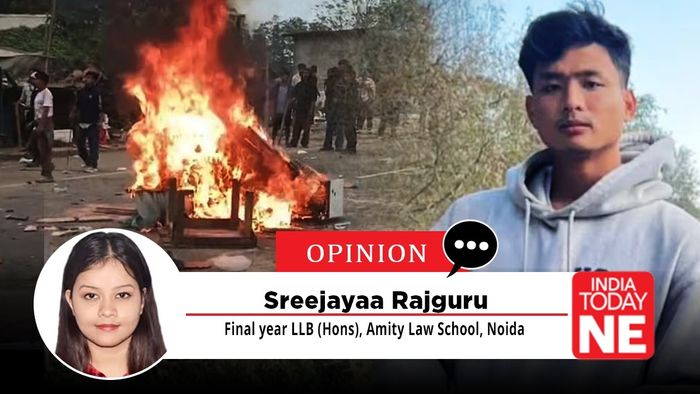
What began as a routine visit to a local market ended in a brutal act of racial violence that cost 24-year-old Angel (Anjel) Chakma his life. An MBA student from Tripura studying in Dehradun, Angel succumbed on December 26, after spending more than two weeks in a hospital intensive care unit battling severe injuries.
Angel and his younger brother were allegedly targeted with racially charged slurs — including “Chinese”, “Chinki”, “Nepali”, and “momos” — while shopping. When they protested the abuse, a group of youths is said to have turned violent, striking Angel’s brother with a metal bangle and stabbing Angel multiple times. Gravely injured, Angel was rushed to the hospital, but the wounds proved fatal. Police have so far arrested five suspects in connection with the attack, while one accused remains at large and is believed to have fled the country.
In a separate but eerily related development, protests in the Karbi Anglong district of Assam have erupted into violence. Indigenous Karbi tribal groups, already aggrieved by long-standing anxieties over demographic change, land alienation, and encroachment on constitutionally protected territories, saw tensions escalate when non-tribal residents reportedly shouted “Karbi Chinese, go back” slogans at Karbi communities during demonstrations over land rights and evictions. The provocative chant has been widely condemned as racist and dehumanising, underscoring how ethnic intolerance and the politics of belonging can fracture even traditionally tolerant societies.
These two events, one in the Himalayan foothills, the other in the fertile hills of Assam, reveal that racism and exclusionary identity politics are not peripheral phenomena in contemporary India. Rather, they intersect with deeper issues of citizenship, cultural recognition, land rights, and the daily lived experiences of those from tribal or Northeast communities. They compel us to confront a troubling question: What does it mean to be Indian when the promise of equal dignity under the Constitution clashes with persistent social prejudice?
Racism on India’s Streets: The Death of Angel Chakma
Angel Chakma’s story resonates far beyond a single violent encounter. The attack he suffered was not merely an assault with blades and rods; it was an attack launched under the banner of racial stereotype, a prejudice based on facial features, physical appearance, and perceived “outsider” status. Such slurs are not isolated to Dehradun streets; many from Northeast India recount similar experiences in cities across the country, where terms like “Chinki”, “Chinese”, and “momos” are casually hurled at them not as jokes but as tools of social exclusion.
What makes Angel’s death particularly devastating is that it arose from a moment of asserting dignity. He objected to derogatory abuse; that simple act of refusing humiliation led to his brutal stabbing. In effect, he was punished for upholding his self-respect in the face of insult, a lesson that chills the heart of anyone who believes that empathy and equality should be the bedrock of civil society.
There are a few protective measures in the Indian legal fabric that directly address racially motivated violence. Civil society organisations such as the Chakma Development Foundation of India (CDFI) have urged the government to fast-track trial and implementation of anti-racial violence legislation as recommended by the MP Bezbaruah Committee, which was formed by the Ministry of Home Affairs to examine concerns of those from the Northeast.
But laws alone are insufficient without cultural transformation. If street harassment escalates into life-ending violence, and such abuse is commonplace enough to go on unchecked for years, then India’s social fabric one historically celebrated for its pluralism, shows signs of serious strain. It is not just a failure of law enforcement; it is a failure of societal empathy.
“Karbi Chinese, Go Back”: Racism at Home in Karbi Anglong
Thousands of kilometres away from Dehradun, in the rolling hills of Assam’s Karbi Anglong district, a different but equally painful scene unfolded. What began as protests by indigenous Karbi groups over land rights particularly calls to evict alleged encroachers from the Professional Grazing Reserve (PGR) and Village Grazing Reserve (VGR) lands, protected under the Sixth Schedule of the Indian Constitution, turned violent. Amid clashes that reportedly left two people dead and dozens injured, some non-tribal demonstrators allegedly raised the slogan “Karbi Chinese Go Back”.
Such a slogan reveals a deep irony. The Karbi are indigenous to their ancestral lands; they are not “foreigners”. Yet, they were derided as if they did not belong in their own homeland. But why did this happen? At its core, the unrest in Karbi Anglong is about land, identity, and constitutional protection. Under the Sixth Schedule, tribal areas like Karbi Anglong are supposed to enjoy autonomy and safeguards against aggressive demographic shifts and non-tribal encroachments. Yet, decades of contested settlement, litigation, and local political tensions have shrunk the Karbi majority, creating anxieties about cultural survival, land alienation, and economic marginalisation.
Thus, when slogans that echo racialised derision emerge from within India’s own borders, in a context where so many indigenous communities feel threatened within their own homeland, it compels us to look beyond simple labels. This is not just “outsiders vs insiders”; it is a symptom of weakened protections, governance gaps, and unresolved land disputes that fuel identity crises and allow dehumanising rhetoric to flourish.
When Identity Politics Becomes Exclusionary
Both the incident in Dehradun and the unrest in Karbi Anglong underscore the fragility of belonging in modern India. Citizens from the Northeast often report feeling like second-class citizens outside their home region, stereotyped for their appearance and culture. Simultaneously, tribal groups in states like Assam fight for constitutional safeguards to protect their ancestral lands and cultural identity.
Yet, the political rhetoric that surrounds these issues often veers into exclusionary territory. When debates about land rights or demographic change are framed with racial overtones, whether against Karbi in Assam or Chakma in Dehradun, they undermine the very constitutional principles they claim to defend.
India’s founding ideals, embodied in its Constitution, affirm the equality of all citizens, regardless of race, caste, or region. But for equality to be meaningful, it must be reflected not just in law but in social attitudes. The persistence of racial abuse, whether on a city street or in the hills of Assam, suggests that much work remains to be done.
The Human Cost of Division
Angel Chakma was not just a statistic; he was a young life with dreams, aspirations, and a family, his father serving the nation in the Border Security Force, and his loved ones now grappling with unimaginable grief. His death reminds us of the human cost of prejudice.
Similarly, the violence in Karbi Anglong has inflicted deep scars on families, communities, and local economies. Loss of life, property destruction, and escalating tensions leave lasting wounds, accentuating distrust and resentment among ethnic and linguistic groups.
What unites these seemingly disparate tragedies is the sense that social cohesion is at risk when segments of the population feel insecure, misunderstood, or marginalised. Whether explicit racial slurs or simmering land disputes morphing into violence, the underlying current is one of a deep lack of mutual recognition, respect, and equal dignity.
Conclusion: A Test of India’s Pluralism
India’s diversity, its languages, religions, cultures, and ethnicities, has often been described as its greatest strength. Yet, when diversity is weaponised as a reason to exclude, demean, or deny belonging, that strength becomes a fault line.
The deaths and unrest witnessed in late 2025 are not isolated accidents; they are warnings. They reveal how racism, unresolved land disputes, and fragile senses of identity can fracture communities and even claim young lives. They remind us that citizenship alone does not guarantee dignity, and constitutional rights must be lived, felt, and protected in communities from Dehradun to Karbi Anglong.
If India hopes to be a nation where every citizen, whether from the Northeast, the tribal hills of Assam, or any other region, feels equally at home, it must confront racism and exclusion not as fringe phenomena but as core challenges to its constitutional promise. Only then can the pledge of justice, liberty, equality, and fraternity truly be realised in the everyday lives of all Indians.