When Context Is the First Casualty
Public discourse in India is not merely growing louder; it is growing thinner. This thinning has little to do with a lack of voices and much to do with how voices are now presented—compressed, cropped and circulated without the ballast of context.
- Jan 29, 2026,
- Updated Jan 29, 2026, 10:57 AM IST
Public discourse in India is not merely growing louder; it is growing thinner. This thinning has little to do with a lack of voices and much to do with how voices are now presented—compressed, cropped and circulated without the ballast of context.
A forty-minute speech today often survives as a five-word headline. An interview meant to explain becomes a trigger for outrage. What is lost is not factual accuracy in the narrow sense, but meaning. And meaning, once stripped away, leaves a vacuum easily filled by speculation and polarisation.
Selective quoting has always existed in journalism. Editors must choose what to foreground. But in the digital age, choice has increasingly turned into extraction. Statements are no longer selected to represent an argument; they are isolated to provoke reaction. The distinction is subtle, yet its consequences are profound.
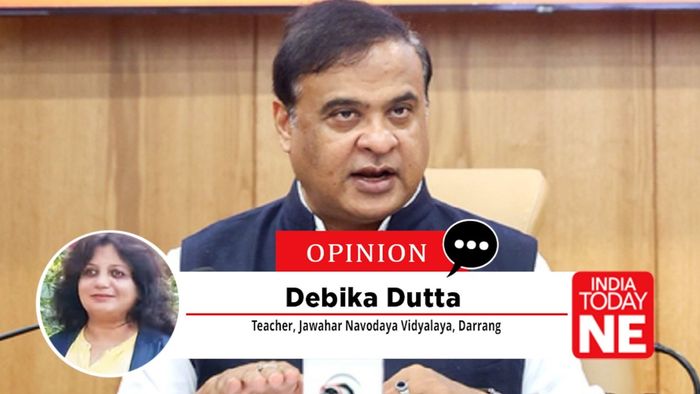
A recent controversy involving remarks attributed to the Assam Chief Minister illustrates this dynamic with unusual clarity. A longer response, delivered within a specific political context, was reduced to a truncated sentence that rapidly circulated across news portals and social media platforms. Within hours, the fragment acquired a life of its own—provoking outrage, rebuttals and counter-clarifications. What was largely absent in the initial news cycle was the full statement itself. The episode reflected a familiar pattern of contemporary news consumption: conclusions formed before context is encountered, if it is encountered at all.
Whether the original remark warranted criticism is beside the point. What deserves scrutiny is how swiftly interpretation replaced information, and how selectively quotation shaped public perception.
For the Northeast, this practice carries particular consequences. Conversations around identity, migration, development and cultural assertion are rarely simple. When such issues are nationalised through fragments stripped of regional nuance, complexity collapses into caricature. What travels fastest is rarely what explains best.
This distortion is not always ideological. More often, it is structural. News portals operate under relentless pressure to publish first and trend fastest. Algorithms reward emotional intensity, not explanatory depth. Context slows stories down; cropped quotes accelerate them.
The defence most often offered is technical correctness: the words were spoken. But journalism has never been stenography. It is interpretation with responsibility. A quote detached from its argumentative frame can mislead as effectively as a falsehood—sometimes more so, because it remains technically defensible.
The cumulative effects are visible. Public figures grow increasingly guarded, speaking in pre-emptively clipped language. Clarifications arrive late and travel little. Debate becomes reactive rather than reflective, driven more by impression than by understanding.
Yet responsibility does not rest with the media alone. Audiences have adapted readily to this economy of half-truths. We scroll, skim and share with barely a pause. In doing so, we reward distortion while lamenting polarisation.
The remedy does not lie in regulation or moral panic. It lies in editorial restraint and reader discipline. Context must be treated not as a dispensable luxury but as a professional obligation. Readers, too, must reclaim the habit of reading beyond the headline.
In a democracy built on disagreement, disagreement itself is not the danger. Distortion is. The choice before journalism today is simple but consequential: to illuminate speech—or merely to mine it.