When Dreams Refuse Limits: Northeast's Rising Voices On The International Day Of Persons With Disabilities
As the world marks the International Day of Disability on December 3rd, India stands at a powerful crossroads, where the dreams of the specially challenged are beginning to shape national conversations, challenge public institutions, and rewrite what inclusion truly means.
- Dec 03, 2025,
- Updated Dec 03, 2025, 5:08 PM IST
As the world marks the International Day of Disability on December 3rd, India stands at a powerful crossroads, where the dreams of the specially challenged are beginning to shape national conversations, challenge public institutions, and rewrite what inclusion truly means.
A Cricketing Revolution Led by the Specially Challenged
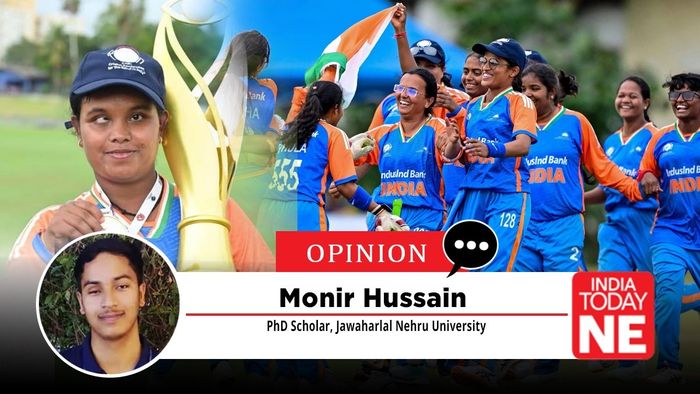
Just weeks ago in Colombo, India lifted the inaugural Blind Women’s T20 World Cup 2025, remaining unbeaten throughout the tournament. But beyond the trophy, the team offered something far more significant: a fundamental shift in how we understand aspiration.
Take Captain Deepika TC, who lost vision at five months. Poverty, social ridicule, and limited access never stopped her from turning resilience into leadership and a job in the Income Tax Department.
Take PhulaSaren, the all-rounder from Odisha. Left partially blind at five, she found her rhythm in the rattle of a ball. Her 44 runs in the final were not just a sporting feat; they were a statement to a nation that still underestimates the specially challenged.
And this year, the Northeast added a name to the national pride,
Simu Basumatary from Assam, a bright talent who represented India in blind cricket and has been a fierce ambassador for inclusion in sports. Growing up in a region with limited accessible sports infrastructure, Simu’s selection into the Indian blind cricket circuit stands as a reminder that raw talent thrives when opportunity is allowed to exist.
Her rise is not a miracle, it is what happens when society steps aside and lets potential breathe. The Northeast’s Towering Inspiration: Hokato HotozheSema
Another story that made India rethink its assumptions is that of HokatoHotozheSema from Nagaland. A former Indian Army soldier, he lost his left leg in a landmine blast during a counterinfiltration operation in 2002.
Most would have stepped back. Sema stepped forward and trained for two decades to redefine the meaning of strength.
In 2024, he won a Paralympic bronze medal in men’s shot put F57, becoming the lone Arjuna Awardee from the Northeast this year. His medal was not merely athletic triumph. It was an act of reclaiming dignity after years of pain and rebuilding. When Support Meets Strength, India Shines
India’s record-breaking 22-medal haul at the 2025 World Para Athletics Championships, with giants like SumitAntil and Simran Sharma setting new standards, proves one simple truth: The specially challenged have never lacked talent. They have only lacked access.
Government initiatives like:
• Accessible India Campaign
• TOPS (Target Olympic Podium Scheme)
• Expanded Indian Sign Language programmes•Sugamya Bharat digital accessibility efforts
are bridging that gap, but implementation is still uneven, especially in smaller towns and in the Northeast.
The Hard Truth: Talent is Universal, Access is Not
For every Deepika, Phula, Simu, and Sema, there are thousands whose dreams fade because:
• school buildings are still inaccessible,
• workplaces are not adapted,
• digital platforms ignore basic accessibility norms, •and societal attitudes freeze ambition before it starts.
The RPwD Act 2016 promises education, reservation, skill development, and employment rights, but promises do not empower people. Practice does.
Unless accessibility becomes foundational rather than ornamental, we will continue mistaking structural failures as individual tragedies. Changing the Narrative
Media still celebrates the specially challenged as “inspirational exceptions.” But the truth is far simpler:
Their dreams are the same as everyone else’s such as to study, to work, to excel, to belong.
What looks “extraordinary” to society is often just ordinary potential allowed to function.
This International Day of Disability, India must decide whether it wants to continue applauding exceptions, or build a system where achievement by the specially challenged becomes normal.
A Call to Action
• Make accessibility mandatory across institutions — not optional.
• Treat inclusive education as a core teaching practice, not a token gesture.
• Ensure workplaces provide reasonable accommodations as a right.
• Invest heavily in Northeast-focused accessibility programmes, including sports infrastructure.
• Shift media language away from pity or glorification, toward dignity and equality.
Let Inclusion Make Excellence Ordinary
Deepika’s winning runs, Simu’s selection, Phula’s explosive batting, and Sema’s Paralympic bronze are not rare miracles. They are everyday dreams pursued with extraordinary determination.
The real question is:
Will India build systems where such achievements become unremarkable, not because they are not great, but because inclusion has finally become normal?
As we honour December 3rd, let us replace symbolic celebration with structural change.
Let us make India a nation where every specially challenged child can dream, not in spite of society, but with it.