When liberty meets narrative: The Supreme Court’s Khera dilemma
The Supreme Court’s decision to grant anticipatory bail to Pawan Khera will, predictably, be read through partisan lenses. One side will see it as a vindication of free speech; the other as a troubling leniency towards alleged misconduct in the heat of an election cycle. Both readings, however, miss the more interesting, and more consequential, question.
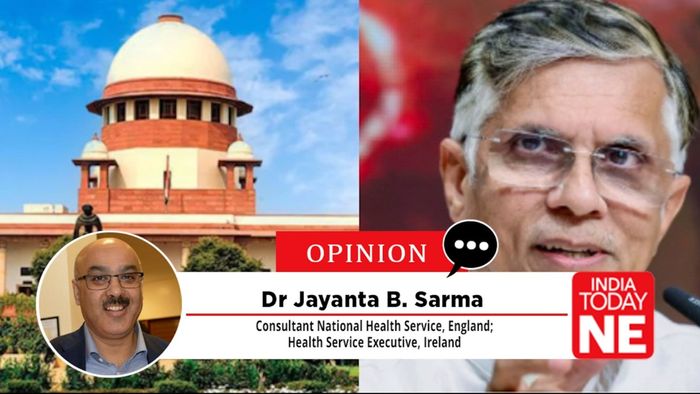
- May 02, 2026,
- Updated May 02, 2026, 9:15 PM IST
The Court has protected liberty, but has it kept pace with how modern political speech actually works?
The Supreme Court’s decision to grant anticipatory bail to Pawan Khera will, predictably, be read through partisan lenses. One side will see it as a vindication of free speech; the other as a troubling leniency towards alleged misconduct in the heat of an election cycle. Both readings, however, miss the more interesting, and more consequential, question.
This was not merely a bail order. It was a stress test of how Indian constitutional law understands political speech in an age where speech is no longer just spoken, it is engineered, amplified, and timed.
At one level, the Court’s reasoning is entirely orthodox. Since Gurbaksh Singh Sibbia v. State of Punjab, anticipatory bail has been treated as a vital safeguard of personal liberty. The principle was reinforced in Arnesh Kumar v. State of Bihar, which warned against routine arrests, and again in Siddharth v. State of Uttar Pradesh, where the Court made clear that custody is not a default requirement of investigation.
Seen through this lens, the Khera order is doctrinally unremarkable. The Court appears to have asked a narrow, disciplined question: is custodial arrest necessary at this stage? Finding no compelling reason, it chose liberty over incarceration. This is not judicial activism; it is judicial consistency.
But consistency, while necessary, is not always sufficient.
Because the case falls in a category that Indian jurisprudence has not fully confronted, it is neither a routine criminal matter nor simply a matter of political speech. It lies at the intersection of both—where allegations of forgery and misrepresentation are said to have been deployed in a politically sensitive, election-adjacent context.
In earlier cases, the Supreme Court has shown a high tolerance for political speech, even when it is abrasive or controversial. In Shreya Singhal v. Union of India, it robustly defended free expression against vague criminalisation. In Vinod Dua v. Union of India, it protected journalistic criticism from overreach. The underlying instinct has been clear: speech, however uncomfortable, should not be policed through coercive arrest.
Yet the Court has also shown that this tolerance is not absolute. When speech is framed as causing communal harm, as in Amish Devgan v. Union of India, or when it is perceived as undermining institutional authority, as in the Prashant Bhushan Contempt Case, judicial sensitivity sharpens.
This is where the Khera case becomes revealing, not for what the Court said, but for what it did not.
The allegation here is not merely about what was said, but about how it was constructed. If speech is built on allegedly forged material, it raises a different kind of question, one not of expression, but of instrumentality. The law has traditionally protected speech content; it has been less clear about how to treat the mechanisms used to generate that speech.
By applying standard bail jurisprudence without explicitly engaging with this distinction, the Court risks collapsing two separate categories: speech as expression, and speech as a product of potentially unlawful fabrication. That is not necessarily wrong—but it is incomplete.
More strikingly, the Court does not appear to have foregrounded what might be called “democratic harm.” Indian constitutional law has developed sensitivities to communal harmony and institutional integrity, but remains underdeveloped regarding the integrity of electoral narratives outside the formal framework of election petitions.
This creates an asymmetry. Speech that threatens social order or institutional authority triggers heightened scrutiny. Speech that may distort electoral perception—arguably the core of democratic functioning, does not yet receive the same conceptual attention.
Part of the difficulty lies in the Court’s traditional framing of criminal cases as individual acts. Bail jurisprudence, by design, focuses on the accused: flight risk, evidence tampering, and cooperation. These are necessary considerations, and in Khera’s case, they likely tilted in favour of granting protection.
But modern political speech does not operate at the level of the individual alone. It moves through networks—social media amplification, partisan ecosystems, timing calibrated to electoral cycles. Its impact is not linear but exponential.
The law, however, continues to treat it as if it were spoken from a podium to a finite audience.
This gap is not unique to this case. It reflects a broader lag between constitutional doctrine and technological reality. Courts are being asked to adjudicate twenty-first-century information flows using twentieth-century legal categories.
To be clear, the solution is not to dilute personal liberty. The instinct to resist unnecessary arrest is both correct and essential. Democracies erode far more quickly through excessive coercion than through excessive speech.
But liberty, if it is to remain meaningful, must coexist with a credible framework for truth, integrity, especially in the electoral domain. Without that, the system risks drifting into a different kind of instability: one in which formal freedoms persist but the informational environment that sustains them is progressively degraded.
This is a metastable condition. Push too far towards control, and dissent is stifled. Push too far towards permissiveness, and the signal itself is lost in noise and distortion.
The Supreme Court, in the Khera case, has chosen to hold the line on liberty. That choice is defensible, and perhaps inevitable within existing doctrine. But it also exposes the limits of that doctrine.
The real question is not whether the Court was right in granting bail. The question is whether the law, as currently structured, is even equipped to ask the right questions about political speech in a networked, high-velocity democracy.
Because the nature of speech has changed, it no longer travels through voice alone.
It travels by velocity.
(Author’s Note: Dr Jayanta Biswa Sarma writes on politics, institutions, and society through the lenses of history, philosophy, and systems thinking, drawing on both Indian and Western intellectual traditions. Artificial intelligence tools may be used in preparing this article as research and editorial aids. All arguments, interpretations, and final editorial judgement remain the author’s responsibility)