When life was actually vibes: 2016 vs 2026
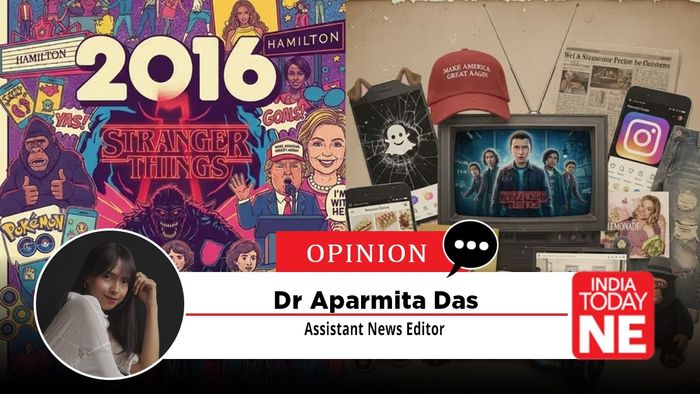
For the past few weeks, the internet has been behaving strangely—dancing to old songs, posting blurry throwbacks, and collectively pretending it’s 2016 again. A decade later, the question isn’t why we miss that year, but what it gave us that 2026 no longer does.
- Jan 19, 2026,
- Updated Jan 19, 2026, 11:43 AM IST
My mama don't like you, and she likes everyone.
That line from Justin Bieber's "Love Yourself" spent most of 2016 lodged in everyone's head. The song topped Billboard's year-end chart, a stripped-down acoustic track that somehow felt both petty and profound. Ed Sheeran wrote it, Bieber made it massive, and for months you could not escape it—not in cafes, not in shopping malls, not even in your own thoughts at 3 am.
Looking back now, a full decade later, that song feels like the perfect artefact of its time. Simple. Direct. Unapologetically itself. Everything that 2026 is not.
The year 2016 sits there in our collective memory like a polaroid left in a drawer—a little faded, a little warped, but undeniably ours. And right now, as we stand just four years away from 2030, everyone seems desperate to hold onto it again.
Social media has become a time machine this January. Instagram is flooded with posts tagged #2016, over 37 million and counting. TikTok has accumulated 1.7 million videos of the same vintage. Millennials are calling it "our good old days" with the kind of nostalgia usually reserved for much older memories. Gen Z is revisiting their high school years with unexpected tenderness.
The celebrities have joined in, too, because of course they have. Charlie Puth posted himself lip-syncing to his 2016 collaboration with Selena Gomez, as if asking the universe whether time travel might actually be possible. Hailey Bieber shared throwback videos with Kendall Jenner and Justine Skye, all of them young and unaware of what the next ten years would bring.
Even Bollywood has entered the conversation. Sonam Kapoor reflected on shooting Neerja that year, talking about how she knew Anand Ahuja was the one. Ananya Panday captioned her throwback simply: "2016 was really it." Janhvi Kapoor replied to her sister Khushi's post, confused but curious—why is everyone doing this, exactly?
The answer is more complicated than it seems.
What made 2016 feel like 2016
Beyoncé dropped Lemonade in April, and suddenly everyone became a detective trying to figure out who "Becky with the good hair" was. The album was more than music—it was a cultural moment, the kind that does not really happen anymore. Drake was inescapable. "One Dance" played in every club, every car, every corner of the internet. The Chainsmokers and Halsey gave us "Closer," which stayed at number one for twelve consecutive weeks and somehow never got old.
Across Asia, BTS was building momentum that would eventually make them global superstars. In May 2016, they released "Young Forever," a compilation album that captured their youth series narrative. But October was the real turning point—when "WINGS" dropped. The album, heavily influenced by Hermann Hesse's novel Demian, dealt with temptation and growth through fifteen tracks that included seven solo songs, each member exploring their individual artistic voice. The lead single "Blood Sweat & Tears" became their first number-one hit in South Korea, selling over 1.5 million copies. The music video reached 10 million views faster than any K-pop video before it. All fifteen tracks from the album charted in the top 50 on the Gaon Digital Chart. They were no longer just a K-pop group—they were becoming a phenomenon. In 2026, they became one.
The internet that year was a different beast entirely. Pokémon Go had grown adults walking into lamp posts trying to catch virtual creatures. The Mannequin Challenge swept through social media like wildfire—everyone freezing in place while someone walked through with a camera, creating these strange tableaus of everyday life. The bottle flip challenge was peak entertainment. "Damn Daniel" became a meme for reasons no one can quite explain in retrospect.
Snapchat was still cool. The dog filter was everywhere, and people used it unironically. Instagram showed you posts in chronological order, which feels almost revolutionary to say now. Musical.ly was just starting to hint at what would become TikTok. YouTube vloggers were the biggest influencers, not people doing thirty-second dance challenges for brand deals.
The music scene felt more democratic somehow. Songs went viral because people genuinely liked them, not because they fit a trending sound or a TikTok algorithm. Artists could bridge folk and mainstream without it feeling calculated. There was space for experimentation, for songs that took their time, for music that did not need to hook you in the first three seconds.
The undercurrent of change
Of course, 2016 was not all sunshine and cottoncandy. The year carried its own contradictions—moments of triumph alongside turbulence, achievements shadowed by upheaval.
In November, India announced demonetisation—the sudden invalidation of 500 and 1,000 rupee notes. Cash shortages followed for weeks, disrupting the economy and daily life for millions. ISRO launched 20 satellites in a single mission in June, breaking its own record and making headlines globally. In Rio, Indian athletes shone—PV Sindhu won silver in badminton, Sakshi Malik took bronze in wrestling, and Dipa Karmakar became the first Indian woman gymnast to qualify for the Olympics, attempting the dangerous Produnova vault.
The world beyond was turbulent, too. Syria's civil war intensified as government forces retook Aleppo after years of brutal conflict. The refugee crisis worsened. In Brussels and Nice, terrorist attacks left hundreds dead. The Panama Papers exposed how wealth was hidden offshore, implicating politicians and public figures worldwide. Brazil impeached President Dilma Rousseff. In Turkey, a military coup attempt failed, followed by massive purges. Mother Teresa was canonised as Saint Teresa of Calcutta.
We lost artists and icons who had shaped culture for decades—David Bowie in January, Prince in April, Muhammad Ali in June, Carrie Fisher in December. Each loss felt personal, collective.
But here is the thing—even with all that turbulence, 2016 still felt like we were all living in the same world. Watching the same shows. Talking about the same news. Sharing the same memes. The internet was fractured, yes, but not yet atomised into the million tiny bubbles we inhabit now.
There was a cohesion to culture that year. Stranger Things premiered, and everyone watched it. Compare that to now, where you can spend an hour explaining a show you love to someone who has never heard of it because they watch entirely different content on entirely different platforms.
2016 was the last year the internet felt like a conversation instead of a broadcast. The last year before algorithms completely took over. The last year before a global pandemic would force us all online in ways we had never imagined.
How everything changed
In 2016, if you wanted to share something on Instagram, you just posted it. There was no Ring light, no editing app, no three-hour content planning session. You did not worry about being "on brand" because personal brands were not yet mandatory. Social media was social. It was a place you went to connect, to share, to waste time with friends.
Then the next ten years happened.
The pandemic arrived in 2020 and turned our homes into offices, our screens into lifelines, our entire existence into a performance. Social media stopped being a fun distraction and became a job interview you never applied for. Every photo needed to be perfect. Every caption needed to be witty. Every post needed to serve your personal brand, whatever that meant.
The algorithm learned to read us better than our closest friends. It started deciding what we should see, what we should think, and what we should buy. TikTok rose up and changed the entire game—suddenly every song needed a dance, every trend needed a hook, every piece of content needed to grab attention in three seconds or die.
Instagram shifted from chronological posts to an algorithmic feed that showed you what it thought you wanted to see, not what your friends actually posted. Snapchat lost its cool factor. YouTube vloggers gave way to TikTok creators who could go viral overnight and disappear just as fast. The internet became less about connection and more about competition.
In India, the music industry transformed, too. Streaming platforms took over. Regional artists found global audiences, but the algorithm also decided what got promoted and what got buried. Songs became shorter to fit attention spans that kept shrinking. The space between "emerging artist" and "viral sensation" collapsed into nothing.
By 2026, being online feels like work. Constant work. You curate your feed. You optimise your posts. You follow the trends. You stay relevant. You perform authenticity while knowing that actual authenticity would probably tank your engagement.
AI has entered the picture, too. Tools that can generate images, write text, and create art that looks more human than what humans make. Nothing feels quite real anymore. You see a photo and wonder if it has been edited, filtered, AI-enhanced, or entirely fabricated. Trust has become a luxury.
The internet that once felt limitless now feels claustrophobic. Every platform wants your attention. Every notification demands a response. Every algorithm wants to keep you scrolling just a little bit longer. What started as a tool for connection has become a machine for extraction—of your time, your attention, your data, your sense of self.
That is why 2016 hits different. It represents the before times. Before the pandemic. Before algorithm dominance. Before every moment needed to be documented and optimised. Before we all became exhausted.
When you scroll through these throwback posts, what people are really mourning is not the fashion (though RIP to chokers and skinny jeans). It is not even the music, though the music was undeniably good.
What people miss is the ease of it all.
In 2016, you could post a blurry selfie at 2 am, and nobody analysed your brand strategy. You could change your profile picture without it being an event. You could share something random and stupid, and nobody cared. The stakes felt lower. The pressure felt manageable. Being online was fun, not labour.
There was spontaneity. You did not need to plan your content calendar a week in advance. You did not need to think about lighting, angles and hashtag strategies. You just lived your life, and sometimes you shared parts of it online, and that was enough.
The music reflected this, too. Artists made songs because they wanted to make songs, not because they needed content for TikTok or Instagram reels. Albums had time to breathe. Singles did not need to hook you in fifteen seconds.
2016 was the last 'moment' when being messy was acceptable. When authenticity did not feel like a marketing strategy. When you could just be yourself without performing being yourself.
The counter-movement
Interestingly, 2026 has also seen a pushback against all this digital exhaustion. People are going analogue again—buying film cameras, starting physical journals, making scrapbooks with actual scissors and glue. CD players have become trendy again, which would have been unthinkable five years ago.
There is a hunger for things that exist in physical space. For experiences that are not mediated by screens. For moments that are not instantly shared, dissected and forgotten. The pendulum is swinging, slowly, toward something more tangible.
But it is hard. The internet has its hooks in deep. The algorithms know exactly how to keep us engaged. The dopamine hits from likes and comments are real. Breaking free requires intention, and intention requires energy that most people do not have after a day of existing in late capitalism.
Why this moment, why now
The timing of this 2016 nostalgia wave is not random. We are at the beginning of 2026, looking at 2030 on the horizon. That number—2030—feels significant in a way that is hard to articulate. It is the future we used to imagine. The round number that always seemed impossibly far away.
And here is what happened: 2016 was ten years ago. A full decade. For millennials who were graduating college or starting careers then, it represents the threshold of adulthood, the last moment before everything got complicated. For Gen Z, it captures peak high school years, prom, first loves, the sweetness before life demanded seriousness.
For everyone, it marks the end of an era. The last year, when culture felt collective. The last year when social media felt social. The last year before we all learned how fragile everything could be.
Can nostalgia save us? The hard truth is that you cannot go back. 2016 is gone. The internet has changed. We have changed. The pandemic happened, politics happened, and technology happened. We know things now that we cannot unknow.
But maybe that is not what this is really about.
Maybe scrolling through old photos and dancing to old songs is not about returning to 2016. Maybe it is about remembering what it felt like when things were lighter. When being online did not feel like a performance. When you could be authentic without it being a strategy.
Maybe it is about taking that energy—that ease, that playfulness, that lack of constant self-optimisation—and trying to bring some of it into now.
The trend is not really about resurrecting 2016. It is about acknowledging that something has been lost along the way, and maybe, possibly, trying to reclaim a piece of it.
So everyone is posting their 2016 photos. Lily Collins posted a slideshow saying she is not sure why everyone decided 2016 is back but it definitely was a vibe. That might be the most honest take. Nobody knows exactly why this is happening now, but we all feel it—that pull toward a simpler time, even if that simplicity is partly illusion.
The question is not whether 2026 can become the new 2016. It cannot. The internet is tired. We are all tired. Looking back at 2016 is just our way of saying that we want things to feel easier again. We want moments that do not need to be optimised. We want connections that are not mediated by algorithms. We want to feel young and free and unburdened, even if just for a moment.
And maybe that is okay. Maybe nostalgia serves a purpose. It reminds us what mattered. What felt good. What we lost without realising we were losing it.
So go ahead. Post that throwback. Dance to those songs. Remember when chokers were fashion, and Snapchat was cool and social media was fun. Hold that feeling for a minute.
And then maybe try to bring a little of that lightness into right now. Because if 2016 taught us anything, it is that the best moments happen when you stop trying so hard. When you let yourself just be.
So, somewhere underneath all the algorithms and the curation and the endless performance, there is still that person who posted blurry selfies with dog filters and did not think twice about it.
Maybe it is time to let them out again.