57 tremors hit Sikkim region since February 9, relief commissioner urges public not to panic
At least 57 earthquakes have been recorded across Sikkim and neighbouring regions of Nepal, Tibet and Bhutan since February 9, State Relief Commissioner Rinzing Chewang Bhutia said on February 27, appealing to citizens not to panic or spread rumours.
- Feb 27, 2026,
- Updated Feb 27, 2026, 7:23 PM IST
At least 57 earthquakes have been recorded across Sikkim and neighbouring regions of Nepal, Tibet and Bhutan since February 9, State Relief Commissioner Rinzing Chewang Bhutia said on February 27, appealing to citizens not to panic or spread rumours.
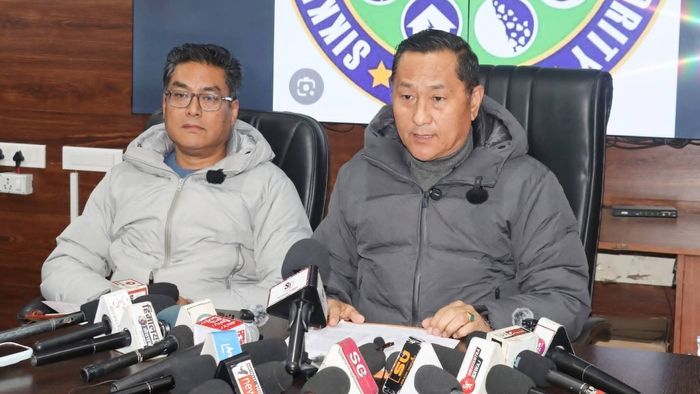
Addressing a press interaction, Bhutia said that of the 57 tremors recorded so far, 41 had their epicentres within Sikkim. He was accompanied by Prabhakar Rai, Director of the Sikkim State Disaster Management Authority (SSDMA).
Clarifying public concerns, Bhutia said earthquakes cannot be predicted anywhere in the world. He noted that even technologically advanced countries such as Japan can only provide a few seconds of early warning before strong shaking, but cannot forecast the exact time or magnitude of a quake. He added that the Himalayan belt, including Sikkim, is a high-risk seismic zone.
Referring to the recent tremors, Bhutia said most were minor in nature. The highest magnitude recorded was 4.6 on the Richter scale, while many others ranged between 2.1 and 2.2, which are not considered major earthquakes. He assured that the government is closely monitoring the situation and assessing any minor damage reported.
Recalling the 2011 earthquake that struck Sikkim and parts of the Northeast, Bhutia said the damage was relatively limited due to the widespread use of reinforced cement concrete (RCC) structures, which perform better during seismic events when constructed properly.
Emphasising preparedness, he said SSDMA and district disaster management authorities regularly conduct awareness campaigns and training programmes. He urged people not to rush out of their homes during minor tremors and instead identify safe spots indoors, such as near strong pillars or under sturdy furniture.
Bhutia reiterated standard earthquake safety practices, advising residents to follow the “Duck, Cover and Hold” principle, plan evacuation routes in advance, and secure heavy or loose objects inside homes. He also highlighted ongoing initiatives such as mock drills in schools, disaster management clubs, and distribution of safety handbooks to teachers.
“There is no need to panic,” Bhutia said, urging people to stay alert, remain informed, and avoid believing or spreading unverified information.