Buddhist circuit, border development push to accelerate Soreng’s rise as Sikkim’s emerging growth hub
Soreng district in West Sikkim is gaining prominence as a development hotspot, with a combination of state-led initiatives and major central schemes set to transform the region’s economic and infrastructural landscape.
- Apr 03, 2026,
- Updated Apr 03, 2026, 8:39 AM IST
Soreng district in West Sikkim is gaining prominence as a development hotspot, with a combination of state-led initiatives and major central schemes set to transform the region’s economic and infrastructural landscape.
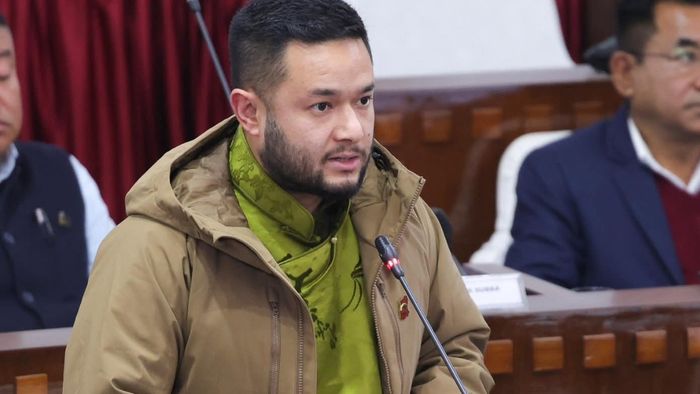
The momentum was highlighted during the recent Sikkim Assembly session, where Soreng-Chakung MLA Aditya Tamang credited the decision to upgrade Soreng into a full-fledged district as the turning point in its growth trajectory. The administrative elevation has strengthened governance mechanisms and improved delivery of public services, while ongoing municipal elections are being seen as a step towards deeper grassroots democracy.
Backed by the leadership of Chief Minister Prem Singh Tamang, several key infrastructure projects are nearing completion. The district hospital is over 90 per cent complete and is expected to significantly enhance healthcare access. Construction of the district administrative office is also progressing steadily, alongside the priority development of the Vrindavan religious site, which is expected to bolster the district’s cultural profile.
Connectivity infrastructure is also witnessing long-awaited progress. The tendering process for a modern taxi stand has been completed, while the widening of the Zoom-Salghari road — pending for over 25 years — has finally commenced, marking a major shift in the region’s infrastructure push.
Looking ahead, two major national initiatives — the Vibrant Villages Programme Phase II (VVP-II) and the Buddhist Circuit scheme announced in the Union Budget 2026-27 — are expected to further accelerate Soreng’s transformation. The VVP-II, approved by the Union Cabinet with an outlay of ₹6,839 crore till FY 2028-29, aims to develop border villages through improved infrastructure, livelihood opportunities, digital connectivity and eco-tourism.
Border villages in Soreng, Daramdin and Rinchenpong constituencies, located along the India-Nepal frontier, are likely to be included under the scheme. MLA Aditya Tamang has strongly advocated for their inclusion, noting the strategic and developmental importance of these areas. A state-level workshop held earlier this year reviewed implementation plans, indicating close coordination between the Centre and the state.
If rolled out effectively, the programme is expected to upgrade rural infrastructure, strengthen agriculture and tourism, and reduce migration by creating sustainable livelihood opportunities in remote areas.
Parallelly, the Buddhist Circuit initiative, announced by Union Finance Minister Nirmala Sitharaman, is set to boost religious tourism across six northeastern states, including Sikkim. The scheme focuses on preserving monasteries and heritage sites, improving connectivity and enhancing visitor amenities.
Soreng, home to several historic Buddhist monasteries and the upcoming Vrindavan site, is well-positioned to benefit from this initiative. Increased tourist inflow is expected to generate employment, support local businesses and integrate cultural heritage with economic development.
Officials believe that the state government’s strategy of aligning local infrastructure development with central schemes has created a strong foundation for sustained growth. With multiple projects underway and national programmes in the pipeline, Soreng is steadily shedding its tag as a remote district and emerging as a model for integrated development in the Northeast.