Budget 2026–27 highlights Northeast, leaves Sikkim without dedicated package
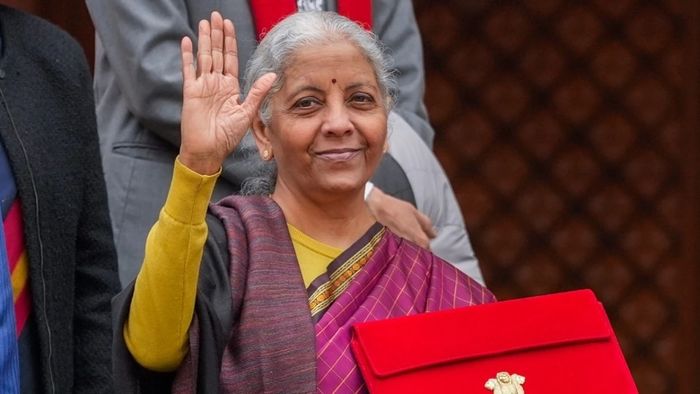
The Union Budget for 2026–27, presented by Nirmala Sitharaman, renewed the Centre’s focus on the Northeast but offered no state-specific allocation for Sikkim, reviving questions about whether the Himalayan state is being overlooked despite its ecological and economic vulnerabilities.
- Feb 03, 2026,
- Updated Feb 03, 2026, 8:20 PM IST
The Union Budget for 2026–27, presented by Nirmala Sitharaman, renewed the Centre’s focus on the Northeast but offered no state-specific allocation for Sikkim, reviving questions about whether the Himalayan state is being overlooked despite its ecological and economic vulnerabilities.
The government has framed its regional push under the ‘Ashtalakshmi’ development model, with an emphasis on connectivity, tourism and infrastructure. A key announcement is a Buddhist Circuits scheme spanning Arunachal Pradesh, Sikkim, Assam, Manipur, Mizoram and Tripura. The programme is intended to conserve temples and monasteries, promote spiritual tourism and create jobs in heritage management.
Introducing the proposal, Sitharaman described the Northeast as a “civilisational confluence of Theravada and Mahayana/Vajrayana traditions”. For Sikkim, home to major monasteries such as Rumtek and Pemayangtse, the initiative could support tourism, which contributes over 10 per cent to the state’s gross domestic product. However, the scheme does not specify state-wise funding, and critics argue that it remains a broad regional promise rather than a concrete commitment to Sikkim.
By contrast, the Budget announced earmarked allocations totalling Rs 1,046 crore for other parts of the Northeast under seven provisions. The largest share—Rs 500 crore—forms the first instalment of a Rs 5,000 crore package linked to the 2023 tripartite peace accord with the United Liberation Front of Assam. The funds will be disbursed over five years through the Ministry of Development of North Eastern Region and will support 36 projects proposed by ULFA across education, infrastructure, tourism, sports and green energy.
Welcoming the announcement, ULFA general secretary Anup Chetia called the allocation a “positive way forward”, noting that more than 9,000 cadres have surrendered and that the Armed Forces (Special Powers) Act has been withdrawn from 85 per cent of Assam.
Additional provisions include Rs 156 crore for the Bodoland Territorial Council, Rs 200 crore for the Karbi Anglong Autonomous Territorial Council, Rs 100 crore for the Dima Hasao Autonomous Territorial Council, Rs 70 crore for the Dimasa people, Rs 50 crore for Tripura’s tribal population and Rs 70 crore for Adivasi groups. These allocations underline the Centre’s focus on post-insurgency rehabilitation and ethnic autonomy in Assam and Tripura. Sikkim, which has not faced insurgency-related conflict, does not feature in any comparable package.
Overall funding for DoNER has risen to Rs 6,812 crore in 2026–27 from Rs 5,915 crore the previous year—an increase of about 15 per cent. Analysts point out that while the rise is notable in absolute terms, it still accounts for only around 0.13 per cent of the total Union Budget of Rs 53.47 lakh crore and may not fully offset inflation or long-term development needs. Sikkim is expected to benefit indirectly through umbrella schemes, but no flagship project has been announced for the state.
The state will continue to receive central tax devolution fixed at 0.388 per cent under the 15th Finance Commission, estimated at about Rs 5,405 crore in 2025–26 (revised estimates) from corporation tax, income tax and GST.
Past budgets show a similar pattern. In 2025–26, Sikkim’s total outlay was Rs 16,196 crore, including Rs 5,519 crore from tax devolution and Rs 2,600 crore in grants. Between 2020 and 2025, annual Finance Commission-related transfers ranged from Rs 1,077 crore to Rs 1,383 crore, largely directed at rural development and disaster management.
Sikkim has rarely received special packages comparable to those linked to peace accords. After the 2023 glacial lake outburst flood in the Teesta Valley, the state sought Rs 3,000 crore in central assistance but received limited support through existing national schemes. The Citizen Action Party later criticised the 2024–25 state budget for inadequate recovery measures.
Reactions to the 2026–27 Budget across the region have been mixed. Industry bodies such as the Indian Chamber of Commerce welcomed the Buddhist Circuits scheme and higher DoNER funding but called for stronger emphasis on manufacturing and skills. Several commentators described the Budget as ambitious in intent but modest in proportional funding, with social media users drawing parallels between Sikkim’s situation and that of states such as Bihar and Jharkhand.
With a stable political environment and a population of about 6.7 lakh, Sikkim’s relative calm may have weakened its case for special funding. While regional initiatives could generate employment, the absence of targeted support has sharpened concerns. As the Centre advances its ‘Purvodaya’ vision for eastern India, Sikkim’s leaders are expected to press for stronger representation to ensure that inclusion on paper results in tangible development on the ground.