Sikkim University’s permanent campus still elusive as postgraduate vacancies pile up
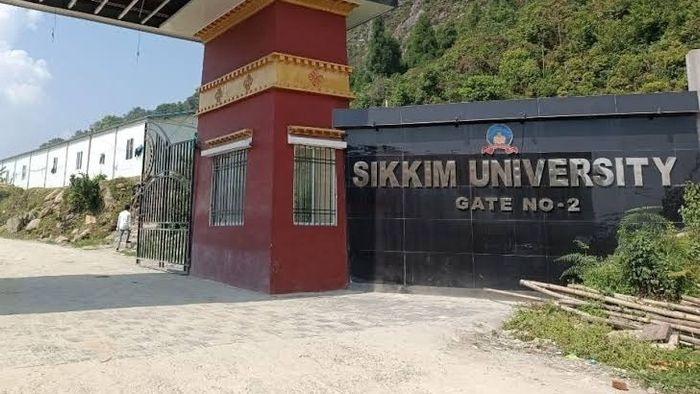
Sikkim University is still operating from rented buildings across Gangtok as its Yangang campus remains under construction. The prolonged delay and persistent postgraduate vacancies are raising questions about the institution's competitiveness and planning.
- Sep 08, 2026,
- Updated Sep 08, 2026, 7:59 PM IST
Nineteen years after its establishment through an Act of Parliament in 2007, Sikkim University, the only Central University in the state, continues to operate without a permanent campus, while persistent vacancies in several postgraduate programmes are raising questions over the impact of the prolonged delay on the institution’s academic appeal.
The university’s administrative office is located at Samdur, 6th Mile, Tadong, while its teaching departments function from around 22 rented buildings spread across nearly 17 kilometres in and around Gangtok. Some of the departments are located at places as far apart as Kazi Road and 7th Mile Road, resulting in a highly dispersed academic setup.
Meanwhile, the university’s proposed permanent campus at Yangang in South Sikkim remains under construction. The university’s current prospectus continues to describe the campus as “being developed”, a description that has remained in use for years.
A 2024 institutional audit, covering the period from 2019-20 to 2022-23, also found that the university was continuing with its hired-building arrangement, which has been in place for more than a decade and a half.
Students have reportedly raised concerns over the effect of the scattered campuses on academic activities. According to accounts cited in the report, events and programmes that could otherwise be completed within a week at a conventional campus sometimes take considerably longer because departments are spread across different locations.
The university’s own postgraduate Spot Admission notices issued over the past three years also point to continuing difficulties in filling sanctioned seats. In the Anthropology department, which has 23 seats, nine remained vacant in 2024. The number rose to 19 in July 2025, stood at 16 following a special admission drive in September 2025, and remained at 18 in 2026.
The situation is more pronounced in Bhutia, which has 20 postgraduate seats. Seventeen seats were vacant in 2024, rising to 19 in July 2025. Even after the September 2025 special admission drive, 19 seats remained vacant, while 18 seats were still unfilled in 2026.
In the Chinese department, which has 23 seats, 16 seats were vacant in 2024 and 20 remained vacant in both July 2025 and the September 2025 special drive. The 2026 vacancy figure also stood at 20 out of 23 seats.
A separate Special Drive admission notice was issued on September 4, 2025, more than a month after regular classes had begun on August 1, in an effort to fill seats that remained vacant after the July admission round.
The figures indicate that the problem in some departments is not confined to the initial admission cycle. In Bhutia, the special drive did not reduce the number of vacant seats, while in Chinese, vacancies remained at 20 out of 23 seats for two consecutive years.
Across the university’s wider 2026 vacancy data, more than 300 of the 840 sanctioned postgraduate seats remained vacant ahead of the July spot counselling round, with vacancies reported across nearly all schools of study.
While demand and awareness may account for part of the shortfall, the persistence of high vacancies, and the worsening situation in some departments, has prompted concerns over more structural challenges.
Observers cited in the report argue that the absence of a permanent campus, the spread of departments across multiple rented buildings and the continued description of the Yangang campus as “under construction” may make it harder for the university to compete for postgraduate students, particularly those considering multiple institutions after CUET-PG admissions.
The university leadership has acknowledged the unfinished permanent campus, but the issue has now continued across three different Vice-Chancellors, alongside successive assurances regarding the Yangang project without a firm completion timeline.
The continuing delay has therefore raised questions about whether the Yangang campus is progressing under a clearly defined construction schedule and whether the university’s persistent postgraduate vacancies will be viewed by the Ministry of Education and the UGC as a broader institutional concern rather than a routine admission-cycle issue.