FIFA explains VAR call that ruled out Croatia's late equaliser against Portugal
FIFA said Connected Ball Technology detected Igor Matanovic's touch before Croatia's late goal against Portugal. The sensor data allowed VAR to confirm offside and preserve Portugal's 2-1 win.
- Jul 03, 2026,
- Updated Jul 03, 2026, 8:10 PM IST
FIFA has explained the technology and VAR process that led to Croatia's dramatic stoppage-time equaliser against Portugal being disallowed in their FIFA World Cup 2026 Round of 32 match.
The governing body said its Connected Ball Technology detected a slight touch by Croatia striker Igor Matanovic during the build-up, allowing match officials to confirm an offside offence that was not visible in standard television replays. The decision preserved Portugal's 2-1 victory and secured their place in the last 16.
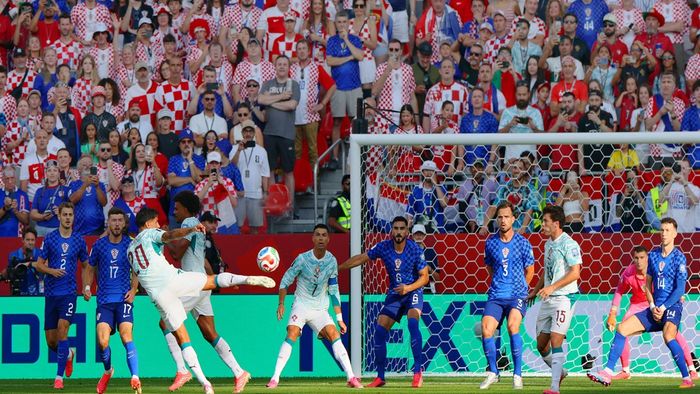
Croatia appeared to have forced extra time when Josko Gvardiol scored deep into stoppage time after Goncalo Ramos had restored Portugal's lead in the fourth minute of added time. The goal was initially allowed, with replays suggesting Matanovic had not made contact with Ivan Perisic's delivery before Mario Pasalic became involved.
However, referee Espen Eskas was instructed to review the incident after data from the sensor inside the official Adidas Trionda match ball registered a touch by Matanovic. The contact, reported to be as slight as a brush against his hair, meant Pasalic had received the ball from a teammate while in an offside position before setting up Gvardiol.
Following the match, FIFA issued a statement on X explaining the decision.
"According to the data provided by Connected Ball Technology housed within the @adidasfootball Trionda, the official match ball of the @FIFAWorldCup, it was proven that contact was made by Croatia's #20 Igor Matanovic in the build-up to the goal against Portugal, allowing the referee to correctly determine offside and disallow the goal," FIFA said.
The world governing body added that the ball is equipped with IMU sensors capable of identifying even the slightest contact.
"IMU sensors housed within the Trionda ball are capable of determining any slight contact... allowing officials an unprecedented level of data to make fast, accurate decisions," the statement said.
According to FIFA, while the touch could not be detected by the naked eye or clearly seen in conventional broadcast footage, the sensor-generated data provided objective evidence for the VAR team to confirm the offside offence and overturn Croatia's late equaliser.