India’s ODI bowling puzzle: Why big totals are no longer safe
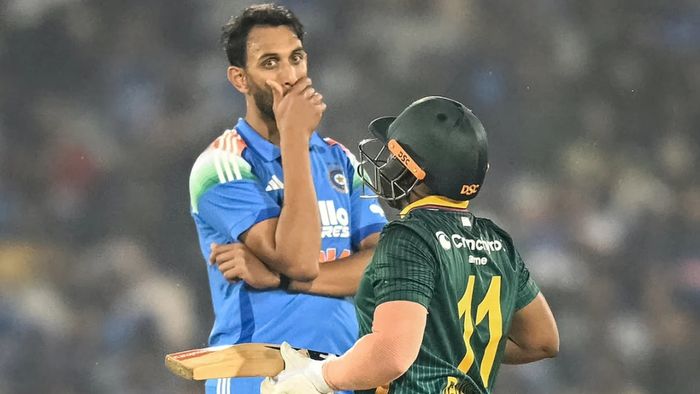
Despite all the batting brilliance, India’s bowling couldn’t close out the game and the target disappeared in front of their eyes. What unfolded wasn’t a one-off. It was another reminder that even at home, even after posting 350-plus, India’s bowling often lacks the sharpness needed to defend big totals. The runs weren’t the issue. The bowling was. Left-arm pacer Arshdeep Singh got wickets early, but there was little support from the other end. Prasidh Krishna and Harshit Rana leaked runs heavily, with Prasidh going at over 10 an over the exact phase where India missed the presence of specialists like Mohammed Shami and Mohammed Siraj.
- Dec 04, 2025,
- Updated Dec 04, 2025, 10:30 AM IST
The crowd in Raipur erupted as Virat Kohli gave fans a moment to treasure, smashing his 53rd ODI century, his second in a row in this series against South Africa. With Shreyas Iyer still recovering from a rib injury from the Australia tour at the other end, India finally seemed to have found yet another calm and composed No. 4 in Ruturaj Gaikwad, who brought up his maiden ODI hundred while stitching a massive 195-run stand with Kohli. At 358/5, India looked set for a strong win.
Instead, by the end of the night, a familiar frustration returned. Despite all the batting brilliance, India’s bowling couldn’t close out the game and the target disappeared in front of their eyes. What unfolded wasn’t a one-off. It was another reminder that even at home, even after posting 350-plus, India’s bowling often lacks the sharpness needed to defend big totals.
Raipur: The night the runs didn’t matter
In the second ODI of the series, India looked in complete control. Kohli’s 102 and Gaikwad’s fluent 105 set the tone, and late hitting from KL Rahul and Ravindra Jadeja lifted the score to 358 for 5. Yet South Africa pulled off a chase that will be remembered for a long time — 362 for 6 in 49.2 overs — sealing a four-wicket win to level the series 1–1. It now stands as one of the highest successful chases against India on home soil.
The runs weren’t the issue. The bowling was. Left-arm pacer Arshdeep Singh got wickets early, but there was little support from the other end. Prasidh Krishna and Harshit Rana leaked runs heavily, with Prasidh going at over 10 an over the exact phase where India missed the presence of specialists like Mohammed Shami and Mohammed Siraj.
Turning up 350 and turning off the bowling
Indian cricket has witnessed this story before: big totals followed by painful collapses in defence. This defeat now adds to India’s growing list of losses after scoring 300-plus.
India once among the most reliable teams at defending big scores now finds itself second on the list of most defeats after posting 300 or more, with 27 such losses.
So why does a strong batting surface suddenly become a trap for the bowlers? And why does the team continue to lean on part-timers and all-rounders when matches like these clearly demand specialists?
The specialists who were ignored
The most glaring exclusion is Yuzvendra Chahal one of India’s best white-ball wrist-spinners who has barely featured in ODIs since early 2023.His record speaks for itself: 121 wickets in 72 ODIs at an average of 27.13 and an economy of 5.27.
Despite that, selectors have preferred spin all-rounders, choosing batting depth over bowling quality. In matches like Raipur, that decision shows its cost.
With Jasprit Bumrah’s workload being managed across formats, experienced options like Mohammed Shami and Mohammed Siraj could have offered control and breakthroughs. Both were left out of the squad, with Shami’s absence especially confusing given he is fit and available.
On a flat Raipur pitch with little spin on offer, wrist-spin and disciplined seam bowling with variations could have made a difference. Instead, India relied on predictable, part-time options.
When defending 350 isn’t enough
Indian cricket has long believed that a total above 300, especially at home, is “safe.” But in the modern game, that assumption has lost its weight.
Flat tracks and powerful batting line-ups demand wicket-taking bowlers, smart plans and specialists who can handle pressure. Comfortable all-rounders cannot always do that job.
Raipur proved how risky it is to go into big games without enough specialists. When the pitch offers nothing, the margin for error becomes tiny. Overs go for 8–10 runs, partnerships grow, and the game slips away quickly. Without genuine match-winners, defending big totals becomes guesswork.
The cost of ignoring the specialists
Leaving out proven match-winners like Chahal has real consequences. Former cricketers have repeatedly questioned the call, finding it strange that someone so consistent hasn’t been backed.
Whether its spinners trying only to contain without threatening wickets or medium pacers struggling at the death, India seems to be relying on a flawed balance prioritizing batting depth at the expense of bowling strength.
If the trend continues, the results will speak for themselves.
What needs to change
Raipur should be a loud wake-up call. As the series moves to Visakhapatnam, the big question is simple: Does India want to win through batting alone, or win with a complete XI?
Chahal’s variations, Siraj’s bounce, and Shami’s death-overs control any of these could immediately strengthen India’s attack compared to the current one-dimensional set-up.
What India needs now is clearer selection, better reading of conditions and trust in specialists rather than makeshift options.
Because in 2025, even 350 is not enough if the bowlers cannot hold their nerve.