Lionel Messi retires from Argentina duty: ‘I gave everything I had’
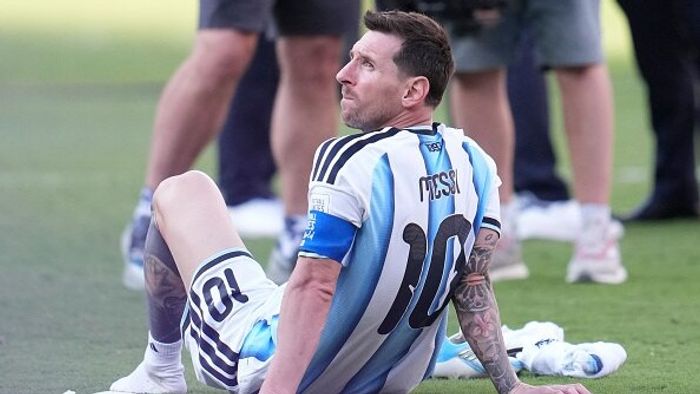
Lionel Messi has retired from Argentina duty after the 2026 World Cup final defeat to Spain. His exit closes a two-decade international career shaped by pain, triumph and persistence.
- Aug 31, 2026,
- Updated Aug 31, 2026, 9:11 PM IST
Lionel Messi has said goodbye to Argentina after more than two decades in the national team, announcing his retirement from international football in a message that was as much about the journey as it was about the decision to leave. At 39, after a 2026 World Cup campaign that ended in defeat to Spain in the final, Messi said he had finally accepted that his time with the blue and white shirt had come to an end.
“After all this time since the final, and after thinking about it a lot, I want to let everyone know that I am retiring from the national team,” Messi wrote on Instagram on Monday, August 31. He said the decision “hurt, and still hurts deeply”, but added that he understood the time had come.
For much of Messi's Argentina career, the shirt carried a complicated history. He became the team's biggest star while also being repeatedly reminded that his extraordinary club career had not yet produced the one thing Argentina wanted most. The 2014 World Cup final defeat to Germany was followed by back-to-back Copa América final losses in 2015 and 2016. After the latter, Messi briefly announced his international retirement, overwhelmed by another painful defeat, before returning to try again.
The ending eventually changed. Argentina won the Copa América in 2021, giving Messi his first major senior international trophy. A year later, in Qatar, came the moment that had seemed to escape him for so long. Messi scored twice in the 2022 World Cup final against France and converted his penalty in the shootout as Argentina lifted the trophy, finally placing his name alongside the country's greatest footballing achievements. Another Copa América title followed in 2024, leaving Messi with little left to prove but still unwilling to walk away.
He returned for the 2026 World Cup, his sixth appearance at the tournament, and Argentina made it all the way to the final again. This time, however, there would be no second World Cup triumph. Spain beat Argentina in the final, bringing an end to Messi's World Cup career and, as it turns out, his international career as well.
Messi's farewell has also been shaped by a loss much closer to home. His father, Jorge Messi, died earlier this month aged 68. Jorge had been beside his son from the beginning, supporting him during his childhood in Rosario and later travelling with him to Spain when Barcelona's offer brought the 13-year-old Messi to La Masia. He eventually became his son's agent and remained a constant presence throughout a career that took Messi from a boy leaving Argentina for Barcelona to one of football's most decorated players.
Messi revealed that he had actually written his farewell shortly after the World Cup final but had not immediately published it. His father's death made him more certain about a decision he had already been considering.
“I wrote these words on July 21, two days after the final,” Messi wrote. “Today, after what happened with my father, I am more convinced than ever.”
The significance of Messi's departure goes beyond the numbers, even though the numbers are extraordinary. He leaves Argentina as the country's record appearance-maker and leading goalscorer, having won the World Cup, two Copa América titles and Olympic gold. He spent years being compared with Diego Maradona and carrying the expectation of a football-mad nation, but his relationship with Argentina was ultimately defined not only by what he won, but by how long he kept coming back after losing.
That is why his farewell carries a different weight now. The player who once left the pitch in tears after another lost final became the captain who eventually lifted the trophies Argentina had waited decades to see. The boy who left Rosario for Barcelona became the man who returned to lead his country to the biggest prize in football.
Messi acknowledged that Argentina will now have to look towards the players coming through behind him. “There are some very talented young players coming through who deserve to be here,” he wrote, accepting that the next generation must now inherit the shirt that defined so much of his own life.
He also thanked his family, coaches, teammates, officials and, above all, the supporters who stayed with him through the defeats and the victories. “I will miss hearing you from inside the stadium very much,” Messi wrote, saying that he would now become one of those watching from the outside, cheering for Argentina “in the good times and the bad, even more so”.
After 20 years with the national team, there will be no more Messi walking out for Argentina, no more waiting for the familiar number 10 to change a game, and no more question of whether he will finally deliver. He already did that.
What remains is a career that began with disappointment and ended with almost everything a player could dream of. And for Messi, perhaps the most fitting farewell was not about the trophies at all, but about the country he spent so long trying to make proud.
“I love, have loved, and will always love being part of the national team,” he wrote. “I gave everything I had; I have nothing more to give.”
He signed off simply: “Thank you, God, for making me Argentine. Come on, Argentina!”