125th Constitutional Amendment a step in right direction, says Pradyot; calls for indigenous unity in Northeast
Pradyot Debbarma backed the proposed 125th Constitutional Amendment at a New Delhi seminar. He said it could strengthen tribal councils while indigenous communities unite around shared rights.
- Nov 20, 2026,
- Updated Nov 20, 2026, 6:43 PM IST
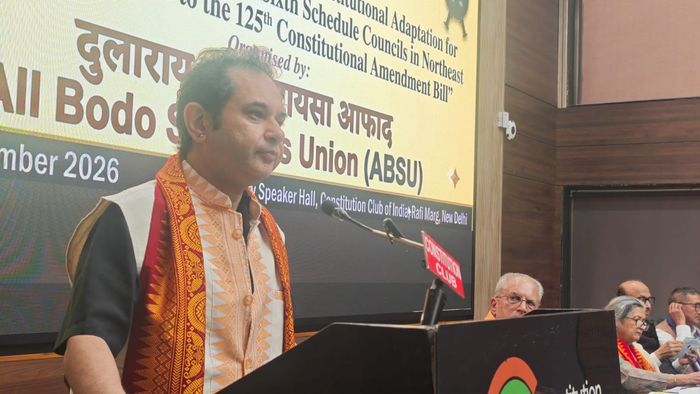
Tipra Motha founder and royal scion Pradyot Kishore Manikya Debbarma has backed the proposed 125th Constitutional Amendment Bill, describing it as a step in the right direction towards strengthening the financial and political powers of Sixth Schedule Autonomous District Councils across the Northeast. He also called for greater unity among indigenous communities in the region, stating that internal divisions remain a major obstacle to their aspirations.
Addressing a national seminar on ‘The Discourse of Peace Accords and Constitutional Adaptation for Empowerment in Governance at Sixth Schedule Councils in Northeast India with Reference to the 125th Constitutional Amendment Bill’, organised by the All Bodo Students Union in New Delhi on Friday, Pradyot said the proposed amendment may not fulfil all aspirations of indigenous communities but would provide greater financial authority, political strength and clarity in governance.
He pointed out that the six Scheduled Areas have varying provisions and levels of authority, resulting in disparities among Autonomous District Councils in the Northeast. Provisions available to the Karbi Anglong Autonomous Council, he said, are not necessarily available to the Tripura, Garo Hills or Khasi Hills Autonomous District Councils.
Speaking about Tripura, Pradyot said indigenous communities are present across all districts and should not be restricted to governing only the Tripura Tribal Areas Autonomous District Council (TTAADC). He asserted that indigenous people also have the right to participate in the governance of the state.
“We are the sons of the soil. We have a right. We do not only want to govern the district council; we also want to have a say in the affairs of the state,” he said.
Emphasising unity, Pradyot said divisions along political, tribal and community lines continue to weaken indigenous movements across the Northeast. Referring to the concept of Thansa, meaning unity, he called upon communities including Debbarma, Jamatia, Reang, Chakma, Boro, Khasi and Kuki to rise above their differences.
He also raised concerns over increasing pressure on indigenous land and natural resources, including gas, petroleum, limestone and coal in Sixth Schedule areas. While clarifying that he was not opposed to development, he questioned whether indigenous communities were receiving a fair share of the revenue generated from the exploitation of these resources.
Pradyot stressed that development should benefit communities collectively rather than a handful of individuals or leaders. He also criticised the financial constraints faced by Autonomous District Councils, pointing out that a major share of their budgets goes towards salaries and employment-related expenditure, leaving limited funds for development.
He alleged that councils do not always receive their allocated funds in full and called for regular consultations between district councils and state governments before budget allocations are finalised.
Highlighting the aspirations of indigenous communities, he said their demands centred on dignity, quality education, skill development and equal opportunities, stressing that they seek the same opportunities available to other communities.
Calling on indigenous leaders and organisations across the Northeast to set aside political differences, Pradyot said the proposed amendment should not be viewed as a political victory for any particular party.
Reiterating his support for the early passage of the 125th Constitutional Amendment Bill, he said further changes could be made whenever necessary. He maintained that the process of empowerment should begin with the measures currently possible rather than waiting for a perfect legislation.