Roman script demand for Kokborok resurfaces ahead of Tripura district council polls
The United Movement Committee for Roman Script (UMCRS), on February 16, renewed its demand for the adoption of the Roman script for Kokborok, placing the issue at the centre of political discourse ahead of the forthcoming TTAADC elections.
- Feb 17, 2026,
- Updated Feb 17, 2026, 8:09 AM IST
The United Movement Committee for Roman Script (UMCRS), on February 16, renewed its demand for the adoption of the Roman script for Kokborok, placing the issue at the centre of political discourse ahead of the forthcoming TTAADC elections.
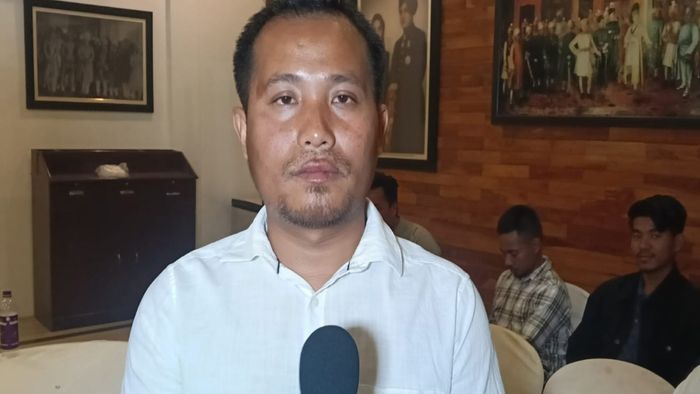
Addressing a press conference at Manikya Court (North Gate) in Agartala at 6.30 pm, leaders of the committee outlined their expectations and the current status of the movement. The UMCRS is a joint platform formed by the Twipra Students' Federation and the Tipra Indigenous Students' Federation.
John Debbarma, convenor of the committee, said the demand for adopting the Roman script for Kokborok has remained unresolved despite repeated representations over the years. He emphasised that the movement seeks a permanent policy decision to ensure uniformity in education and administration concerning the language.
Kokborok, spoken by indigenous communities across Tripura’s 19 tribes, has been at the centre of a long-standing debate over script. Two separate commissions were constituted in 1990 and 2004 to examine the matter, but neither led to a final settlement.
With the elections to the Tripura Tribal Areas Autonomous District Council approaching, the script issue has gained renewed traction. Members of the Tipra Indigenous Students’ Federation recently organised human chains in several sub-divisional towns and districts to press for the demand.
During the press interaction, the committee appealed to media organisations for wider coverage, stating that public awareness and informed discussion are essential to resolving the matter. Leaders said they would continue engaging with stakeholders while expanding outreach efforts.
The script debate remains a sensitive political question in the state, touching on questions of identity, education policy and cultural preservation. As campaigning intensifies, the Roman script demand is expected to remain a significant issue in the tribal belt.