Supreme Court seeks Tripura’s response to PIL challenging Jamatia Customary Law provision
The Supreme Court sought responses from Tripura and the TTAADC on a PIL challenging Section 143. The plea questions financial penalties under customary adjudication in cases involving the enticement and rape of women.
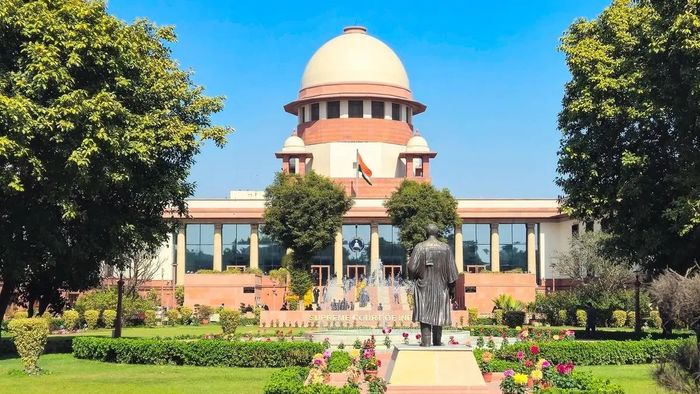
- Oct 26, 2026,
- Updated Oct 26, 2026, 4:11 PM IST
The Supreme Court on October 26 sought responses from the Tripura government and the Tripura Tribal Areas Autonomous District Council (TTAADC) on a public interest litigation (PIL) challenging the constitutional validity of a provision of the Jamatia Customary Law Act, 2017, relating to financial penalties in cases involving the enticement and rape of women.
A bench comprising Chief Justice of India Surya Kant and Justices Joymalya Bagchi and V. Mohana issued notices on a petition filed by Madhumita Bhattacharya. The bench also tagged the plea with a pending matter.
The petition challenges Section 143 of the 2017 Act, alleging that the provision allows accused persons in rape-related cases to escape criminal consequences by paying financial penalties under the customary adjudication mechanism.
Filed through advocate Shoumendu Mukherji, the plea seeks a declaration that the provision is unconstitutional. It has also sought directions for the production and transmission of relevant records concerning the enactment of the law before the Supreme Court.
Under the provision, a party aggrieved by a judgment or decision delivered by Okras—traditional Jamatia spiritual or community leaders who perform adjudicatory functions—may approach the appropriate formal forum.
The Jamatia Customary Law Act, 2017, was enacted by the TTAADC under the Sixth Schedule of the Constitution to codify the Jamatia community’s traditional customs and dispute-resolution mechanisms.
The Supreme Court’s notice seeks responses from the state government and the autonomous district council. Further proceedings will determine the challenge to the provision’s constitutional validity.