Tripura opens first Tea Auction Centre to boost growers returns
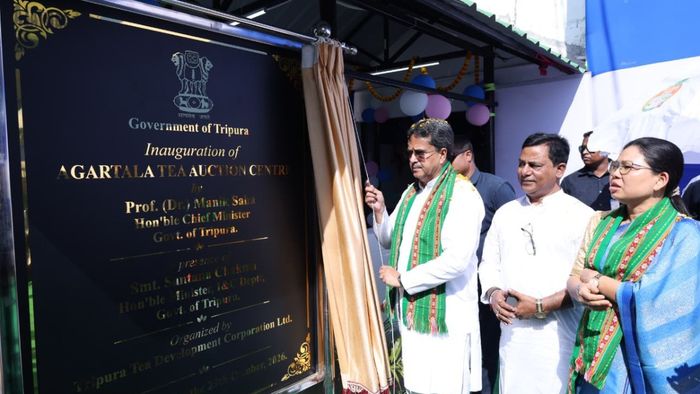
Chief Minister Manik Saha inaugurated Tripura's first Tea Auction Centre in Agartala. The facility is expected to cut costs, speed up sales and improve growers' returns.
- Oct 29, 2026,
- Updated Oct 29, 2026, 6:23 PM IST
Tripura Chief Minister Manik Saha on October 29 inaugurated the state’s first Tea Auction Centre at PN Complex in Gorkhabasti, Agartala, saying the facility would help revive struggling tea gardens, improve growers’ returns and reduce transportation costs.
Describing the inauguration as a significant milestone in Tripura’s economic development, Saha said the centre would strengthen the state’s tea industry, improve the livelihoods of tea workers and small tea growers, and create new employment opportunities.
“This is a very important and significant day for us, and it will be written in the history of Tripura,” the Chief Minister said.
Saha highlighted Tripura’s potential for tea production, noting that the state ranks third nationally and second in the Northeast. Tripura produces approximately 70–100 lakh kilograms of tea annually and has around 54 tea gardens and 2,000–2,800 small tea growers, he said.
The Chief Minister said the state government had undertaken several initiatives since 2018 to improve tea garden infrastructure and the socio-economic conditions of workers and their families, including measures to support the education and welfare of their children.
Explaining the need for the new facility, Saha said Tripura’s tea was previously transported mainly to Kolkata and Guwahati for auctions and sales, increasing logistics costs and often delaying payments to producers.
The new centre is expected to bring the trading process closer to local producers through electronic auctions, promoting transparency and competition among buyers while reducing dependence on intermediaries. Testing facilities, warehousing and other supporting infrastructure are also expected to lower transportation, storage and sample-testing expenses.
According to information shared at the programme, the facility could generate savings of around ₹3–6 per kilogram of tea. The overall selling process, which previously took approximately 44 days, is also expected to become nearly 40 per cent shorter.
Saha said improved market access and better returns would encourage growers to invest in quality enhancement, modern production methods and stronger branding. He added that the government remained committed to bringing struggling tea gardens back to a productive and sustainable path while improving the financial security of families dependent on the industry.