Tripura plans 10 electric buses for Agartala, proposes Rs 130 crore flood-control project
Tripura has floated a tender for 10 electric buses in Agartala and proposed a major drainage overhaul. The twin push aims to improve city transport and reduce monsoon waterlogging faster.
- Aug 11, 2026,
- Updated Aug 11, 2026, 9:20 PM IST
Tripura has begun the process of introducing electric buses in Agartala while drawing up a Rs 130 crore plan to strengthen the city’s storm-water drainage network, as the state seeks to address two key urban challenges — public transport and recurring monsoon waterlogging.
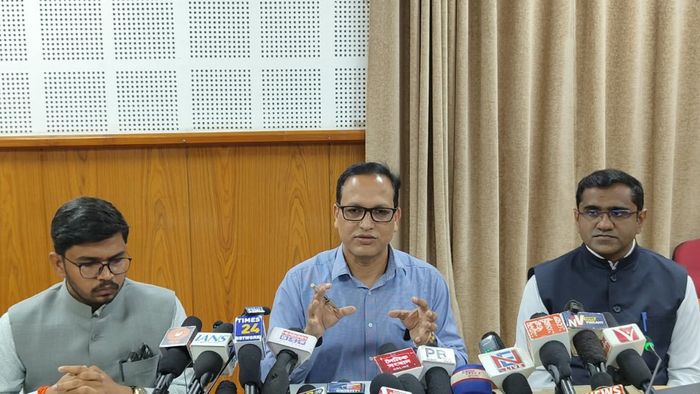
The tender for procuring the first 10 electric buses has already been floated with assistance from the Asian Development Bank (ADB) and is scheduled to be opened on August 21, Urban Development Department Secretary Milind Ramteke said at a press conference.
The nine-metre buses will operate primarily within Agartala and areas located about 10-12 km from the city. Charging infrastructure will be developed alongside the bus service.
Ramteke said the initiative was taken after the state government approached the ADB with a proposal for electric buses and the infrastructure required to support them.
“Agartala currently lacks a well-organised public transportation system and adequate electric mobility infrastructure,” he said.
The electric bus project is part of a larger ADB-supported infrastructure programme for Agartala estimated at around Rs 1,200 crore. Of this, Rs 500-600 crore could be earmarked for storm-water drainage and related works.
The Agartala Municipal Corporation has submitted a proposal for a major overhaul of the city's storm-water drainage system, with the project estimated to cost around Rs 130 crore.
The proposed measures are aimed at reducing both the extent of waterlogging and the time taken to clear accumulated rainwater. Authorities want to bring the current drainage time of one to two hours down to around 15-30 minutes.
Municipal Commissioner Saju Wahid said central and eastern parts of Agartala are particularly prone to waterlogging because of their geographical features. A digital elevation map and detailed surveys have been used to identify low-lying areas and major water accumulation points.
Agartala currently has 17 functional pumping stations. The stations are equipped with electric pumps as well as alternative arrangements to keep drainage operations running during power cuts. Mechanical pumps have also been installed at six vulnerable locations — Banamalipur, Orient Chowmuhani, the East Police Station area, Paradise Chowmuhani, Ganraj and IGM.
Wahid said the risk of waterlogging increases when rainfall crosses about 38-40 mm per hour, particularly when heavy rain persists for one to two hours.
“Several measures have already been taken to improve drainage capacity,” he said.
An additional pump and a 600-mm pipeline have been installed in the Ganaraj area, while new pumping stations are being built at Shakuntala Road, Satsang and Ramnagar-4. Underground sumps are also planned at Orient Chowmuhani and Paradise Chowmuhani to collect and pump out rainwater.
The proposed ADB-backed project would further increase the capacity of existing pumping stations, expand the pipeline network and add new sumps and water reservoirs.
Ramteke said Agartala's drainage infrastructure has been developed in phases over the past two decades. The new project, if approved, would increase both the number and capacity of pumps.
A SCADA-based automated system has also been proposed. Under the system, pumps would switch on automatically once water levels cross a predetermined threshold.
The authorities are also looking at Agartala's existing water bodies as part of the city's flood-management strategy.
Around 55 water bodies in and around the city have been identified for conservation. Selected water bodies could also be desilted by two to three feet, depending on environmental considerations, to increase their water-storage capacity.
Another proposal seeks to cover and deepen the Kalapania canal at an estimated cost of Rs 70-75 crore.
A separate long-term study is being initiated to examine the hydrology and water flow of the Haora and Katakhal rivers. A detailed project report will assess possible measures such as embankments, barrages and other flood-control infrastructure.
The state may seek assistance from the National Disaster Management Authority as well as the central and state governments if additional intervention is required.
Meanwhile, work on Agartala's 23-km Smart Road project has reached around 50 per cent completion, Agartala Smart City Limited CEO GS Nayak said.
The project was around 20-25 per cent complete in December 2025.
Work on roadside storm-water drains has progressed faster, with around 99 per cent of the planned drainage work completed. Of the proposed 46 km of drains, around 45.5 km have already been constructed.
The drainage upgrades are expected to form an important part of the city's wider effort to improve its ability to handle heavy rainfall while upgrading urban infrastructure.