Not your regular success story: 'Designed to Win' hits home
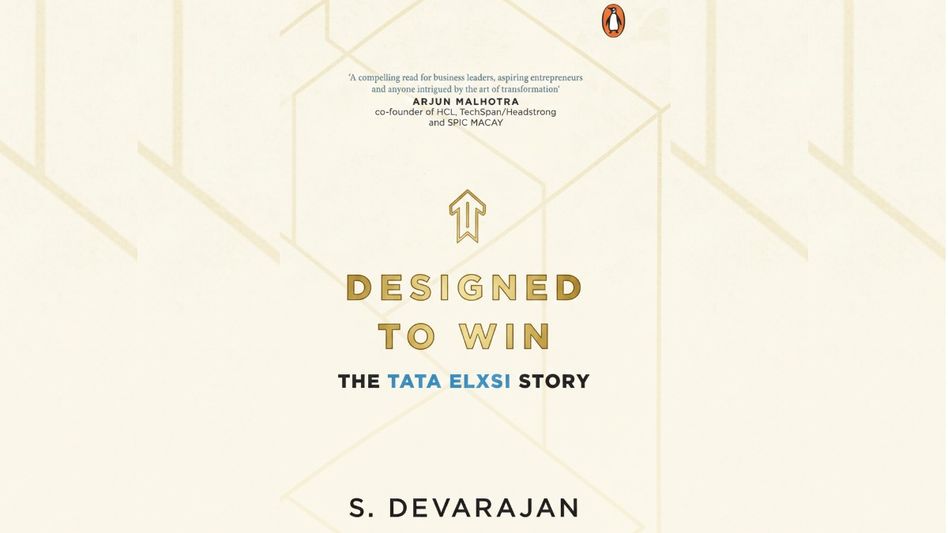
'Designed to Win', despite sounding like just another corporate heavyweight, is a refreshingly no-nonsense read that does not hesitate to reveal its missteps before charting its rise.

- Feb 09, 2026,
- Updated Feb 09, 2026, 11:00 AM IST

From the very first page, this book makes it clear that it is a story about people — before it is about growth, numbers, or business. 'Designed to Win', despite sounding like just another corporate heavyweight, is a refreshingly no-nonsense read that does not hesitate to reveal its missteps before charting its rise.
Authored by S. Devarajan, the book opens with a brief introduction to the brand’s becoming. What stands out early on is the prologue — picture-perfect imagery of just another man among millions, dreaming big and quietly working towards achievement.
This extract is enough to grab attention: "How would you describe a young man of twenty-five who crossed the mighty Tungabhadra in a small coracle, because he had to keep an appointment with the CFO of a company, and there was no other way to reach the other side. Crazy? Conscientious? Passionate? Maybe bits of it all."
Much like other books on corporate success, the initial pages of 'Designed to Win' trace Devarajan’s early life — his upbringing, his parents, his circle, and the environment that shaped him.
What feels instantly relatable is his love for literature, a not-so-common occurrence in those days. "I still remember how I became so engrossed in Julius Caesar that I memorized the entire play. My love for literature also extended to To Kill a Mockingbird, which I knew by heart."
One important aspect the book captures is that success does not erase struggle. No matter how accomplished a person becomes, their journey is often rooted in very ordinary beginnings. Devarajan shares his own moments of simplicity and loss with honesty: "I remember my father surprising me with an HMT watch as a birthday gift during that trip...A thief broke into our home at night, stealing some jewellery and a few watches, including my HMT!"
Most people are familiar with the famous interview scenario where a candidate is asked to sell a pen — an example that has been recreated in videos, stories, and films. What many may not know is that this moment traces back to Devarajan himself, when Hindustan Computer’s head of personnel posed the question to him.
The extract is here: "'Devarajan, can you sell me this pen?’ I was thrown out of gear and did not know what to do. He assisted me by saying, ‘okay, tell me why I should buy this pen?’" As expected, Devarajan gets the job—and the world gets an interview moment that would go on to become iconic.
He later describes his entry into Tata Elxsi — a company he had not initially pursued but was invited to join, an offer he eventually accepted. This chapter, detailing his introduction to the brand, stands out for its simplicity and quiet symbolism, making it distinct from typical corporate narratives.
"...Mr Kohli started making me a cup of tea and one for him...and he splashed some milk into my cup. Then he pushed that cup of tea across to my side of the table." The moment reflects the simplicity of the interaction, where the official’s demeanour and the setting made the interview feel light-hearted and humane, far removed from the stiffness usually associated with such encounters.
Devarajan went on to play a significant role in the company’s growth, witnessing Tata Elxsi’s journey from being just another organisation to a recognised brand. The chapters that follow map how the brand expanded, taking its roots beyond India.
Also Read: Making of India’s razor blade legacy: Through a daughter’s eyes
For readers who are not inclined towards non-fiction, especially books on corporate success, business, or entrepreneurship, 'Designed to Win' might initially appear like just another story. However, the narrative carries an edge. This is a brand almost everyone recognises, even children, and that familiarity naturally draws curiosity about how it all began.
In my opinion, Indians should be aware of one of their country’s most important brands and understand how it came to be—its rise, its fall, and its tryst with success.
The second half of the book leans into technical details, names, and milestones that chart the brand’s careful steps towards becoming an accomplished company.
"There was another major hurdle that Tata Elxsi and I had to overcome—the financial crisis. It was May of 1993, when I joined Tata Elxsi and it took me a good three months to settle in and understand how the company functioned."
This extract reinforces a simple truth: even the most admired success stories are built through uncertainty and persistence. As a reader, the quote — "Success seems to be connected with action. Successful people keep moving. They make mistakes, but they don't quit." — feels particularly fitting for Tata Elxsi’s journey.
In my opinion, Devarajan’s 'Designed to Win' hits home. It is a book not only for those seeking success and accomplishment, but also for Indians who should take pride in understanding the making of such a brand. The author does not wear his achievements lightly or glorify himself; instead, he honestly and genuinely lays out every part of how the organisation became what it is today.
"Together, my excellent team and I built Tata Elxsi into a formidable force in the technology space. Looking back, it was the most productive phase of my career—to quote from the silver plaque that was presented to me at my farewell, it was ‘eight years that changed Tata Elxsi’s fortunes’ and, most definitely, me."