
A Thousand Silenced Voices Will Defeat the Hate Agenda of Kuki-Zo CSOs
While much of the public discourse centers on inter-community violence, land disputes, and demands for separate administration by Kuki-Zo groups, a less visible but equally disturbing phenomenon has emerged.

- Dec 23, 2025,
- Updated Dec 23, 2025, 2:17 PM IST

- Moderate voices in Kuki-Zo community face threats and violence.
- CSOs enforce separatist narrative, punishing dissenters.
- Peace-seeking individuals risk social boycotts and coercion.
While much of the public discourse centers on inter-community violence, land disputes, and demands for separate administration by Kuki-Zo groups, a less visible but equally disturbing phenomenon has emerged.
The systematic suppression of moderate, peace-seeking voices within the Kuki-Zo community itself. Influential civil society organizations, often aligned with Suspension of Operations (SoO) militant groups, have enforced a rigid separatist narrative, punishing or coercing individuals who express desires for reconciliation, unity, or even practical engagement with the state government.
These "peace voices"—ordinary citizens, youths, elected leaders, and displaced persons yearning for normalcy—are swiftly met with threats, physical violence, social boycotts, or forced public retractions. This internal intolerance not only undermines potential bridges to healing but also prolongs the suffering of thousands trapped in relief camps, perpetuating a cycle of fear that serves hardline agendas over communal welfare.
There are several instances where Kuki Zo CSOs target dissenters—those advocating reconciliation, unity, or state engagement—with threats, physical violence, social boycotts, coerced retractions, and even capital punishment edicts.
Yet, amid this pervasive coercion, certain voices remain unsuppressible, shining as beacons of resilience even at the peril of life. A prime example is Michael Lamjathang Haokip, a prominent Thadou leader. Under his leadership and other Thadou leaders, the Thadou community—one of Manipur's largest indigenous tribes—has come out openly to assert a distinct ethnic identity separate from the Kuki label, championing peaceful coexistence, territorial integrity, and cross-community dialogue without compromising Manipur's unity.
Despite facing repeated violent attacks in 2024 on his ancestral home in Churachandpur, death threats offering rewards for his assassination, and relentless intimidation from hardline elements opposed to this stance, Micheal Lamjathang continues undeterred—facilitating historic peace initiatives, such as joint declarations with Meitei organizations in 2025.
Tragically, this courage has come at a profound cost: fellow Thadou peace advocate Nehkam Jomhao, who participated in an August 2025 Imphal dialogue, was abducted, tortured, and murdered on August 30, 2025, in Assam's Karbi Anglong by suspected Kuki militants (KRA and UKDA). Such sacrifices highlight that truth and unity endure suppression.
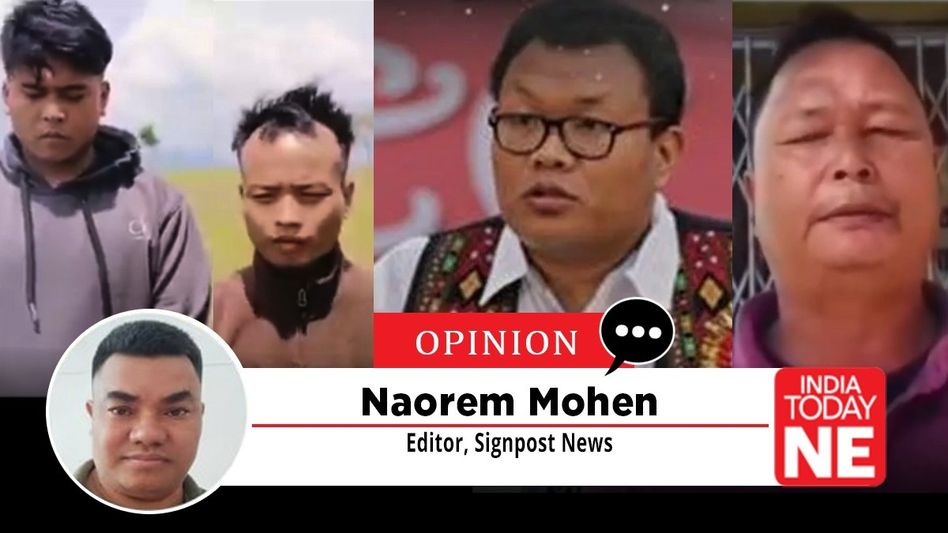
One of the earliest suppressions occurred in Pallel, a mixed-border town in Kakching district. On May 21, 2024, two Kuki youths told a Meitei journalist at Pallel Bazaar that Meiteis and Kukis coexisted peacefully, citing vehicle repairs at Meitei workshops and urging statewide harmony.
The next day, May 22, a viral video showed them brutally beaten by Kuki miscreants with death threats for promoting brotherhood. This assault, revealing private yearnings for peace silenced "at gunpoint" by CSOs and Kuki militants, set a deterrent pattern—persisting into 2025 with attacks on perceived deviants.
This brutal attack on two Kuki youths who were perceived as deviating from the hardline stance, is a part of a broader campaign involving threats, social boycotts, and physical intimidation, sends a clear message.
Any step toward bridge-building will be met with severe repercussions. Such violence not only traumatizes individuals but also deters others from speaking out, perpetuating a climate of fear within the community.
Many observers point to outright coercion as the driving force behind the shift, arguing that powerful hardline factions in Kuki-Zo leadership brook no dissent from their separatist agenda. This calculated use of threats and violence not only deeply traumatizes those directly affected but also instills widespread fear, effectively silencing potential voices of moderation and reconciliation within the community.
Similarly, BJP MLA Vungzagin Valte, a Paite leader from Thanlon constituency, exemplified the perils of advocating unity. After surviving a violent mob attack in 2023 and undergoing prolonged treatment, Valte initially made heartfelt appeals for a united Manipur, emphasizing good relations between Meiteis and Kuki-Zo without majority-minority divisions. His words offered a rare glimmer of hope in a divided state. Yet, within days, he retracted or aligned his statements with demands for autonomy, mirroring the agenda of Kuki militants under SoO pact.
Another instance involves a Kuki youth who, during a bandh called by foothills Naga groups amid tensions over land and security, gave an interview to Meitei media outlets. His comments, perhaps seeking dialogue or expressing frustration with the shutdown's impact, crossed unspoken boundaries. The next day, he was compelled to issue a clarification, effectively disavowing his earlier remarks. This pattern of forced reversals highlights how CSOs enforce narrative control, punishing perceived "betrayals" that could humanize cross-community interactions.
Perhaps, the most poignant is the plight of Kuki Internally Displaced Persons in Litan Sareikhong, Ukhrul district. Displaced by the violence and living in relief camps, some IDPs like Nehpu Khongsai has the courage to sought government assistance for basic needs and resettlement. MLA Yumnam Khemchand Singh's visit sparked hope when. in fluent Meiteilon, Khongsai pleaded, “We have been in the relief camp for almost three years now. We are suffering a lot and we would like to request the government to help us return to our original homes.”
However, Kuki CSOs swiftly condemned it as "unannounced" and "opportunistic." Camp representatives issued clarifications distancing themselves, framing the outreach as insensitive. Those IDPs who might have welcomed state help found themselves caught in the crossfire, forced to apologize or clarify lest they be labeled collaborators.
These incidents suggest there are likely more than thousand such suppressed or silenced voices within the Kuki-Zo community — ordinary citizens, youths, leaders, and displaced families yearning for normalcy but muzzled by fear of reprisal from their own CSOs and groups.
A more recent case exposes this ongoing intolerance. On December 14, 2025, during a crucial BJP legislature party meeting in Delhi — the first time Meitei and Kuki-Zo BJP MLAs sat together in over two years amid talks on peace and potential government formation — BJP MLA LM Khaute from Churachandpur was photographed sitting beside former Chief Minister N. Biren Singh.
This mere act of proximity sparked intense online trolling and backlash from hardline sections within the Kuki-Zo community, who viewed it as a compromise on their core demand for separate administration. Shortly afterward, at a public football match function, LM Khaute was compelled to issue a public statement clarifying his position: "Sitting with Biren doesn't mean that we have compromised our rights and our stand for Separate Administration." This forced confession highlights the unrelenting pressure on even elected representatives to toe the separatist line, lest they face ostracism or worse.
These cases form a broader intolerance. Kuki-Zo CSOs legitimately highlight grievances like land issues and perceived bias, but tactics—threats (including UKNA's capital punishment warnings to MLAs engaging the state), violence, forced retractions—prioritize division.
These cases are not isolated anomalies but symptoms of a deeper intolerance. Kuki-Zo CSOs, have been accused of prioritizing separatist demands over inclusive peace efforts.This systematic silencing has prolonged the suffering of thousands of IDPs and ordinary citizens who simply wish to return home, rebuild their lives, and heal both themselves and Manipur.
By punishing any outreach toward reconciliation or state assistance, these powerful CSOs and associated militant elements are denying justice to their own displaced and common people, trapping them in limbo for political gains.
Ironically, the very human rights advocates who vociferously champion the Kuki-Zo cause remain conspicuously silent on this internal oppression — a telling omission that suggests the fate of these displaced persons has already been scripted by the CSOs, condemning them to suffer in silence while the conflict drags on indefinitely.
From Pallel's beaten youths, coerced leaders, and muzzled IDPs like Nehpu Khongsai to resilient figures like Michael Lamjathang Thadou and martyr Nehkam Jomhao, over a thousand suppressed voices—families, youths, moderates—signal the hate agenda's doom. Their endurance, even unto death, affirms fragility of coercion. True peace requires inter-community dialogue and internal dissent freedom.
True peace in Manipur requires not just inter-community talks but also internal freedom to dissent and dream of unity. Until these silenced voices are heard and protected, the cycle of division will persist, to the detriment of all Manipuris. These thousand silenced voices will triumph, healing Manipur and proving hatred cannot quench humanity's light.
Let the people speak. Let the displaced return!
MORE NEWS


Copyright©2026 Living Media India Limited. For reprint rights: Syndications Today
