Manipur’s Orchids and the Promise of Manipur University Laboratory
At Manipur University’s Biotech Expo, Prof. Keithellakpam Sanatombi brought students, researchers and entrepreneurs together to show what biotechnology can offer the state, from conserving native orchids to finding new uses for a farmer’s harvest.

- Nov 26, 2026,
- Updated Nov 26, 2026, 3:37 PM IST

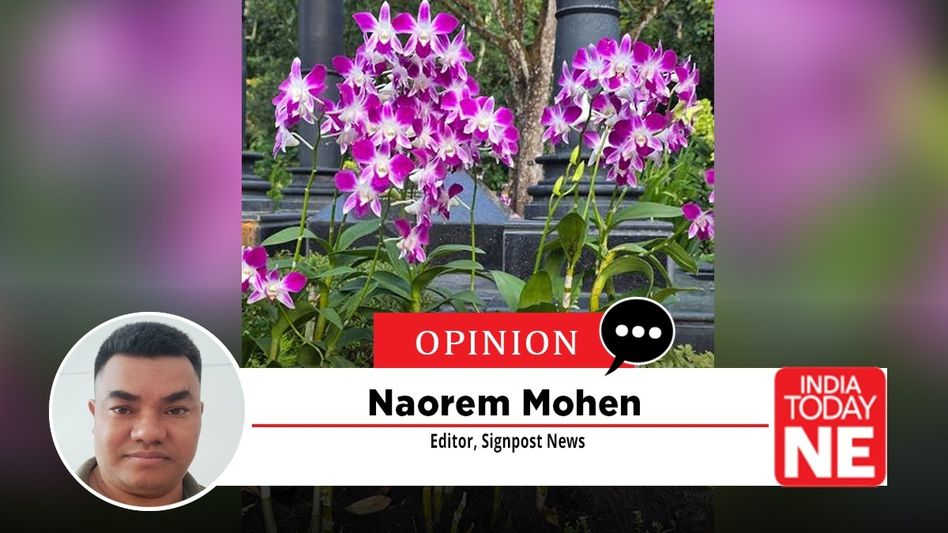
Of all the exhibits at Manipur University’s Biotech Expo on November 26, the indigenous orchids raised a question that stayed with me. If a flower that our elders remember seeing in the hills begins to disappear, who in Manipur knows how to help it grow again? At Canchipur, that question is already part of a researcher’s working day. Scientists are studying how to raise orchids from small pieces of plant tissue and how to tell whether the new plants retain the characteristics of the originals. For a state that takes such pride in its flora, this is work worth knowing about while the flowers are still with us.
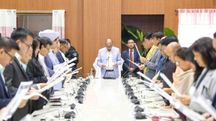
The person who brought that work into public view was Prof. Keithellakpam Sanatombi, Head of the Department of Biotechnology and the driving force behind the expo. Opening the two-day Biotech Confluence 2026, the department showcased 10 products, with six participating enterprises exhibiting alongside its research scholars and students. Prof. Sanatombi said the department had invited biotechnology startups so that visitors could interact with researchers and explore applications in agriculture, healthcare and environmental sustainability. Live demonstrations and laboratory tours opened the department’s doors to visitors, while three food stalls served local and regional dishes.
What I appreciate most about Prof. K Sanatombi’s leadership is the responsibility she gave her students. They ran exhibition stalls and explained their work to people who could ask questions in their own terms. A visitor concerned about a native orchid could ask how it might be conserved. A grower interested in mushrooms could ask what happens to a harvest when there are too few buyers for fresh produce. For a research scholar, hearing what matters to the person across the table is an education in itself.
Prof. K Sanatombi brings her own experience in plant biotechnology to that approach. She has co-authored research on regenerating plants from tissue taken from six chilli cultivars and on indigo production in tissue cultures of a dye plant. A chilli that a family grows in its kitchen garden or a plant valued for its colour can hold a research question worth pursuing. For students in Manipur deciding what to study, there is encouragement in seeing a scientist build a career by paying close attention to such plants.
The orchid display offered a closer look at the work of Dr Leimapokpam Tikendra Singh. His research includes developing tissue culture methods to propagate orchids and other medicinal plants. He studies how plant hormones influence growth and development. Once new plants have grown, another question follows. How faithfully have they retained the genetic characteristics of the parent plant? In published studies of Dendrobium orchids, Dr L. Tikendra and his colleagues have used DNA markers to check the genetic stability of laboratory-grown plants. The distinction matters when the purpose of growing more orchids is to conserve a particular variety at risk of being lost.
That work deserves a relationship with the communities who know these plants in the wild. A researcher may know how to raise a plantlet. Someone in a hill village may remember where the orchid flowered, in which season it appeared and when it became difficult to find. Bringing those people together would give the university a better understanding of which plants need attention. It would also give families who have watched a familiar flower grow scarce somewhere to take that concern. Alongside the work in the laboratory, protecting the places where these plants grow must remain part of Manipur’s conservation effort.
The other exhibits brought equally recognisable questions into the room. The Green Foundation featured the locally familiar kanglayen among its edible mushrooms and showed how agricultural materials such as paddy straw can be put to use in cultivation. Its display also covered dried mushrooms, pickles, powders and noodles.
For a grower trying to sell a perishable crop, the ability to process part of a harvest could make a difference to how much of it earns an income. Yawol Agro Private Limited, based at Wangkhei Thangjam Leikai in Imphal East, presented locally grown microgreens, including radish, beetroot, sunflower and fenugreek.
At Chankorb Private Limited’s exhibit, banana cultivation met one of Manipur’s oldest skills. The enterprise uses fibre recovered from banana waste to make textiles and handicrafts. A banana grower and a handloom weaver might reasonably ask different questions of the same product. Is the material left after harvest worth collecting? How well does the fibre work on a loom? Can the price of the finished article reward both people for their labour? Those questions deserve as much attention as the ingenuity of making the fibre itself.
BioCircular Innovations presented HydroKera, a feather meal developed from poultry feathers for use in animal feed and agriculture. LABDIG brought the Moboscope, a smartphone-based microscope. I would like to see the latter demonstrated in a school, where a teacher could put a specimen under the lens and let children examine the image together. Their questions, and the teacher’s experience of using it during an ordinary lesson, could tell the makers a great deal about what the instrument needs to do.
Speaking as Chief Guest at the inaugural programme, Vice-Chancellor Prof. R. K. Hemakumar Singh said the expo gave students and aspiring entrepreneurs a platform to share ideas and demonstrate their use of new techniques. He said such opportunities could help students develop their ideas and explore entrepreneurship.
Prof. N. Mohilal Meitei, Dean of the School of Life Sciences and a Guest of Honour, described the expo as timely because it brought laboratory research into public view. Citing mushroom cultivation as an example, he said biotechnology could address everyday needs and encouraged participants to take promising ideas forward through startups and relevant programmes.
What gives me hope for Manipur is that a young person can come to Canchipur with a question rooted in this land and find people equipped to help answer it. The question may begin with an unsold basket of mushrooms, fibre left after a banana harvest or an orchid an elder remembers by its local name.
Of all the outcomes we might wish for this department, one seems especially worth working towards. Years from now, an elder who once had to describe that orchid from memory might be able to take a grandchild to see it in flower.
***