A single number for safer lives: Why Assam's 24x7 emergency response framework matters
The Emergency Response Support System (ERSS), of which 112 is the national emergency number, was conceived precisely with this objective. Assam's decision to invest substantially in expanding and modernising this framework suggests a recognition that emergency response is not merely a law-and-order issue but a core public service.

- Jul 07, 2026,
- Updated Jul 07, 2026, 2:34 PM IST

In an emergency, every second counts. Whether it is a road accident on a national highway, a woman facing harassment late at night, a child trapped in a flood, an elderly person suffering a heart attack, or a fire breaking out in a crowded neighbourhood, the first few minutes often determine whether lives are saved or lost. Yet, for decades, India's emergency response system has been fragmented, requiring citizens to remember multiple numbers for different services. Assam's recent Cabinet decision to establish a 24x7 Emergency Response Framework by strengthening the 112 emergency helpline, backed by an investment of Rs 100 crore, is therefore far more than an administrative reform. It represents a significant step towards building a responsive, technology-driven and citizen-centric governance system.
The need for such a framework has never been greater. Assam today is experiencing rapid urbanisation, expanding road networks, growing industrial activity and increasing digital connectivity. While these developments have accelerated economic growth, they have also introduced new risks. Road accidents have become more frequent, cyber-enabled crimes have increased, and climate-induced disasters such as floods and landslides continue to threaten lives and infrastructure every year. Emergency situations are becoming more complex, demanding faster coordination among police, fire services, ambulance networks and disaster management authorities.
Traditionally, emergency response in many parts of India has suffered from institutional silos. Police, medical services and fire departments have often operated independently, leading to duplication of effort, communication delays and confusion among citizens. Many people are still unaware of the appropriate emergency numbers or hesitate to seek help because they do not know which agency to contact first. A unified emergency number addresses this challenge by placing the responsibility of coordination on the State rather than on citizens in distress.
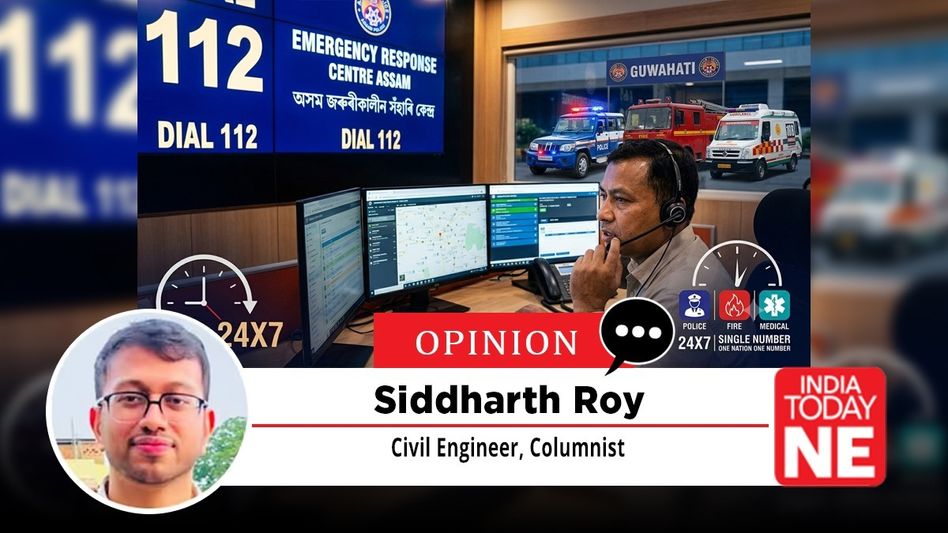
The Emergency Response Support System (ERSS), of which 112 is the national emergency number, was conceived precisely with this objective. Assam's decision to invest substantially in expanding and modernising this framework suggests a recognition that emergency response is not merely a law-and-order issue but a core public service. A well-equipped command-and-control centre operating round the clock can receive distress calls, determine the nature of the emergency and simultaneously dispatch police personnel, ambulances, firefighters or disaster response teams. Such integration reduces response time and improves the chances of saving lives.
For Assam, the initiative has particular relevance because of its unique geography. Large parts of the State remain vulnerable to annual flooding, erosion and landslides. During the monsoon, villages can become inaccessible within hours, while communication networks are often disrupted. In such situations, a centralised emergency platform capable of coordinating multiple agencies becomes indispensable. Instead of scattered information flowing through different administrative channels, authorities can obtain a unified operational picture and allocate resources more efficiently.
The framework can also strengthen women's safety. Across India, women increasingly rely on emergency helplines during situations involving harassment, domestic violence or stalking. If integrated with GPS-enabled mobile applications, real-time location tracking and rapid police deployment, the 112 system can significantly reduce response times. Confidence in public safety improves when citizens know that help is available at any hour through a single accessible number.
Equally important is the potential to support vulnerable populations, including senior citizens, persons with disabilities and those living alone. Medical emergencies often require immediate intervention, and delays can prove fatal. A modern emergency response framework capable of identifying caller location, coordinating with nearby hospitals and dispatching ambulances can substantially improve survival rates in cases such as cardiac arrests, strokes or severe trauma.
The investment also aligns with India's broader vision of digital governance. Artificial intelligence-assisted call management, multilingual support, geospatial mapping, computer-aided dispatch systems and integrated databases can transform emergency services from reactive institutions into predictive and preventive ones. Data generated through the system can reveal accident-prone zones, crime hotspots and disaster vulnerabilities, enabling authorities to take preventive measures instead of merely responding after crises occur.
However, infrastructure alone cannot guarantee success. Many emergency response systems worldwide have struggled because of inadequate staffing, poor training or technological breakdowns. Assam's Rs 100 crore allocation should therefore prioritise not only hardware and software but also skilled human resources. Call handlers must be professionally trained to remain calm under pressure, assess emergencies accurately and communicate compassionately with distressed callers. Field personnel, too, require continuous training in coordinated response protocols.
Public awareness will be another determining factor. Even the most sophisticated emergency system remains underutilised if citizens are unaware of its existence or uncertain about when to use it. Schools, colleges, workplaces and community organisations should be encouraged to conduct awareness campaigns explaining the purpose of 112, its responsible use, and the consequences of false alarms. Public trust grows when citizens see that emergency services are reliable, prompt and professional.
There is also a need to ensure interoperability across districts. Assam's diverse terrain means that response capabilities vary considerably between urban centres and remote rural areas. The Emergency Response Framework should therefore avoid creating islands of excellence limited to major cities. Rural police stations, primary health centres, district hospitals and local disaster response units must all become integral parts of the same network. Equity in emergency response is as important as efficiency.
Cybersecurity deserves equal attention. As emergency systems become increasingly digital, protecting them from cyberattacks, data breaches and service disruptions becomes critical. A compromised emergency network during a disaster could have catastrophic consequences. Robust cybersecurity architecture, regular audits and backup communication systems should therefore be embedded into the framework from the outset.
Ultimately, Assam's decision reflects an evolving understanding of governance in the twenty-first century. Citizens increasingly judge governments not merely by policy announcements but by their ability to respond swiftly during moments of personal crisis. Roads, hospitals and schools remain essential public investments, but so too are systems that ensure help arrives when it is needed most.
The true measure of this initiative will not lie in the amount allocated but in the number of lives saved, tragedies prevented and confidence restored. If implemented with professionalism, technological foresight and sustained public engagement, Assam's 24x7 Emergency Response Framework could become a model for other States. In emergencies, a single phone call should never be the beginning of uncertainty. It should be the assurance that the State is already on its way.