CBSE’s Three-Language Policy is India’s Civilisational Wake-Up Call
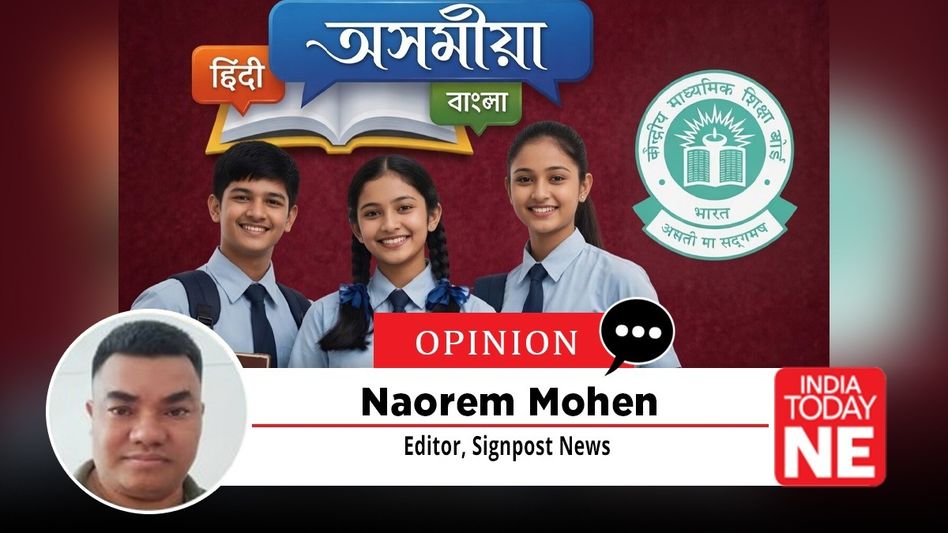
The Central Board of Secondary Education’s circular issued on May 15 has finally drawn a firm, unapologetic line in the sand. From July 1, 2026, every Class IX student under the CBSE system will study three languages — R1, R2, and R3 — with at least two of them being native Indian languages. This is not a routine policy adjustment or bureaucratic formality.

- May 17, 2026,
- Updated May 17, 2026, 2:12 PM IST

The Central Board of Secondary Education’s circular issued on May 15 has finally drawn a firm, unapologetic line in the sand. From July 1, 2026, every Class IX student under the CBSE system will study three languages — R1, R2, and R3 — with at least two of them being native Indian languages. This is not a routine policy adjustment or bureaucratic formality.
This is a profound civilisational reset. A long-delayed assertion of cultural self-respect and intellectual sovereignty after decades of quiet linguistic colonisation that persisted even long after we gained political independence in 1947.
As someone who grew up surrounded by the melodic rhythms of Meiteilon at home, the rich oral traditions of Tangkhul and Thadou among friends, and the practical necessity of English in classrooms, I feel this moment in my bones.
For too long, we Indians, particularly in the Northeast and other diverse regions, have been subtly conditioned to believe that our own languages are somehow “lesser,” “regional,” or insufficient for success in the modern world.
Nowhere is the extraordinary beauty, complexity, and living power of India’s linguistic diversity more vibrantly alive than in my home state of Manipur. Our state is a true linguistic treasure house, blessed with dozens of native languages and dialects — Meiteilon, Tangkhul, Rongmei, Anal, Paite, Thadou, Poumai, Kom, Vaiphei, Hmar, and many more. Each language is not just a tool for communication but a complete universe — carrying unique literature (both oral and written), folklore, music, ecological wisdom, historical memory, and distinct ways of understanding life, community, and the natural world.
Far from treating this diversity as a problem to be managed or homogenised, Manipur has chosen the path of celebration and integration.
In a landmark initiative in December 2022, former Chief Minister N. Biren Singh launched the visionary “Two Months Local Language Training Programme” under the Department of Language Planning & Implementation. This programme focused on seven major languages of the state: Meiteilon, Tangkhul, Poumai, Rongmei, Anal, Paite, and Thadou.
The goal went far beyond language learning, it was deliberately designed to foster mutual understanding, reduce mistrust, and strengthen communal harmony by encouraging people from different communities to learn and appreciate one another’s tongues.
Even more significant was the government’s bold policy announcement: individuals who demonstrate proficiency in multiple local languages would receive priority in state government job recruitment. This was genuine, forward-looking statesmanship. It recognised that in a plural society like ours, effective governance, sensitive administration, and lasting social cohesion depend heavily on linguistic competence and cultural empathy.
CBSE’s three-language policy now arrives as a perfect national partner to Manipur’s pioneering efforts. Students across the state can proudly select two or even all three languages from this incredibly rich local ecosystem — combining, for example, Meiteilon and Tangkhul with Hindi or English.
Instead of imposing artificial uniformity, the policy creates authentic space for genuine multilingual excellence in one of India’s most linguistically vibrant corners. Manipur is not a difficult exception that needs special handling. It is a shining model that the rest of the country can study, admire, and emulate. The beautiful synergy between Manipur’s proactive state-level initiatives and CBSE’s national framework gives me tremendous hope and pride as a Manipuri.
For more than several decades, English was aggressively promoted as the only genuine ladder to opportunity, prestige, and global mobility. Foreign languages like French and German were marketed as ultimate status symbols. Our mother tongues were politely tolerated as emotional or cultural hobbies at best.
The CBSE’s three-language policy finally declares with courage and clarity: enough is enough. It is time we stopped apologising for our own linguistic heritage. It is time Indian children stood firmly on their own cultural and intellectual feet. This is not mere education reform. This is India’s much-needed civilisational wake-up call — a call to reclaim our minds, our voices, and our future.
This bold initiative flows directly from the transformative vision of the National Education Policy (NEP) 2020 and the National Curriculum Framework for School Education (NCF-SE) 2023. It is not driven by narrow chauvinism or political rhetoric.
Instead, it emerges from a mature, clear-eyed recognition of what a rising global India truly requires in the 21st century: citizens who are deeply rooted in their heritage, cognitively empowered through multilingual excellence, culturally confident, emotionally secure, and fully equipped to engage the world on equal terms — without feeling alienated from their own soil and civilisational memory.
For generations, we have unconsciously committed a serious cognitive betrayal against our own children. Decades of research in neuroscience, psycholinguistics, cognitive psychology, and educational science have established beyond any reasonable doubt that sustained, high-quality multilingual education — especially when it begins with the mother tongue and includes other Indian languages — fundamentally reshapes and strengthens the developing brain in powerful ways.
It enhances executive function, dramatically improves working memory, boosts creative problem-solving abilities, heightens metalinguistic awareness, and even cultivates greater emotional intelligence and cross-cultural empathy. Children who regularly navigate multiple linguistic systems learn early that the same reality can be perceived, described, and understood through different cultural and philosophical lenses. This mental flexibility becomes a lifelong asset.
In the Indian context, this advantage multiplies exponentially. A young learner in Tamil Nadu who deeply engages with Tamil literature and philosophy alongside Hindi and English doesn’t merely collect vocabulary — she inherits multiple civilisational perspectives. The same holds true for a child in Punjab, Odisha, Kerala, or the Northeast.
However, for far too long, many elite urban schools and a significant section of the aspiring middle class pushed narrow English-dominant or English-plus-one-European-language models, under the mistaken belief that this was the fastest route to success. The result has been heartbreakingly visible: academically bright young Indians who excel in global standardised tests but often struggle to articulate deep thoughts, emotions, or cultural nuances in their own mother tongue.
We have been running a self-defeating national experiment — prioritising colonial-era convenience and superficial global signalling over genuine neurological development and cultural depth.
The CBSE three-language policy is a decisive correction of this historic injustice. It finally gives our children what they have always been biologically, culturally, and intellectually entitled to.
Let us have the courage to speak plainly and honestly. The long-standing supremacy of English and European languages in many of our educational institutions was never purely about practical “global opportunities.” It was the enduring shadow of colonial rule — a subtle yet powerful form of linguistic and mental slavery that outlived the departure of the British flag from our land.
We internalised the colonial gaze so completely that we began devaluing our own tongues, labelling them dismissively as “vernacular” or “regional” while elevating French, German, or Spanish as symbols of refinement and sophistication.
How many of our brightest students can engage with the same ease and depth with the profound poetry of Hijam Anganghal, the wisdom traditions of our Northeast folktales, the verses of Thiruvalluvar, or the dohas of Kabir as they do with Shakespeare or Western philosophers?
This widespread cultural and linguistic disconnect is not a sign of progress. It is a form of civilisational self-forgetting. The CBSE three-language policy marks a mature, dignified, and decisive break from this lingering colonial hangover. Importantly, it does not ban or eliminate foreign languages. They remain welcome and valuable — they can be studied as the third language (when two Indian languages are secured) or pursued with passion as an optional fourth language.
The old unjust hierarchy is being corrected with wisdom and balance, not replaced by any new form of extremism. This approach reflects the true maturity of a great civilisation that is finally learning to trust, honour, and celebrate itself.
Meanwhile, in culturally unique regions like Puducherry, where French has been deeply woven into the social fabric, daily life, architecture, and collective memory since French colonial rule ended in 1954, the policy understandably evokes strong emotions. For many families, French is not merely a foreign language — it is heritage, identity, continuity, and a living bridge to the wider Francophone world.
The policy must, and does, respect such genuine historical realities. French can continue meaningfully as R3 when paired with two Indian languages, or flourish as a strong fourth language for students who wish to maintain deep proficiency.
CBSE’s commitment to case-by-case relaxations and flexible implementation demonstrates maturity. With empathy, dialogue, and creative local adaptations, even Puducherry can transform this transition into an opportunity for richer, more layered multilingualism — producing young citizens who are proud Indians and confident global citizens at the same time.
Of course, there will be practical challenges, shortages of qualified teachers in certain languages, the need for new textbooks, and temporary adjustments in urban schools that have invested heavily in foreign language programmes. These difficulties are real and must be acknowledged honestly.
However, they cannot be allowed to become permanent excuses for maintaining the status quo.CBSE has already outlined several practical pathways: inter-school teacher sharing, virtual and hybrid teaching platforms, engagement of retired educators and qualified postgraduates, and the transitional use of Class VI textbooks generously supplemented by rich local and regional literature.
In Manipur and other Northeastern states, we already possess valuable experience and infrastructure from existing language programmes. We can lead by example. Schools have a clear deadline of June 30, 2026, to update their offerings on the OASIS portal. These are serious, actionable steps.
After seventy-five years of living with a distorted linguistic order inherited from the past, we can certainly commit a few years of sincere, determined effort to build something far better for our children. The temporary discomfort of transition pales in comparison to the generational benefits of cultural rootedness and cognitive empowerment.
Further proof of the policy’s thoughtful design lies in its well-considered exemptions. Children with Special Needs will continue to receive appropriate relaxations under the Rights of Persons with Disabilities Act, 2016. CBSE schools located outside India (including in the UAE and Gulf countries) and students returning from overseas are eligible for case-by-case considerations. This is not ideological rigidity. It is compassionate, inclusive, and realistic policymaking.
At its deepest level, this is not merely an academic or administrative debate. It is a profound civilisational question: What kind of India do we wish to build? A nation that systematically undervalues its own languages risks slowly eroding its soul.
When our children grow up disconnected from their linguistic and cultural roots, they may become successful professionals on the global stage but often remain emotional and cultural orphans, technically competent yet spiritually adrift from their own civilisational heritage.
The three-language policy, when combined with inspiring state-level initiatives like those in Manipur, promises to nurture a generation that is linguistically empowered, culturally confident, professionally unstoppable, and emotionally secure.
In every sphere, governance, healthcare, justice, trade, tourism, digital content, diplomacy, and everyday social harmony, Indians fluent in multiple Indian languages will carry unmatched advantages. This is not sentimental nostalgia. This is hard civilisational strategy for a confident 21st-century India.
I see this policy as powerful validation of everything our communities have worked hard to preserve — our languages, our identities, our unique ways of knowing and relating to the world. This is our collective moment. Let us not meet it with fear or resistance born of old habits. Let us embrace it with creativity, pride, and determination.
Parents, teachers, school leaders, and administrators — the time has come to shift from worry to active partnership. Let us innovate, adapt, and build excellent multilingual ecosystems in our schools. States like Manipur have already shown leadership. Let the entire nation now walk this path together.
No More Linguistic Slavery. The Central Board of Secondary Education has taken a bold, necessary, and historically significant step. The three-language policy is India’s civilisational wake-up call. It is now up to all of us — as parents, educators, policymakers, and citizens — to answer this call with courage, sincerity, creativity, love for our languages, and immense pride in our incredible diversity.
This is not cultural chauvinism; it is cultural confidence. It does not reject the world but asks India to meet the world as equals — proud of our languages, literatures, and worldviews.
When our children stand equipped with the treasures of Indian linguistic traditions alongside global tongues, they will not feel culturally adrift. They will feel whole. They will become the bridge-builders, innovators, and leaders a 21st-century civilisational state deserves.
CBSE’s three-language policy, with all its safeguards, flexibilities, and forward momentum, merits enthusiastic national support. Parents, educators, administrators, and policymakers must now partner in its success.
The rewards — sharper minds, stronger identities, richer futures, and a more cohesive yet plural India — far outweigh the transitional costs.