Congratulations Bubagra, You Have Shown Regional Party Can Serve the People
Congratulations Bubagra Pradyot Bikram Manikya DebBarma! By building TIPRA Motha from a social platform during the COVID-19 crisis into a formidable regional force, you have powerfully demonstrated that a rooted regional party can truly serve the people — especially the indigenous Tiprasa and other tribal communities of Tripura who have long yearned for genuine representation.

- Apr 18, 2026,
- Updated Apr 18, 2026, 1:06 PM IST

Congratulations Bubagra Pradyot Bikram Manikya DebBarma! By building TIPRA Motha from a social platform during the COVID-19 crisis into a formidable regional force, you have powerfully demonstrated that a rooted regional party can truly serve the people — especially the indigenous Tiprasa and other tribal communities of Tripura who have long yearned for genuine representation.
In 2021, when Bubagra Pradyot Bikram Manikya DebBarma, the royal scion-turned-political leader has built TIPRA Motha (Tipraha Indigenous Progressive Regional Alliance), it was not merely a political party. But it was a movement rooted in the struggles, aspirations, and unyielding spirit of the Tiprasa and other indigenous communities.
As a journalist who has observed the shifting political landscape of Northeast India from National parties to regional ones in the last few years, I pose this straight question to Bubagra: What is the true measure of your party’s success? Is it the seats won, the alliances forged, or something deeper — the rekindling of hope among the indigenous inhabitants of Tripura who have long felt their land, language, culture, and identity slipping away?
Let the whole indigenous community — Ahom, Kachari, Meitei, Reang, Jamatia, Khasi, Bodo and other tribes — hear it directly from you. The success of TIPRA Motha cannot be understood without going back to the ground level, where the party’s roots run deep into the red soil of tribal villages, remote hamlets, and the collective memory of marginalization.
For decades, indigenous communities in Tripura have grappled with demographic changes that altered the social fabric, land alienation that threatened their very sustenance, cultural erosion that diluted their rich heritage, and economic backwardness that pushed many youth toward despair or migration.
Earlier regional voices raised concerns, but often got lost in the maze of national party compromises or internal divisions. At that high political vaccum, Pradyot left the Indian National Congress and his newly formed TIPRA Motha emerged differently.
Born as a social platform during the COVID-19 crisis when Pradyot Bikram Manikya actively helped stranded students and workers return home, it quickly evolved into a political force centered on Thansa — the Kokborok word for unity.
The party’s message was simple yet powerful.The Tiprasa people deserve dignity, constitutional safeguards, secure land rights, recognition of their language Kokborok (including the long-pending demand for Roman script), preservation of culture, and genuine socio-economic development in their ancestral homeland.
The first resounding validation came in the 2021 Tripura Tribal Areas Autonomous District Council (TTAADC) elections. Contesting as TIPRA Motha in alliance with the Indigenous Nationalist Party of Tripura (INPT), the party secured a historic majority by winning 18 seats out of the 28 elected seats (TIPRA Motha itself won 16 seats, with INPT taking 2).
This was a landmark shift — the TIPRA-led alliance captured control of the council, while the BJP-led front managed only 9 seats and the Left Front was completely wiped out with zero seats. This victory marked the end of long-standing dominance by established fronts and was no elite-driven triumph engineered from air-conditioned offices in Agartala.
It was powered by tireless grassroots mobilization — party workers walking miles through hilly terrains, holding village meetings under flickering lanterns, listening to the grievances of farmers worried about insecure jhum lands, mothers concerned about their children’s future, and elders anxious about the survival of Tripuri traditions.
This ground-level connect paid richer dividends in the 2023 Tripura Assembly elections. A relatively new regional party, TIPRA Motha won 13 seats and emerged as the principal opposition in the 60-member House. It disrupted the bipolar politics dominated by the BJP-CPI(M) rivalry and thrust indigenous issues — land, language, identity, and Greater Tipraland aspirations — into the national spotlight.
The subsequent Tiprasa Accord signed in March 2024 with the Tripura government and the Centre was a direct outcome of this sustained pressure. The tripartite agreement aimed at addressing core demands related to identity, culture, language, political empowerment, and economic upliftment of indigenous people.
Yet, success is not without its tests. Implementation of the Tiprasa Accord has faced delays, leading to public expressions of impatience from the party. Pradyot has repeatedly met Chief Minister Dr. Manik Saha and highlighted the need for swift action. Critics point to slow progress, while the party maintains that constant dialogue is underway. In politics, especially in a sensitive region like Tripura, such accords test not just governments but also the credibility of movements.
The indigenous community watches closely: will promises translate into tangible change on the ground — secure land titles, better educational opportunities, employment avenues within the state, and protection against further alienation?
The latest chapter unfolded dramatically in the April 2026 TTAADC elections. TIPRA Motha delivered a spectacular performance, winning 24 out of 28 seats — a near-clean sweep that improved dramatically on its 2021 tally of 18 seats. The BJP was reduced to just 4 seats, while Congress, CPI(M), and other parties drew a blank.
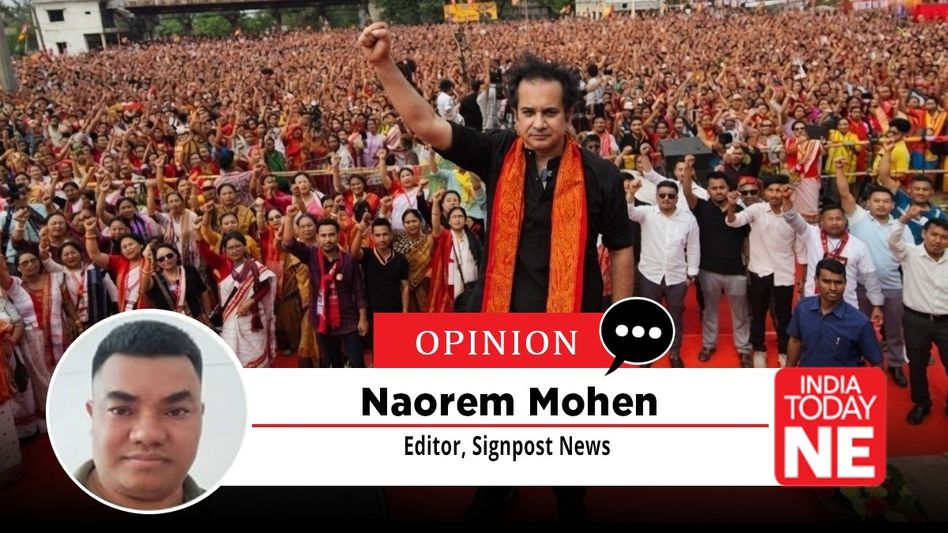
Pradyot Bikram Manikya described the result not as his personal triumph but as a “mandate from the people” — a clear endorsement of indigenous unity (Thansa) and the party’s commitment to the next generation. Winning candidates spoke of it as a victory of “Jaati Power” over money and muscle, reaffirming the party’s focus on roots rather than short-term power-sharing.
This repeated success in the tribal council — which governs a significant portion of Tripura’s indigenous population — underscores the depth of TIPRA Motha’s penetration at the grassroots.
The party has consistently prioritized issues that matter in everyday tribal life, focussing on core issues like Land rights and protection: Fighting against illegal occupation or conversion of ADC lands, as seen in Pradyot’s recent moves to legally challenge attempts to turn council areas into nagar panchayats.
Language and culture: Bold advocacy for Roman script in Kokborok and preservation of temples, rituals, and traditions that define Tiprasa identity.
Youth empowerment: Addressing unemployment and educational gaps so that indigenous boys and girls do not have to leave their hills in search of dignity.
Inter-tribal unity: Bridging the 19 indigenous groups under one platform while appealing for harmonious coexistence with all communities in Tripura.
This focus on roots sets TIPRA Motha apart. Unlike many parties that parachute leaders during elections, Motha’s workers are often local sons and daughters of the soil. Torch rallies, village-to-village campaigns, and direct conversations have built an emotional bond.
Even when the party joined the BJP-led government in 2024, with two ministers inducted, it maintained a distinct voice on indigenous issues rather than dissolving into coalition compromises.
Bubagra’s own journey adds to the narrative. A former Congress leader who resigned over disagreements on key issues, he chose the harder path of building an indigenous-centric platform. He left relative comfort to embrace the struggles — facing criticism, internal challenges, and the rough-and-tumble of regional politics.
Supporters see him not just as a politician but as a symbol of hope and self-respect. The title “Bubagra” is not merely hereditary; it is earned through the trust reposed by ordinary villagers who see in him a leader willing to stand with them.
However, true and lasting success remains a work in progress. The indigenous community has endured enough broken promises over decades. Poverty persists in many pockets, land disputes continue, cultural dilution remains a concern, and youth unemployment drives migration.
The party must now convert electoral mandates into on-ground transformation. How will the Tiprasa Accord be implemented in letter and spirit? How will village council elections (long overdue and now slated for June 2026) strengthen grassroots democracy? How will TIPRA Motha ensure that “Tiprasa rule” in ADC areas translates into better roads, schools, healthcare, and economic opportunities without alienating other communities?
I have seen movements rise and fade when they lose touch with their base. TIPRA Motha’s strength lies in its refusal to do so. Its repeated victories — from the breakthrough 18 seats in 2021, to 13 seats in the 2023 Assembly polls, to the sweeping 24 seats in the 2026 TTAADC — reflect the resilience of a community that refuses to be sidelined in its own land.
The struggles have been real, years of feeling outnumbered, culturally threatened, and politically underrepresented. The party has given voice to that pain and channeled it into organized, democratic assertion.
Bubagra, the indigenous people — especially the new generation born in an era of rapid change — look to you for clarity. What is the next chapter? How will the ground-level sacrifices of countless party workers and supporters translate into secure futures?
How will Thansa evolve from a slogan into an unbreakable bond that brings prosperity while preserving identity? Let the whole community know your unfiltered vision.The roots of TIPRA Motha are strong because they draw from the lived struggles of the Tiprasa.
The success so far is visible in awakened consciousness, disrupted status quo, and repeated mandates.
But the ultimate test lies ahead in delivering tangible change that makes every indigenous family in Tripura feel truly at home — secure, respected, and hopeful.