Divine Panthou’s Call to Protect the Yanggoi Sagol, Manipur’s Living Heritage
The indigenous sagol's place in faith, culture and sporting history carries a responsibility: to ensure that future generations inherit more than its memory.
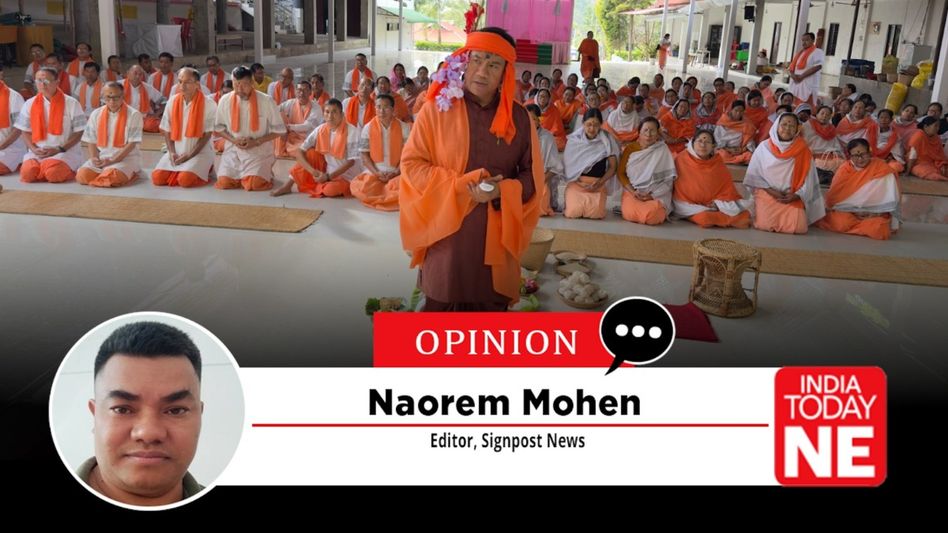

- Nov 08, 2026,
- Updated Nov 08, 2026, 11:12 AM IST

- Meitei traditions regard the pony as Ibudhou Marjing’s sacred mount
- Family affection frames conservation as an intimate shared community responsibility
- Children are encouraged to learn the animal’s religious and cultural significance
The care with which we protect our children, our families and our homes must also shape our responsibility towards the living heritage of our land. This is the deeply personal appeal at the heart of Divine Panthou’s teaching on the Yanggoi Sagol, the indigenous pony of Manipur.
An animal woven into the community’s religious traditions, cultural memory and sporting history deserves more than admiration for what it represents. Its continued presence among us must matter enough to inspire care, protection and a willingness to take responsibility for its future.
Divine Panthou places this duty within a wider understanding of human existence as part of divine creation. We inhabit a world that we did not create alone, yet our choices help determine what survives within it.
As society advances, the present generation must consider what kind of inheritance it is preparing for those who will follow. Progress carries an obligation to recognise what is precious, nurture what remains and ensure that the pursuit of a better life does not leave our children separated from the living world that shaped their identity.
The Yanggoi Sagol gives this responsibility a familiar and meaningful form. In Divine Panthou’s teaching, its relationship with the Meitei people extends through accounts of creation, religious traditions and Sagol Kangjei, Manipur’s traditional form of polo.
He describes the pony as bearing a divine form and associates it with Ibudhou Marjing as his sacred mount. Within this understanding, the animal occupies a place of reverence, but that reverence also makes a demand upon those who profess it. The sacred relationship must find expression in the treatment of the living animal, through the attention and care necessary for it to survive.
Recalling Manipur’s recognition as the birthplace of modern polo, Divine Panthou also draws attention to the pony’s role in carrying the identity of the land beyond its borders. Through Sagol Kangjei and its association with polo, a tradition rooted in Manipur has acquired recognition far beyond the state. That recognition should deepen our sense of responsibility at home. When we take pride in this sporting inheritance, we must also ask how that pride benefits the animal that helped make it possible. Celebrating the history brings with it a duty to protect the life connected with that history.
Perhaps the most moving part of his appeal is the way he brings this duty into the ordinary language of family affection. We cannot bear the thought of losing a child or a grandchild, and we work to safeguard our homes and the land upon which our families depend. Divine Panthou asks us to extend that concern towards the Yanggoi Sagol. By placing its protection alongside the things we instinctively cherish, he makes conservation a personal responsibility. The pony should matter to us as a living presence entrusted to our care, with a future that depends in part upon the choices we make today.
That future belongs to children who may come to understand their heritage through what they encounter around them. The present generation will not remain forever, but it can help ensure that those who follow have the opportunity to know the Yanggoi Sagol and develop affection for it.
Preserving the animal and explaining its significance are closely connected duties. Children need opportunities to discover why it holds a place in their community’s faith, stories and cultural life. Such familiarity can give inherited pride a deeper foundation and encourage the patience and concern upon which lasting protection depends.
It was with this intention that Divine Panthou presented a jagoi performance titled Yanggoi Sagol Saklon Sayon, personally demonstrating its movements. He explained that bringing this expression before the people was intended to awaken affection for the pony, particularly among younger generations.
Cultural expression becomes, in this context, a way of making the relationship visible and memorable. A movement, a performance or a story can invite children into an inheritance whose meaning might otherwise remain distant. The affection it awakens can become the beginning of a more sustained interest in the animal itself.
His wider teaching connects this concern with the traditional skills and local produce that sustain community life. References to woven fabrics, phanek, innaphi, white pheijom and locally produced food draw attention to the people whose work allows cultural practices to continue.
Heritage survives through everyday participation: through what families wear, what communities grow, what artisans make and what children learn to value. Supporting these practices can strengthen both cultural continuity and local livelihoods, giving the next generation reasons and opportunities to carry them forward.
Divine Panthou’s teaching leaves us with a question that extends beyond the pony: what will our children actually inherit from the things we claim to cherish? The answer will depend upon the care we are prepared to give them while they are still part of our lives.
For the Yanggoi Sagol, that means allowing religious reverence, cultural pride and family affection to become a continuing responsibility.
Our children and grandchildren should have the opportunity to know this animal for themselves, to understand its place in Manipur and, in time, to become responsible for its future.