Excluded by Marriage, Erased by Birth: Assam NRC’s War on Women and Children
The Assam National Register of Citizens was meant to be a clean exercise to identify genuine Indian citizens and detect those who came illegally after March 24, 1971. In reality, it turned into a long, painful process that left nearly 19 lakh people excluded.

- May 02, 2026,
- Updated May 02, 2026, 5:06 PM IST

The Assam National Register of Citizens was meant to be a clean exercise to identify genuine Indian citizens and detect those who came illegally after March 24, 1971. In reality, it turned into a long, painful process that left nearly 19 lakh people excluded.
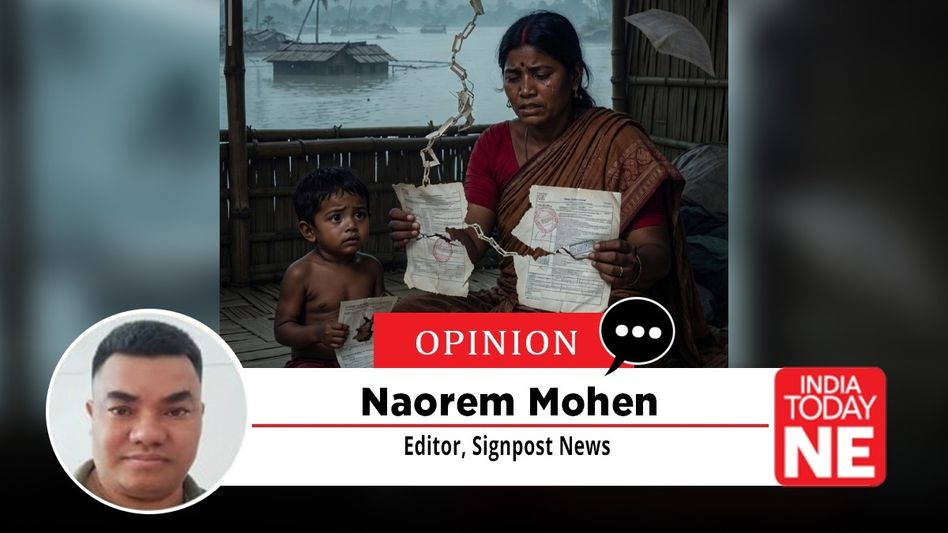
Many of them were not foreigners. They were excluded because of missing papers, minor mismatches, or documents that the system suddenly declared unreliable.
Among all the affected groups, women and children suffered the most. This is not just my observation — it is a clear pattern that repeated across districts, communities, and families.
Every applicant had to submit two things:
Legacy (List A): Proof that they or their ancestor lived in Assam before midnight of 24 March 1971.
Linkage (List B): Documents showing their relationship to that legacy person.
On paper, this looks reasonable. In the flood-prone, rural, low-documentation reality of Assam, it became a nightmare. Old records were lost to floods, names had spelling variations in Bengali/Assamese/English, and many genuine citizens had never possessed birth certificates or consistent paperwork.
The strict verification rules and Supreme Court deadlines made the process unforgiving. Minor errors that any reasonable person would overlook became grounds for rejection.
Gaon Panchayat Certificates: The Biggest Enemy of Married Women
The single largest cause of exclusion for women was the Gaon Panchayat (GP) Secretary Certificate. Rural and poor married women relied on it heavily for linkage because after marriage they often had no independent records in their husband’s village. Their name had changed, they had moved, and pre-marriage documents were either unavailable or not collected.
Authorities and courts later started treating these GP certificates as “private” documents with low reliability. Many were rejected during verification. Several studies and ground reports showed that GP certificates were the top reason in 60–80% of excluded women in several pockets, sometimes accounting for nearly 79% of adult female exclusions.
Husband Included, Wife Excluded
This scenario became extremely common, even among indigenous Assamese families. Take a typical case, Both husband and wife belong to the same indigenous community, Koch-Rajbongshi or Kalita living in a rural village. The husband’s family has been there for generations. His legacy documents are accepted.
The wife married into the village around 2000. She submits a GP certificate from the husband’s village linking to her parents. It gets rejected as unverifiable or private. Her maiden name and married name create mismatch. There is often no registered marriage certificate. Parental records from her original village are weak or lost.
Result: Husband included, wife excluded. Children sometimes get linked only through the father, creating broken families on paper.
Even families with “Original Inhabitant” status saw wives facing extra scrutiny. Patriarchal documentation systems kept most records in male names. Marriage migration cut women off from their parental legacy. This was not an occasional error — it was a systemic gender gap that the NRC process failed to address properly.
Children Erased by Birth and Broken Linkage Chains
If marriage excluded women, birth often erased children — especially in the third generation.
Very Common Scenario: Grandfather OK → Son Linked → Grandson Excluded
Grandfather’s name appears in 1951 NRC or pre-1971 electoral rolls. Son manages to link through school or land records and gets included. Grandson gets rejected.
Why this happened so frequently:
No proper birth certificate linking grandson to father (rural births were often not registered or registered late).
School marksheets or certificates showing spelling differences or incomplete father details.
Minor discrepancies in father’s documents that were ignored earlier but flagged later.
Grandson relying only on post-1971 documents like Aadhaar or recent voter IDs.
Mother’s GP certificate rejected, breaking the chain for the children.
D-Voter status on any parent creating automatic hurdles for minors.
In riverine char areas and flood-hit districts like Dhubri, Barpeta, and Nagaon, entire joint families saw grandchildren left out because old records were destroyed by annual floods or never properly maintained. If one parent’s file had issues, the children suffered regardless of being born and brought up in Assam their entire lives.
Additional Problems That Hit Women and Children Hard
Spelling and name variations (Md. Ali vs Mohammad Ali, Rahman vs Rahmaan) — common trap in Bengali and Urdu names.
Lost or damaged old electoral rolls and land records due to floods.
Refugee registration certificates (especially for Bengali Hindu families who came during the 1971 war) often not accepted or unverifiable.
D-Voter cases and their descendants facing extra scrutiny.
Lack of early joint documents like ration cards or bank accounts in both husband-wife names.
Oral evidence and witness affidavits frequently dismissed if dates did not match exactly.
Poor, rural, illiterate families, tea garden workers, and minorities faced stricter checks in many areas. Transgender persons were almost entirely excluded due to name and gender mismatches.
A Personal Example Many Families Will Recognise
A man born in 1975 with father born in 1947 has clear legacy through passport and gets included. He marries a girl from Cachar in 2010. No formal marriage certificate. Wife’s parents are deceased, sister lives in Manipur. They have only nominee status in some accounts. For the wife, linkage has to come from her parental side in Cachar — not from her husband.
GP married-women certificate from her parental village becomes critical. Without strong parental legacy proof or supporting documents, her risk of exclusion remains high. This exact situation left thousands of married women in uncertainty even after the final NRC.
India, especially rural Assam in the 1950s–70s, never had strong documentation culture. No universal birth registration. Floods regularly destroyed records. Poor archiving and maintenance made old rolls unreliable.
On top of that, the NRC process applied very strict rules under tight deadlines. Guidelines on GP certificates kept changing. Minor ink colour, formatting, or header issues led to rejections. The result was procedural exclusion rather than genuine detection of foreigners. Many genuine citizens with decades of residence in Assam failed on technicalities. Women paid the price for patriarchal society and marriage customs. Children paid the price for being born into families with weak paper trails.
A similar fate could await women and children in Manipur if NRC is implemented this year or the next. Manipur shares many of the same challenges as Assam — weak documentation in rural and hill areas, frequent ethnic conflicts leading to displacement, and strong patriarchal traditions.
Married women who move between valley and hill districts or to neighbouring states often lose easy access to parental legacy documents. GP or village authority certificates would likely face the same credibility issues seen in Assam. Most of us have limited formal records, along with children born during periods of unrest or in remote villages without proper birth registration, would be highly vulnerable to linkage failures.
The third-generation break seen in Assam could repeat here, especially in families affected by blockades, floods, or insurgency-related migration. Without special safeguards for marginalised section, marriage migration, and conflict-affected records, Manipur’s women and children risk facing the same cycle of exclusion, prolonged tribunal battles, and family disruptions.
The stress caused family breakdowns, loss of voting rights, jobs, and ration cards. Some cases led to reported suicides. Thousands of women and children remain in limbo with Foreigners Tribunal appeals still pending. CAA has provided relief to some eligible non-Muslims, but it is not a complete solution. Assam government’s digitization and re-verification efforts are moving slowly.
This was not a small administrative glitch. It was a process that disproportionately punished the most vulnerable — married women who changed villages and children who depended on imperfect parental documents.
What Should Be Done Now
For families still fighting: Prioritise multiple linkage documents. Combine GP certificate with school records, land papers, or affidavits.
Check spellings consistently across all records.
For married women, aggressively use pre-marriage documents and GP married-women certificates.
In tribunals, argue “preponderance of evidence” — the overall weight of proof rather than one perfect document.
At the policy level, future exercises must learn from these mistakes. There should be gender-sensitive guidelines, relaxations for flood-affected records, acceptance of community corroboration where documents are genuinely unavailable, and automatic protection for children when parents hold valid status. Technical perfection cannot be allowed to override substantive belonging.
The Assam NRC was born out of genuine concerns about illegal immigration and demographic change. But the way it was implemented created new injustices. Women were excluded simply because they got married and followed traditional customs. Children were erased simply because they were born in a region with weak documentation systems.
This became a war on paperless lives — especially the lives of mothers and their children. Many genuine citizens of Assam are still suffering the consequences years later. The human cost has been too high. Minor technical gaps should never have been allowed to decide the fate of families who have lived here for generations.
Assam and the country need to acknowledge these realities and find practical, compassionate ways to resolve the pending cases and avoid repeating the same mistakes.
The views expressed in this article are those of the author and do not necessarily reflect the views of India Today NE or its affiliates.