From shelter to seizure: When Manipur’s IDP crisis becomes a land grab
Temporary occupation of abandoned homes by displaced Meitei and Kuki families is a grim but reversible outcome of Manipur’s violence, driven by survival rather than ownership claims. The real danger begins when non-displaced outsiders, armed with dubious documents and intimidation tactics, attempt to convert humanitarian collapse into permanent dispossession.

- Dec 16, 2025,
- Updated Dec 16, 2025, 4:00 PM IST

- IDPs occupy abandoned homes temporarily amid Manipur violence.
- Outsiders exploit IDP properties with fraudulent ownership claims.
- Banners mark Kuki properties as 'Muslim,' defying court orders.
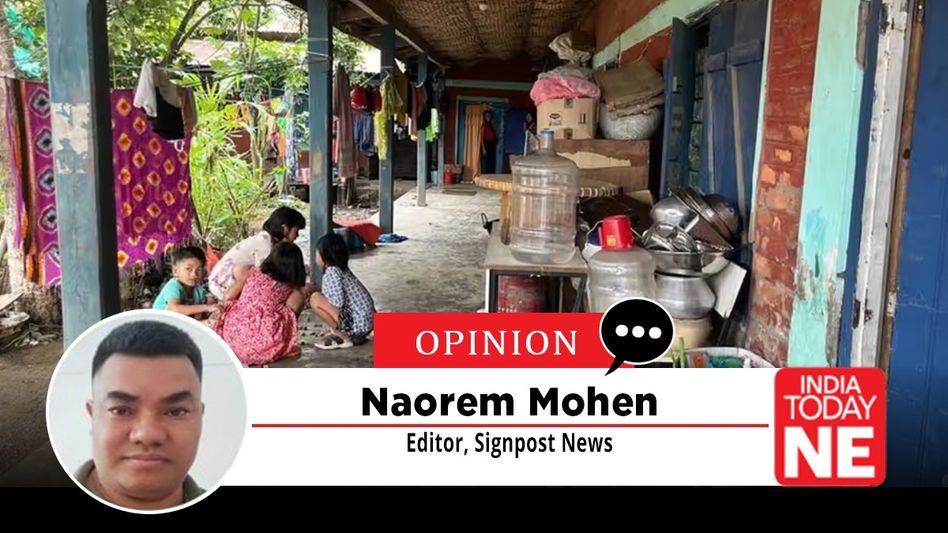
Temporary occupation of abandoned properties by internally displaced persons from both Kuki and Meitei communities is understandable and, crucially, reversible. Driven purely by survival needs, Meitei IDPs in valley areas and Kuki IDPs in hills have used empty homes for shelter, farming, or small livelihoods—arrangements that can be unwound once peace returns and owners reclaim their assets.
What is entirely unacceptable, however, is when non-displaced outsiders—individuals or groups with no legitimate stake in the conflict—assert ownership through highly questionable means.
Reports of sudden banners like "Muslim" properties, threats to temporary occupants, and claims of remote “sales” point not to necessity but to calculated exploitation. This raises grave concerns about intent: are organised networks or new gangs emerging to systematically target IDP properties, using forgery, intimidation, and fraudulent deeds to permanently dispossess vulnerable families and profit from the tragedy?
A question raised by a Meitei IDP from Moreh, who is now taking temporary shelter in Imphal East, is: Are some people colluding with a few influential Kuki families in the Imphal Valley to engage in demographic engineering and promote ethnic-based land separation?
The ethnic violence that erupted in Manipur in May 2023 has displaced thousands from Meitei and Kuki communities, leaving behind abandoned homes, businesses, and farmlands across the Imphal, Jiribam, Churachandpur, Tengnoupal and Kangpokpi districts. These properties were supposed to be safeguarded under Supreme Court directives and state orders.
A few months ago, a displaced Meitei from Ikou village in Imphal East district reported that Kukis have occupied their abandoned homes—many burned shortly after the violence erupted on May 3, 2023—and are tilling their agricultural fields, leaving fringe areas vulnerable. A similar pattern of temporary occupation occurs in the other direction: in the Game village of Imphal West district, a few displaced Meiteis have reportedly used abandoned Kuki homes out of necessity.
All these cases highlight reversible, survival-driven occupations by displaced persons from both communities—understandable in the crisis but strictly temporary, with no basis for permanent claims or ownership changes, as rightful restoration must follow rehabilitation and peace.
Many Meitei families displaced from border towns like Moreh fled across the border into Myanmar soon after the violence erupted on May 3, 2023, seeking safety after initial refuge in army camps proved temporary. They remained in hiding there for two to three months, which delayed their return to Manipur and prevented timely registration as IDPs in official relief camps.
Upon finally coming back, around 100 individuals from 13 families found vacant government quarters in Imphal's Langol Zone III and IV empty and, with permission from the then Chief Minister, took shelter there as a last resort. Now, having nowhere else to go, these IDPs face repeated eviction notices from authorities—including a directive to vacate by June 1, 2025—despite their miserable living conditions, a move critics say exploits their vulnerability and lacks alternative resettlement arrangements.
Yet, the persistent reports of fraudulent occupations, claims by non-IDPs, dubious sales, and visible markers of new "ownership" continue to fuel tensions. What could have been temporary displacement is increasingly at risk of becoming permanent dispossession, exacerbating ethnic divides.
Reports of abandoned Kuki properties in Imphal being marked with "Muslim property" banners and claimed by new buyers—often described as non-local Muslims rather than indigenous Pangals—defy both the Supreme Court's 2023 protection orders and the 2025 notification.If these buyers are not permanent residents of Manipur, such transactions should not be registerable under the new rules in Manipur.
Even for transactions involving permanent Manipur residents—the only exception allowed under the 2025 notification—strict multi-level verification by the deputy commissioner, internal committee, and high-level panel is mandatory. Yet, persistent reports suggest that many alleged deals are being finalised entirely outside the state, in cities like Guwahati or Delhi, completely bypassing Manipur’s land authorities and registration processes.
Some claims reportedly rely on backdated sale deeds, predating May 2023, to create the illusion that transfers occurred before the ethnic violence and protective orders took effect. In reality, displaced Kukis—whether confined to relief camps in the hills or living as non-camp IDPs outside the State, facing severe security risks in the valley—cannot safely or practically travel to Imphal to appear in person at the Settlement and Land Records Office for proper execution and registration. This physical and security barrier makes authentic, post-2023 sales highly implausible and fuels strong suspicions of forgery or fraud.
This raises pointed questions: Are documents being forged? Are middlemen exploiting power of attorney loopholes? Or are unregistered claims being asserted through intimidation and visible markers to create facts on the ground?
Without official registration, these "sales" lack legal validity. But in the absence of swift enforcement, they pressure temporary Meitei IDP occupants to vacate and deter original owners from returning.
There are also certain unverified allegations circulating on some social media and in local discussions suggesting that certain individuals or groups are purchasing abandoned Kuki properties in Imphal, potentially altering the valley's demographic composition and discouraging remaining Kuki residents from returning or settling there.
These claims portray such actions as a form of demographic engineering, with displaced Kukis reportedly selling properties under distress to buyers from non-IDP communities, leaving isolated individuals fearful amid the broader exodus from the valley.
A compelling firsthand account came from a press briefing at the Manipur Press Club, where Ningthoukhongjam Phulindro, a Meitei IDP displaced from the conflict-hit border town of Moreh, sounded a stark warning about the irreversible harm caused by unchecked property transactions.
He highlighted specific incidents in areas such as New Lambulane and Nongpok Ingkhol, where Meitei IDPs temporarily sheltering in abandoned Kuki-owned homes suddenly faced demands to vacate. These vulnerable occupants were directly threatened and informed that the properties had been “sold” to new buyers who insisted on immediate possession.
In several cases, the alleged new owners—identified as Muslims- erected banners or posters on the gates boldly proclaiming “Muslim property,” asserting control and intimidating anyone challenging their claims."
Phulindro explained that these markers boldly assert control—deterring original owners from returning, intimidating temporary occupants, and signalling permanent demographic shifts. Meitei IDPs reported verbal threats of consequences for refusing to vacate, heightening fear among already vulnerable families.
He strongly questioned the legitimacy of such sales, pointing out that displaced Kukis, unable to access Imphal safely, could not genuinely execute deals. Remote transactions, he argued, reek of fraud, likely involving forged signatures or coerced agreements.
His central warning was stark: permanent loss of Kuki properties in the valley—and parallel Meitei losses in the hills—would make mutual returns impossible, entrench ethnic segregation, and lend irreversible momentum to Kuki demands for separate administration.
The Supreme Court’s order of September 25, 2023, was unequivocal: the Manipur government must protect IDP properties, remove all encroachments, and facilitate safe returns for displaced families, with explicit warnings of contempt proceedings for any failure.
In response, the Home Department issued directives in October 2023, instructing district officials to enforce these protections rigorously. These measures were built on long-standing legal frameworks and have since been significantly strengthened by the September 2025 notification, which tightly restricts transfers from indigenous to non-indigenous persons.
In a move to protect indigenous land rights amid the ongoing crisis, the President Rule governance issued a notification on September 18, 2025. This directive explicitly prohibits the registration of deeds for the transfer of land—by sale, gift, or mortgage—from an indigenous person to a non-indigenous person. The notification states clearly: "No deed shall be registered for the transfer of land (by gift, sale, or mortgage) from an indigenous person to a non-indigenous person."
However, an exception allows registration if both parties involved are permanent residents of Manipur. Prospective buyers must apply to the district deputy commissioner for verification, with applications reviewed by an internal committee before recommendation to a panel for final approval. Additionally, transactions exceeding Rs 2 lakh require bank transfers or cheques for transparency.
This measure, rooted in the Manipur Regulation of Sale Deed Registration (Amendment) Rules, 2023, aims to curb opportunistic land grabs and safeguard indigenous holdings, particularly in the context of displacement. It took effect immediately and applies statewide, though it sparked debates in hill areas over constitutional implications under Article 371-C.
In the Imphal Valley—governed by general revenue laws without the stringent tribal protections of the hill districts—the September 2025 notification adds essential scrutiny to prevent land transfers that could upset ethnic balances. Yet, the forceful claims by non-IDP Muslims on abandoned Kuki properties, often supported by dubious remote transactions, plainly fail to satisfy these requirements.
The pattern of targeting abandoned Kuki properties in the valley with outsider claims obviously invites scrutiny over motives. By permanently displacing one community from mixed areas, it enforces ethnic homogenisation: Kukis consolidated in the hills, Meiteis in the valley.
To move toward strong enforcement and genuine healing, Manipur needs urgent and impartial action from its authorities. This must include a thorough probe into all IDP property transactions since 2023, with illegal ones promptly declared void. The September 2025 land notification should be enforced without exception, backed by regular public audits of registrations to ensure transparency.
Suspicious deeds must be frozen until safe rehabilitation and return mechanisms are fully in place. Those involved in fraud, forgery, intimidation, or enabling such acts should face swift prosecution.
Above all, the Supreme Court’s 2023 orders must be upheld strictly, with the state submitting regular compliance reports to demonstrate accountability. Such transparency and swift justice would protect displaced families from every community, deter opportunists and profiteers, and begin to rebuild the shattered trust essential for lasting peace.
Nearly 24 hours after a purported strong exposure by an IDP regarding Muslims purchasing abandoned Kuki properties, questions remain about whether concerned authorities have taken swift action to address these issues by verification and intervention to help stabilise Manipur.