Himanta Biswa Sarma’s second term: A defining phase for Assam politics
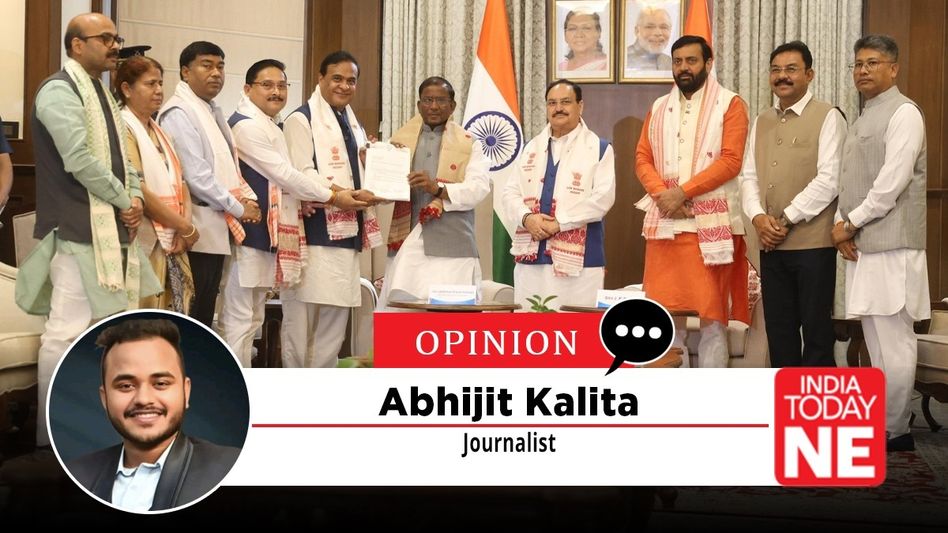
The return of Himanta Biswa Sarma for a second consecutive term as Chief Minister marks more than just another electoral victory for the NDA in Assam. With the NDA legislators electing him as their leader, Himanta Biswa Sarma is now set to officially take oath as the Chief Minister of Assam for the second time on May 12. The swearing in ceremony is expected to be a major political event, symbolising the BJP-led alliance’s continued dominance in the state.

- May 10, 2026,
- Updated May 10, 2026, 3:48 PM IST

The return of Himanta Biswa Sarma for a second consecutive term as Chief Minister marks more than just another electoral victory for the NDA in Assam. With the NDA legislators electing him as their leader, Himanta Biswa Sarma is now set to officially take oath as the Chief Minister of Assam for the second time on May 12. The swearing in ceremony is expected to be a major political event, symbolising the BJP-led alliance’s continued dominance in the state.
Over the last few years, Sarma has emerged as one of the BJP’s strongest regional faces and a key architect of the party’s expansion in the Northeast. From being a master political strategist to becoming the face of governance in Assam, he has successfully reshaped the political narrative of the state. Roads, healthcare expansion, educational institutions, police reforms and several infrastructure projects have become visible talking points during his first tenure.
One of the biggest political strengths of Himanta Biswa Sarma has been his ability to combine governance with strong political messaging. Issues relating to illegal immigration, protection of indigenous identity, land rights and development were repeatedly highlighted during his tenure. These factors helped the BJP-led alliance strengthen its support base across both urban and rural Assam.
At the same time, welfare-oriented schemes for women, students and economically weaker sections played a crucial role in consolidating voter confidence. Supporters view him as a decisive and action-oriented leader capable of taking quick administrative decisions during difficult situations.
However, the second term may bring greater challenges and expectations. Employment generation remains a major concern among the youth. While infrastructure development has accelerated in many regions, people are now expecting industrial growth, private investment and sustainable economic opportunities. Flood management, human-elephant conflict, environmental concerns and preservation of Assam’s cultural identity will also remain crucial issues before the government.
Politically, Sarma’s return further strengthens the BJP’s influence across the Northeast. Assam continues to be the gateway to the region, and his leadership is now seen as strategically important not only for the state but also for the BJP’s larger national plans.
Critics argue that along with strong governance, the government must also ensure inclusive politics and social harmony in a diverse state like Assam. The coming years will therefore be a crucial test of how effectively the government balances development, identity politics and democratic inclusiveness.
As Himanta Biswa Sarma prepares to take oath once again on Tuesday, Assam enters another important political chapter. Whether this second innings becomes merely a continuation of political dominance or transforms into a landmark era of development and stability will depend on how the government responds to the aspirations and challenges of the people in the years ahead.