How Kwatha Meitei Village Is Rebuilding Peace with the Army's Help
In Kwatha village, a small Meitei community perched near the Indo-Myanmar border, the Assam Rifles hosted "A Day with Company Commander", turning a single afternoon into a powerful statement about trust, unity, and the slow, human work of healing in a state still reeling from nearly three years of ethnic conflict.

- Feb 07, 2026,
- Updated Feb 07, 2026, 7:27 PM IST

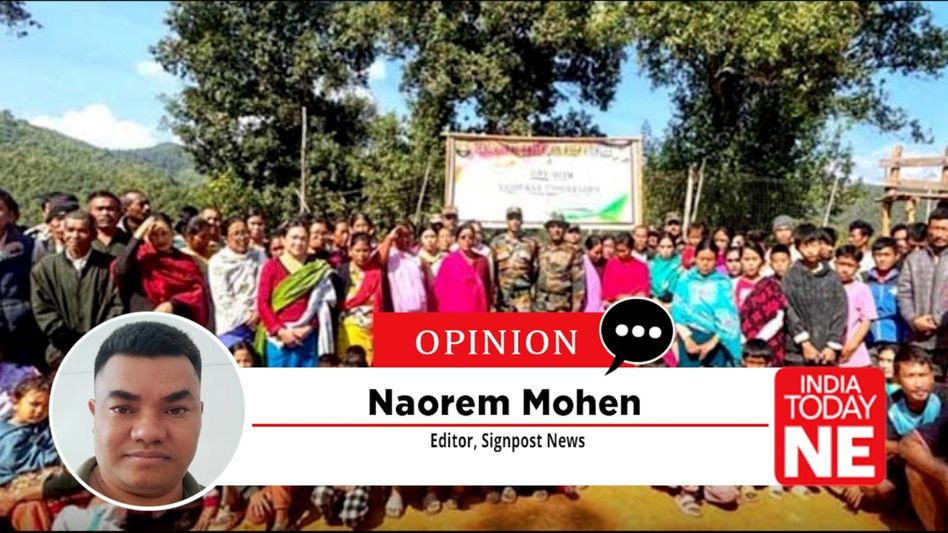
On February 6, 2026, something quietly remarkable happened in Tengnoupal district of Manipur. In Kwatha village, a small Meitei community perched near the Indo-Myanmar border, the Assam Rifles hosted "A Day with Company Commander", turning a single afternoon into a powerful statement about trust, unity, and the slow, human work of healing in a state still reeling from nearly three years of ethnic conflict.
This wasn't a grand summit or a high-profile peace talk. It was simpler, more grounded. Troops and villagers coming together on the village ground for sports, games, laughter, and honest conversation.
Around 110 residents turned out, men, women, children joining Assam Rifles personnel in activities that felt worlds away from the tension that has defined so much of Manipur since May 2023. A spirited volleyball match kicked things off, with friendly rivalry sparking cheers instead of suspicion. Kids tugged ropes in a tug-of-war, learning teamwork while adults watched and smiled.
Musical chairs brought bursts of joy, especially among women and younger participants, filling the air with the kind of inclusive fun that reminds everyone what normal life can feel like.
The day ended with prizes handed out to celebrate participation, not just victory, and then the real heart of the program: an open interactive session. Kwatha villagers spoke directly with the Company Commander and soldiers about the realities they face, border challenges, security concerns that disrupt daily routines, and the shared need to keep peace in this sensitive frontier zone.
This message was straightforward and repeated collective responsibility, mutual cooperation, and trust between locals and security forces are what hold stability together in places like this.
Villagers welcomed it genuinely, and the event visibly strengthened bonds that had been tested. The Inspector General of Assam Rifles (South) has long championed these people-centric efforts, noting they build lasting harmony and a secure environment in remote border areas.
In Kwatha, that vision felt tangible.Why does this one day matter so much? Because Kwatha isn't just any village. It's a predominantly Meitei settlement of roughly 300–400 people in about 87 households, sitting on ancestral land generations have farmed and cherished.
Surrounded by six Kuki villages and three Naga nearby, in a district where both Kuki and Naga communities dominate, it has become a symbol of quiet defiance against the broader ethnic fracture.
While much of Manipur has seen villages emptied, homes burned, and families displaced into relief camps, Kwatha's core residents have stayed put. No mass exodus here, even as isolation brought shortages of food, medicine, and market access early in the conflict.
That resilience was tested harshly in March 2024, when kuki miscreants torched houses in the adjacent Kwatha Khunou area, including the village chief's home. The arson, around 8 pm on March 10, left emotional scars. Yet the village didn't break. People rebuilt, held on to their land, and continued to protect the border.
In that context, February 6, 2026, stands out as more than a feel-good event. It's a deliberate counter to division. The Assam Rifles, with their deep roots in the Northeast and reputation for impartiality, stepped in not as occupiers but as facilitators.
By organizing games that cross ethnic lines in spirit, distributing care through associated medical outreach, and hosting dialogue that addresses real concerns, they model what neutral security forces can do best: create space for humanity to re-emerge.
This approach is exactly what Manipur needs right now. In such a situation, the Indian Army and Assam Rifles remain the most credible neutral players. Their discipline, operational independence, and track record in humanitarian outreach position them uniquely to lead.
In violence-affected areas of the state, where the scars of nearly three years of ethnic clashes between Meitei and Kuki communities run deep, marked by burned homes, displaced families, and eroded trust neutral forces hold a unique position to foster genuine unity, mutual trust, and peaceful coexistence.
These simple acts humanize "the other," reminding participants that neighbors once shared markets, festivals, and everyday support before politics hardened lines.The real power lies in the facilitated dialogue that follows.
In a secure, neutral setting moderated by the Company Commander, people voice concerns about border security, access to essentials, or fears of renewed violence without the shadow of bias. Troops listen actively, share their commitment to even-handed protection, and emphasize collective responsibility for peace.
"A Day with Company Commander" isn't a one-off gimmick. It's part of a pattern. Assam Rifles have run similar programs across districts, motivational sessions with students in Senapati. They distribute rations, run medical camps, escort vulnerable groups, recover illegal arms even-handedly, and maintain security zones to prevent further ethnic clashes.
These actions build credibility brick by brick.The message here is clear. Peace won't come from political posturing alone or from waiting for perfect conditions. It starts with these small, consistent acts of engagement.
When soldiers play volleyball with villagers, when children laugh during tug-of-war, when elders voice concerns in a safe space, mistrust erodes. Kwatha proves it's possible even in a tough spot, a Meitei enclave encircled by tension yet choosing restraint and connection.
Let security create the room, then let Manipuris, across communities rediscover shared roots.Kwatha’s story, spotlighted by this event, carries quiet power. In a state exhausted by violence, a single day of games, prizes, and talk can feel revolutionary. It reminds us that unity isn't abstract.
If Manipur follows this model, trust rebuilt one interaction at a time the healing so many crave might finally take hold.