ITLF Should Listen to Displaced Kuki-Zo Before Alleging Against Meitei IDPs
The Indigenous Tribal Leaders' Forum's unsubstantiated and provocative allegations—accusing Meiteis of violating non existent buffer zones while allegedly carrying IEDs—represent a serious affront to the innocent Meitei IDPs finally returning to their own villages after enduring over 30 months in relief camps. Such accusations unfairly implicate an entire community in criminal activities, demanding a firm response through appropriate legal action.

- Dec 22, 2025,
- Updated Dec 22, 2025, 4:22 PM IST

The Indigenous Tribal Leaders' Forum's unsubstantiated and provocative allegations—accusing Meiteis of violating non existent buffer zones while allegedly carrying IEDs—represent a serious affront to the innocent Meitei IDPs finally returning to their own villages after enduring over 30 months in relief camps. Such accusations unfairly implicate an entire community in criminal activities, demanding a firm response through appropriate legal action.
By perpetuating this divisive narrative despite State official denials of formal buffer zones, ITLF has crossed all ethical limits, undermining rehabilitation for displaced families on both sides and fueling communal mistrust in Manipur.
Furthermore, this Tribal group has once again exposed its true intentions by exploiting the suffering of displaced persons to further its separatist agenda. This organization has a well-documented history of inflammatory rhetoric and unlawful demands. While invoking the plight of Kuki-Zo IDPs—who have endured displacement for over 2.7 years since ethnic violence erupted in May 2023—ITLF claims to champion their cause, yet it does not genuinely advocate for their dignified return home. Instead, it cynically weaponizes their misery as a political tool to deepen divisions and bolster demands for a separate administration. The hypocrisy is glaring.
Where precisely are these buffer zones defined, and what concrete evidence supports claims of returning Meitei IDPs-planted IEDs? Without verifiable proof, such unsubstantiated and inflammatory accusations risk undermining fragile peace initiatives and deepening divisions in Manipur.
ITLF appears strongly opposed to the return of Meitei IDPs to their homes in peripheral areas such as Torbung and Phougakchao Ikhai. These returns have been facilitated by district authorities as part of ongoing resettlement efforts, allowing families to reclaim their villages after more than 30 months of displacement in relief camps.
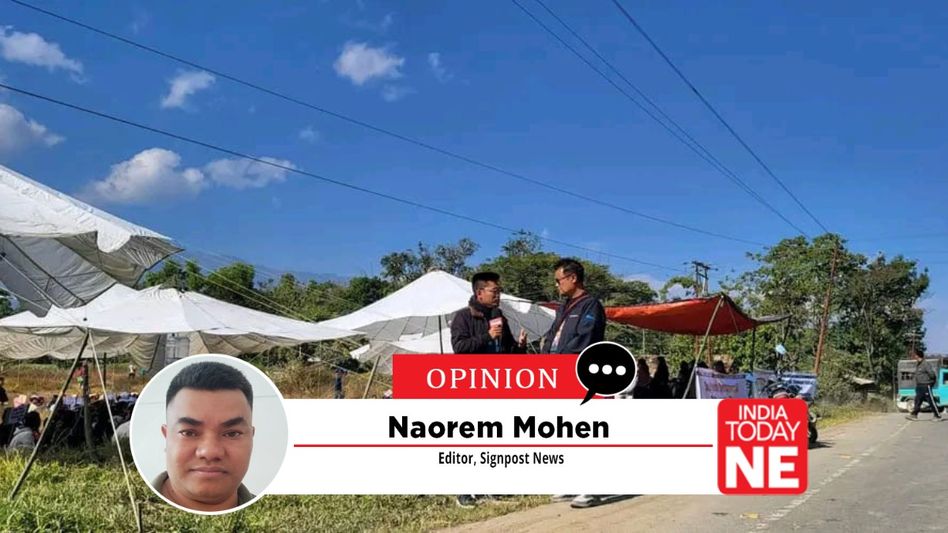
However, on December 16, Kuki militants launched attacks on these Meitei settlements, triggering widespread fear and panic among the newly resettled villagers. Within days, on December 22, 2025, the ITLF organized a sit-in protest near Torbung, in T. Munjang village, decrying what they described as "continued and deliberate attempts by Meiteis to breach the buffer zone," while raising alarms over alleged threats from explosives.
Also Read: National Highways Are Not the Property of COTU, They Cannot Dictate Who Travels or Who Does Not
After long agonising months, most IDPs—regardless of community—share one heartbreaking plea: to return home.
As one anonymous Kuki IDP shared through tears, "We are tired, so tired of suffering in these camps. Our children are growing up without proper schools, our elderly are falling sick, and our hearts ache every single day for the homes we lost. Please, stop politicising our pain. Stop turning our tears into communal weapons. Just help us go back with dignity. That’s all we ask."
This is not a demand for separation or confrontation; it is a cry for basic humanity that no leader should ignore or exploit.Yet, many displaced feel abandoned by the very civil society organisations meant to champion them.
A non-camp Paite IDP, speaking with deep anguish and fear of reprisal, poured out frustration that resonates widely: "I’m so angry and hurt when I see these CSOs who claim to speak for us, by playing parallel government, holding secret meetings, wrapping officials in our sacred traditional shawls just for photographs. It breaks my heart every time I see my tribal shawl—something so precious, so full of meaning and honour—handed out like cheap candy. That shawl represents our identity, our respect, our ancestors. How can they treat it so casually? It feels like they’re trampling on our soul."
The casual erosion of cultural symbols mirrors, for many, the casual disregard for their daily suffering.The despair runs even deeper. The same voice continued, voice cracking: "In these 963 agonising days, I’ve realised with deep sorrow that almost nobody truly cares about us victims anymore. Most people, even leaders, are just chasing their own power or agendas. We’ve become nothing but political tools—the longer we cry and suffer, the more useful our pain becomes to them."
Exhausted from rebuilding life from scratch while helping others in spare moments, this IDP issued a desperate call to fellow sufferers: "Don’t wait for saviours who will never come. Take your life back yourself, even if it’s just small steps. Because if we keep waiting, we’ll only keep bleeding."
Another displaced Kuki IDP staying in Churachandpur, whispering in fear, revealed the terror of dissent: "So many of us quietly cry at night thinking of our old homes in the valley—our jobs, our neighbours, our children’s schools, the hospitals we could reach easily. We just want to go back, to live in peace again. But if we speak this out loud, we get threats. It terrifies us. The loudest voices aren’t ours—they belong to people pushing separation. We feel abandoned, silenced, and used."
These anonymous testimonies lay bare a painful truth: while organisations like the ITLF mobilise protests over contested lines and political demands, ordinary displaced families—trapped in camps or scattered in hardship—feel their genuine longing for home and healing is being drowned out.
Would genuine Kuki-Zo IDPs, yearning for home during the most significant Christian festival, harbor hatred toward Meitei families facing the same hardships? Unlikely.
The real question is: How many ordinary IDPs eager to participate in this ITLF-orchestrated spectacle like sit in protest? True victims seek peace and return, not endless agitation that prolongs their suffering.
Further exposing the ITLF's waning legitimacy, even within its own stronghold of Churachandpur, the forum faced stark rejection from segments of the public in March 2024. Unidentified armed miscreants vandalized its office in the district, destroying computers, documents, and furniture—an act the ITLF itself described as "uncivilised violence toward members of one's own community."
On the same night, the group alleged that an armed faction attempted to murder its spokesperson, Ginza Vualzong, at his residence in D Phailien. These attacks, expose a deep divisions and dissatisfaction with the ITLF's leadership. Rather than representing the genuine voice of displaced Kuki-Zo IDPs yearning for peace and return, the forum appears increasingly aligned with militant and political agendas.
The ITLF must prioritize being the authentic advocate for IDPs' welfare, not a mouthpiece for divisive politics.The ITLF's track record also speaks volumes. In November 2025, it called a shutdown in Churachandpur to mourn four United Kuki National Army (UKNA) militants killed in an encounter with security forces—cadres from a group involved in recent atrocities to innocent people.
Earlier patterns repeat: In 2023, the ITLF issued an ultimatum to establish "self-government" in Kuki-Zo areas, prompting the Manipur government to condemn it as unconstitutional and initiate legal action. In 2024, it faced warnings for illegally forcing shutdowns of government offices.
Most damning is the persistent misuse of the "buffer zone" myth. Official statements, from Manipur Police confirm no such zones exist constitutionally. By repeatedly asserting this fiction, the ITLF justifies aggression, confuses the public, and erodes peace initiatives—all while the state remains inexplicably complacent in countering such provocation.
The ITLF must account to Kuki-Zo IDPs: What concrete steps have you taken for their welfare beyond rallies and shutdowns? How many homes rebuilt? How many livelihoods restored?
Half of Manipur's problems would be resolved, and lasting peace achievable, if the ITLF chose silence over provocation. Over the past two and a half years, it has done little to alleviate the suffering of displaced Kuki-Zo people, instead relentlessly fueling communal divisions between the Meitei and Kuki communities. Its baseless allegations—labeling the return of Meitei IDPs to their homes as breaches of non-existent buffer zones, and even accusing them of deploying IEDs—are merely the latest tactics to keep the flames of hatred alive.
The critical question that ITLF must answer to its own displaced Kuki-Zo people is this: How will it facilitate their safe and dignified return to their homes? Or will it continue playing divisive politics, serving as the mouthpiece for Kuki militants and politicians who have remained conspicuously silent on the plight of IDPs?
As Christmas approaches—a time for reflection and unity—the ITLF should cease misleading its own community. Rather, it must prioritize genuine rehabilitation over political theater.