
Manipur University Back on Track with Successful 15th Convocation
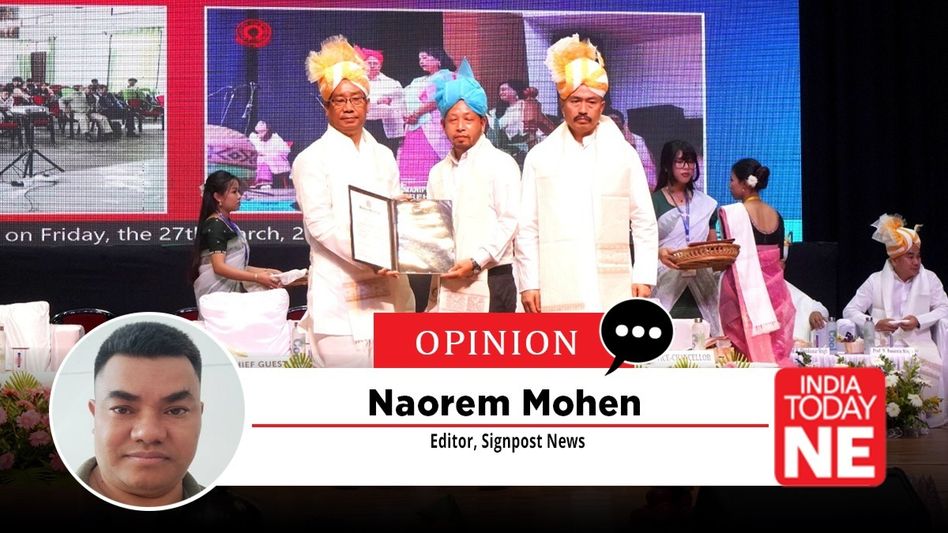
Manipur University is back on track. After a long and painful hiatus of over 12 years, the institution finally held its 15th Convocation Ceremony on March 27, 2026, at the University Auditorium in Canchipur. The previous convocation had taken place on April 29, 2014.

- Mar 31, 2026,
- Updated Mar 31, 2026, 5:25 PM IST

Manipur University is back on track. After a long and painful hiatus of over 12 years, the institution finally held its 15th Convocation Ceremony on March 27, 2026, at the University Auditorium in Canchipur. The previous convocation had taken place on April 29, 2014.
For alumni, students, parents, and well-wishers across the state and beyond, this was not merely an academic event — it was a powerful symbol of resilience, renewal, and restored normalcy.
The ceremony conferred degrees upon 1,061 graduates, including 304 gold medallists and 104 PhD scholars. Students from affiliated colleges in Churachandpur, Kangpokpi, and Moreh participated through virtual mode, ensuring wider inclusion.
The occasion was graced by Ajay Kumar Bhalla, Governor of Manipur and Chief Rector of the University, as Chief Guest; Chief Minister Yumnam Khemchand Singh as Guest of Honour; and presided over by Chancellor Professor T. Tirupati Rao. Special Guest Pankaj Mittal, Secretary General of the Association of Indian Universities, aptly described the convocation as significant amid rapid changes in education and technology.
At the heart of this successful resumption stands the calm, determined, and visionary leadership of Vice-Chancellor Prof. Naorem Lokendra Singh and Registrar Prof. Moirangthem Premjit Singh. Their combined efforts deserve heartfelt appreciation and public recognition.
For years, Manipur University had remained mired in controversy. It seemed as if unseen forces were working round the clock to keep the pot boiling — one issue after another, one crisis after another. Negative headlines, internal conflicts, administrative challenges, and prolonged disruptions painted a picture of perpetual instability. The Vice-Chancellor’s post, often described as a “hot seat,” became synonymous with tension and turbulence.
However, under Prof. Naorem Lokendra Singh’s stewardship since he assumed charge in July 2021, a quiet but steady transformation began. He navigated the complexities with composure, focusing on core academic deliverables rather than getting entangled in endless distractions.
The successful organisation of the 15th Convocation is a crowning achievement of this patient and persistent approach. It is a long-overdue gift to the thousands of students and alumni who had waited patiently — sometimes with frustration and disappointment — for their university to reclaim its rightful place as a centre of learning and excellence in the Northeast.
Prof. N. Lokendra Singh presented the annual report with quiet pride, highlighting several tangible milestones. The university secured NAAC B+ accreditation and maintained its position in the 101–150 band under the National Institutional Ranking Framework (NIRF). These rankings, though modest compared to earlier peaks, reflect consistent effort amid difficult circumstances.
More importantly, the VC emphasised academic regularity with timely conduct of examinations, successful implementation of the National Education Policy (NEP) 2020, introduction of new academic programmes, and a robust research output with over 1,500 publications by faculty members in recent years.
The university has also shone in sports, winning 127 medals including 45 gold medals between 2021–22 and 2026. These are not mere statistics; they represent restored momentum in teaching, research, and holistic student development.
None of this would have been possible without the strong administrative support of Registrar Prof. Moirangthem Premjit Singh. His meticulous planning and efficient execution ensured the convocation proceeded smoothly, despite the long gap and logistical complexities involved in organising a large-scale event with both physical and virtual participation.
Most often, Convocation ceremonies demand flawless coordination, from degree verification, gold medal preparation, and logistical arrangements to seamless virtual participation for distant colleges. The smooth conduct of the event, despite the long gap and the inherent complexities of a large public university in a sensitive region, speaks volumes about the Registrar’s quiet competence and dedication.
Together, the Vice-Chancellor and Registrar formed a stable and effective leadership duo. They managed to shield the academic calendar from external disruptions and internal unrest. In an environment where every decision could easily become fodder for controversy, they maintained focus on students’ futures. Their leadership style — calm, collaborative, and result-oriented — has helped heal many of the wounds that had accumulated over the years.
The successful convocation is living proof that when leadership prioritises governance, transparency, and academic priorities over reactive firefighting, institutions can rebound.
For the alumni community, this convocation carries deep emotional significance. Many graduates from the intervening years had received their degrees without the ceremonial pomp and sense of closure that a proper convocation provides.
Parents who sacrificed immensely to educate their children in difficult times could finally witness their wards being honoured on stage (or virtually). The 304 gold medallists and 104 PhD awardees represent the bright future of Manipur — young minds who have persisted despite challenges.
Their success is not isolated; it is the collective victory of a university that refused to remain stagnant.The resumption of the convocation also sends a strong message to the entire higher education ecosystem in the region.
Manipur University, one of the premier institutions in the Northeast, had risked losing its stature due to prolonged instability. With this milestone, it has signalled that it is firmly back on track.
The foundation laid by Prof. Naorem Lokendra Singh and Prof. Moirangthem Premjit Singh creates fertile ground for future growth. We can now realistically expect several more achievements in the coming years, with improved NIRF rankings, higher NAAC grades, expanded research collaborations, stronger industry linkages, better placement records, and greater international visibility.
The challenges are far from over. State's socio-political complexities, resource constraints, and the broader pressures on public universities remain. However, the successful holding of the 15th Convocation after a 12-year gap proves that with steady leadership and collective will, these challenges can be overcome.
The Vice-Chancellor’s emphasis on NEP implementation and new programmes shows forward-thinking. The focus on research publications and sports excellence demonstrates a commitment to all-round development. If this momentum is sustained — and there is every reason to believe it will be under the current leadership — Manipur University can once again become a beacon of knowledge, innovation, and cultural pride for the state.
Pankaj Mittal’s observation about the convocation’s significance in the era of rapid educational and technological change is particularly relevant. Today’s graduates enter a world transformed by AI, digital learning, climate challenges, and evolving job markets. The university’s efforts to align with NEP and promote research equip them better for these realities.
As the graduates step out with their degrees and medals, they carry not just academic credentials but also the inspiring story of an institution that rose above prolonged adversity. Manipur University is indeed back on track. We look forward to many more milestones — academic, research, sports, and beyond — that will make the entire state proud.
The unseen forces that once kept the pot boiling have been countered by visible, consistent, and student-centric governance. This success belongs to the Vice-Chancellor and Registrar as much as it belongs to the resilient students and faculty who never gave up on their university.
May this momentum continue, and may Manipur University reclaim its position as a leading centre of higher learning in the Northeast and beyond.
MORE NEWS












Copyright©2026 Living Media India Limited. For reprint rights: Syndications Today
