Manipur University Central Museum – A Cornerstone for Indigenous Knowledge Systems under NEP 2020
The Manipur University Central Museum is not merely a storehouse of antiquities, but a living fortress of cultural resurgence and intellectual sovereignty. Conceived in 1981 through the visionary proposal of the Departments of History and Manipuri Language and Literature, and formally established in December 1982, this institution emerged as the first university museum in the entire Northeast India.

- Apr 30, 2026,
- Updated Apr 30, 2026, 12:57 PM IST

The Manipur University Central Museum is not merely a storehouse of antiquities, but a living fortress of cultural resurgence and intellectual sovereignty. Conceived in 1981 through the visionary proposal of the Departments of History and Manipuri Language and Literature, and formally established in December 1982, this institution emerged as the first university museum in the entire Northeast India.
From its humble beginnings with a handful of earthen pots, musical instruments, and woven treasures collected from the heartlands of our tribal and Meitei communities, it has blossomed into a vibrant multidisciplinary centre of learning.
This remarkable journey perfectly embodies the transformative spirit of National Education Policy (NEP) 2020 — a bold call to decolonise our education system, deeply integrate Indigenous Knowledge Systems (IKS), and firmly root the pursuit of knowledge in our own soil, mother tongue, and lived civilisational heritage.
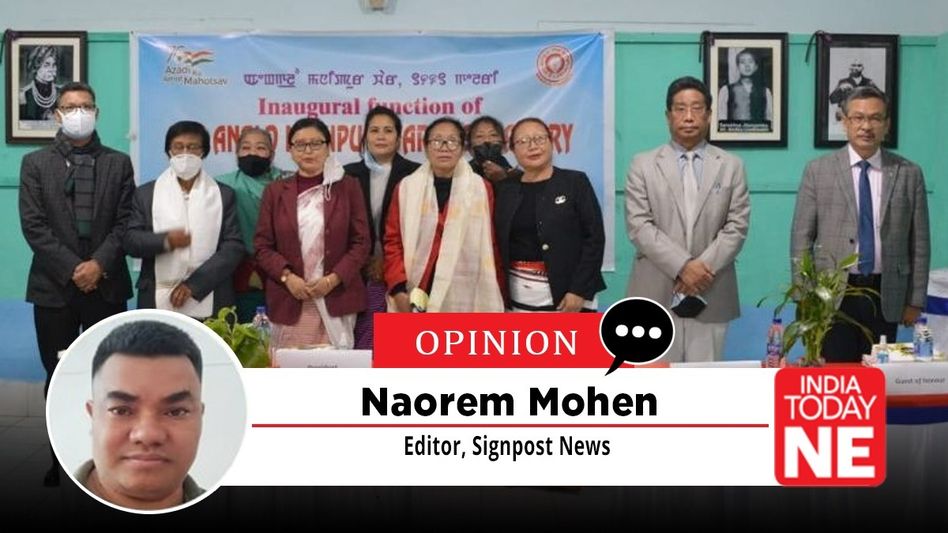
A few years ago, under the visionary and culturally rooted leadership of Vice-Chancellor Prof. Naorem Lokendra Singh, the Manipur University Central Museum achieved yet another historic milestone. On 8 February 2022, Prof. Singh formally inaugurated THE ANGLO MANIPUR WAR, 1891 GALLERY, breathing new life and purpose into the institution. This landmark gallery stands as a powerful tribute to the heroic resistance of our ancestors against British colonial aggression. It also reclaims the narrative of 1891 not as a footnote of colonial history but as a proud chapter of indigenous sovereignty, leadership, and cultural assertion.
Through rare artifacts, weapons, archival photographs, documents, and evocative narratives, it immortalises the valour, strategic brilliance, and unyielding spirit of the Manipuri people in 1891. For every Manipuri, this inauguration was far more than a ceremonial event — it was a defining moment of cultural assertion and historical reclamation. By giving this gallery pride of place, Prof. Naorem Lokendra Singh has reinforced the museum’s role as a living centre for Indigenous Knowledge Systems, perfectly aligning with the vision of NEP 2020. It sends a clear message to the youth of Manipur: our history of resistance is not a forgotten chapter, but a guiding light for reclaiming our identity, dignity, and intellectual sovereignty in the modern era.
Besides, the museum’s foundational collections, gathered in the early years, speak volumes about the depth of indigenous wisdom embedded in everyday Manipuri life. These were not random artifacts but deliberate embodiments of material culture, technology, and traditional knowledge systems primarily sourced from tribal and Meitei communities across Manipur.
From Andro and Nungbi came exquisite earthen wares and pottery: Kharung, Pun, Ngangkha, Yukhum, Thangmei Makhong (lamp stands), Kamuk, and Kegam. These items reflect centuries of pottery-making expertise confined largely to the Chakpa communities — the Lois of Andro, Sekmai, Phayeng, and Chairen.
Recent archaeological findings of cord-marked tripod-legged pottery from Napachik link our pottery tradition to prehistoric times and even Neolithic cultures of China, highlighting Manipur’s ancient connections within broader Asian knowledge networks. As O.K. Singh noted in 1986, this continuity highlights how our ancestors mastered sustainable clay technology long before modern science validated it.
Musical instruments collected from Panmei of Oinam hill — the bamboo Ching (mouth organ), Sakhei made from the pollen tube of the Kewa flower, and the single-string Lobung — represent our rich intangible auditory heritage. These instruments embody indigenous acoustic science, natural resource utilisation, and spiritual expression central to Manipuri performing arts and rituals.
Ornaments such as bronze armlets, bangles, Sandrembi Pareng, Heikru Khaibi Pareng, Tharoi Maning Pareng, brass bracelets, and Sana Khujee reveal advanced indigenous metallurgy and aesthetic sensibilities passed down through generations. Objects of weaving — the Kaptreng (wooden machine for removing cotton seeds), Tem used in loin looms, and shuttles for handloom weaving — along with textile masterpieces like Khamen Chatpa, Pheijom, Namthang Khut hat, Kokyet, Shami Lami Ningkham Samjil, and Mapan Naiba Phanek demonstrate sophisticated traditional textile technology and design philosophy.
These artifacts are living proofs of sustainable, community-based knowledge systems that integrated ecology, economy, and artistry. The museum’s early epigraphic collection — photographs and estampages of inscriptions in archaic Manipuri script, including those of Konthoujam Lairembi, King Garibaniwaz (1709-1748), and the First M.R. Ground — provides invaluable primary sources for understanding our political, social, economic, and religious past. They serve as vital guides to historical geography and ancient place names, reinforcing the importance of indigenous scripting and documentation traditions.
Even its comparative collections — duplicate seals from Mohenjadaro (Unicorn, Pasupati, Bull), bust of the Priest King, Mother Goddess figurines, Sunga and Gupta period sculptures, and terracotta works — were acquired with the vision of placing Manipuri heritage within the larger canvas of Indian civilisation. The discussion on Manipuri coinage, referencing the ancient text Numit Kappa (The Man Who Shot the Sun) and possible use of inscribed coins like Taret-Mayi-Naiba from the 1st or 3rd century A.D., opens fascinating windows into our numismatic and astronomical knowledge traditions.
Paintings such as Religious Odyssey, Jagoi Rasa, Loktak Lake, Ahong Yum, Service, and Protest in oil on canvas, tempera, and other media further enrich the collection, capturing the soul of Manipuri life, devotion, and resistance. This foundational vision has now matured into four major galleries — Art Gallery, Archival Photographs Gallery, Ethno-Archaeology Gallery, and Basketry Gallery — with the crowning addition of THE ANGLO MANIPUR WAR, 1891 GALLERY.
NEP 2020 is not just an education policy; it is a civilisational call to reclaim our knowledge sovereignty. It urges us to move beyond colonial frameworks and integrate multidisciplinary, rooted learning that honours Indian Knowledge Systems in all their diversity. The Manipur University Central Museum has been quietly doing exactly this for over four decades.
By treating the museum as an affiliated laboratory for students and scholars in History, Archaeology, Manipuri Language & Literature, Art & Culture, and Natural History, the university has institutionalised experiential learning. Collection tours, acquisitions via donation and loan, rigorous cataloguing, conservation (cleaning and chemical treatment), exhibitions, guide lectures, gallery talks, and research publications transform passive observation into active engagement with IKS.
The Ethno-Archaeology and Basketry Galleries, built upon those early collections from Andro, Nungbi, and Oinam, celebrate indigenous technologies — sustainable pottery, weaving, and natural material science — that modern sustainability discourses are only now rediscovering.
The Anglo Manipur War, 1891 Gallery takes this further by foregrounding our martial knowledge, strategic acumen, and spirit of resistance. For Manipuri youth navigating contemporary challenges, this gallery becomes a source of identity, pride, and intellectual decolonisation. It invites reflection on history, political thought, and ethics of resistance. Such interconnections foster innovation that is authentically rooted rather than imitatively Western.
One of the greatest strengths of this museum is its recognition that IKS is not monolithic. It beautifully integrates Meitei, tribal, and pan-Indian elements. The prehistoric pottery links, the epigraphic records in archaic Manipuri, the traditional musical instruments, and the resistance narrative of 1891 together demonstrate the pluralistic richness of Northeast Indian knowledge traditions. In doing so, it enriches the national IKS discourse led by the Ministry of Education and challenges any narrow interpretation of Indian heritage.
This approach directly supports NEP 2020’s goals of multilingualism, multidisciplinary learning, and community engagement. A student studying pottery can explore ethnobotany, chemistry of clay, and cultural continuity. One examining musical instruments can delve into acoustics, ecology, and performative traditions.
From its visionary proposal in 1981 and establishment in 1982 with those humble yet profound collections of earthen wares, musical instruments, textiles, and inscriptions, the Manipur University Central Museum has grown into a powerhouse of indigenous knowledge preservation and transmission. The Anglo Manipur War, 1891 Gallery marks its boldest assertion yet — that our past is not dead history but living wisdom for the future.
As NEP 2020 gains momentum, this museum offers a shining model for universities across the Northeast and India. It proves that decolonising education is not about rejection but intelligent reclamation. In these testing times for Manipur, the museum reaffirms that our greatest strength lies in our cultural roots.
The Manipur University Central Museum is not merely collecting objects — it is resurrecting consciousness. Under NEP 2020, it stands as a beacon, guiding us towards an education system that is truly our own — proud, rooted, and resilient.