Manipur’s displaced families deserve to know where relief funds go
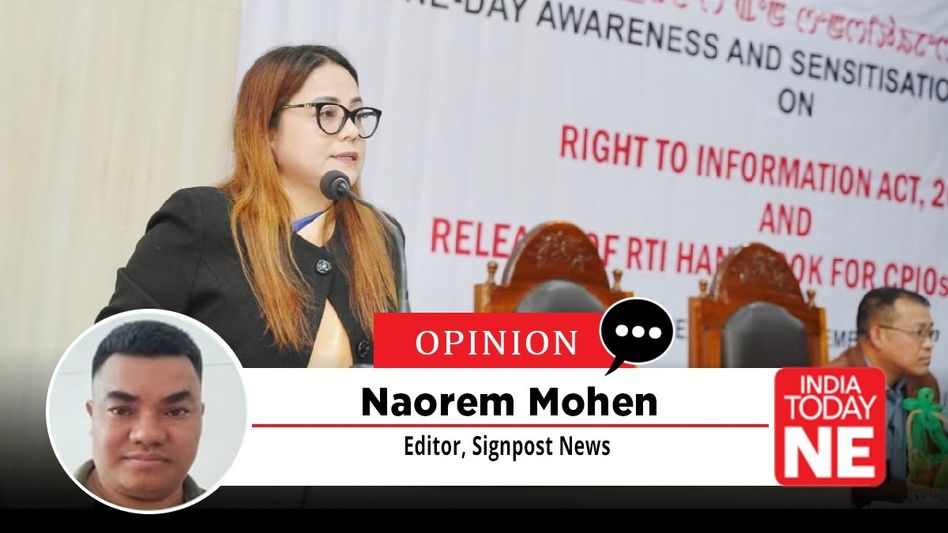
At Manipur University, Prof. Khelena Gurumayum asked whether citizens can find out how rehabilitation money is spent and who receives assistance. The answers matter in a state where years of violence and displacement have eroded public trust.

- Nov 18, 2026,
- Updated Nov 18, 2026, 4:25 PM IST

- Union Home Ministry released ₹229.25 crore for relief camps in 2024–25
- A ₹119-crore package offers additional housing support to 7,000 households
- University's first third-party RTI audit returned a 67.5 per cent score
When a rehabilitation package is announced, a displaced family in Manipur has immediate questions. Do we qualify for help to rebuild our home? Has our application been processed? If it is still pending, who can tell us why? The answers may determine where the family will live and whether its children will have to change schools again. It should be able to get those answers without making repeated trips to a district office.
At Manipur University’s November 18 awareness programme on the Right to Information Act, political scientist Prof. Khelena Gurumayum connected those questions to a basic principle of democracy. Elections give citizens a say in who exercises public power. Between elections, citizens must be able to ask those in authority to account for their decisions. Information held by public institutions, she argued, is a public resource. In Manipur, where violence since May 2023 has uprooted families, disrupted livelihoods and strained relations between citizens and the state, access to that information has particular weight.
The programme also marked the release of an RTI handbook for Central Public Information Officers (CPIOs) and First Appellate Authorities (FAAs). The release gave practical expression to the programme’s theme of strengthening transparency and accountability in public institutions. Information officers must help applicants, locate records and respond clearly.
Appellate authorities must examine whether a refusal or an inadequate reply can be justified. The handbook’s value will be measured in how those duties are carried out, whether the person seeking an answer is a student asking about examination rules or a displaced parent trying to find out where a housing claim stands.
Follow the money to the household
Gurumayum Khelena asked how much had been sanctioned for relief and rehabilitation, how much had been released and how the government was assessing whether its programmes were working. These are questions for taxpayers as well as displaced families. The answers would help the public judge whether assistance is reaching eligible households fairly across districts and communities.
The Union Ministry of Home Affairs records that it released ₹229.25 crore to Manipur in 2024–25 to operate relief camps. Its 2025–26 special package lists ₹119 crore in additional housing support for 7,000 households, at ₹1.70 lakh per household over and above the Pradhan Mantri Awaas Yojana–Gramin grant. Manipur’s government should make the next part of the record easy to follow. How much did each district receive and spend? How many households received payments? How many claims are pending, and for how long? Where housing payments have been made, how many homes have been completed?
Gurumayum Khelena also stressed the dignity and privacy of displaced people. The state can publish district-wise expenditure, eligibility rules and the number of households assisted while giving families a private way to check their own claims. If an application is held up, the family should be told the reason and whom to contact. In a state where rumours about who received help can deepen mistrust between communities, verifiable public records give people a common basis for questioning how relief is distributed.
A portal is only the beginning
Poor record-keeping, delayed replies, backlogs at information commissions and refusals with inadequate explanations were among the problems Prof Khelena identified. An online portal can make an RTI request easier to file and track. A timely, useful reply depends on whether the responsible office can locate the record and provide it in a form the applicant can use. Section 4 of the RTI Act requires public authorities to maintain records and proactively disclose specified information. For relief schemes, the state should explain eligibility, application procedures and where to seek help at camps and district offices as well as online.
Gurumayum Khelena drew attention to women who have organised relief, cared for displaced people and worked for peace since the conflict began. She asked what empowerment means in practice for a woman who is herself displaced or facing financial hardship. Can she find out what assistance she qualifies for? Can she question a delay and receive an answer? Access to that information gives her a way to claim her entitlements and hold the responsible office to account.
Manipur University can start with its own records
A publicly funded university that encourages students to think critically, Khelena said, should be prepared to answer legitimate questions about its own decisions. At the programme, Dr Sakila Nongmeikapam, the university’s Public Relations Officer and Central Public Information Officer, reported that Manipur University scored 67.5 per cent in its first third-party RTI transparency audit for 2025–26. She called for better record-keeping, closer coordination between departments and more regular updates to the university website. Publishing the steps taken after the audit would allow students, staff and applicants to see what has improved.
Controller of Examinations T. Shantikumar Singh gave a practical example. Students sometimes seek re-evaluation when the university’s rules provide for re-scrutiny, which checks for unmarked answers and errors in totalling or carrying forward marks. A clear notice on the examination portal could explain what students can apply for and how.
Prof. Yumnam Premananda Singh, Head of Manipur University’s Department of Law, urged information officers to help applicants who cannot put an RTI request in writing. That assistance is a legal duty. Under Section 6(1) of the Right to Information Act, the Central or State Public Information Officer must provide reasonable assistance to put an oral request in writing when the applicant cannot do so.
The Act also sets out what an officer must tell an applicant when a request is rejected. Under Section 7(8), the officer must give the reasons for the rejection, the deadline for filing an appeal and the details of the appellate authority. For a displaced person seeking records on rehabilitation spending or the status of a housing claim, these safeguards matter at both ends of the process. They help the person get the request on record and know where to turn if access is refused.
Registrar and First Appellate Authority Prof. M. Premjit Singh stressed the importance of recording the reasons for decisions when they are made. In an RTI appeal, a clear record helps the appellate authority examine how the original decision was reached and whether the applicable rules were followed. It also gives the university a basis for explaining its decision to the person affected.
Vice-Chancellor Prof. R.K. Hemakumar Singh called on departments to share responsibility for maintaining the records needed to answer RTI requests. An information officer can coordinate a reply, but the department that made the decision often holds the relevant files. Whether the university can give a student or staff member a complete answer depends on how well each department keeps its records.
How transparency can earn trust
Finance Officer Prof. L. Rajendrakumar Singh recalled an administrative culture in which decisions were made behind closed doors and files moved from table to table while citizens waited. Without access to the records behind a decision, people struggled to challenge delays, favouritism or misuse of public funds. He described the way forward in three words, “transparency, trust, and transformation.” When officials know that decisions about purchases, expenditure or examinations can be scrutinised, he argued, they have a reason to keep accurate records and explain how they applied the rules. Citizens can then judge for themselves whether an institution acted fairly.
Rajendrakumar linked stronger implementation of RTI to the need to restore people’s faith in Manipur’s public institutions. Rehabilitation offers a practical test. If the same problem is holding up dozens of housing claims, the administration can use its records to identify where the process breaks down and fix it.
For a displaced family, the change will be felt in an ordinary exchange at a district office. The family asks what happened to its application. An officer opens the record, explains where the claim stands and says who is responsible for the next step. After years of uncertainty, a family should be able to count on that answer.
Manipur University’s November 18 programme brought the Right to Information Act into the everyday work of public institutions. A student asking how examination marks were checked and a displaced family trying to find out where its housing application stands are both entitled to a clear answer.
Giving that answer begins long before anyone files an RTI request. It begins when an office records why it made a decision, keeps that record accessible and takes responsibility for explaining it. That was the practical lesson of the Manipur University programme, and it is one that every public institution in Manipur can act on.