Meghachandra's Cut Motion: A Call to Defer Census Until IDPs Return and Immigrants Are Identified
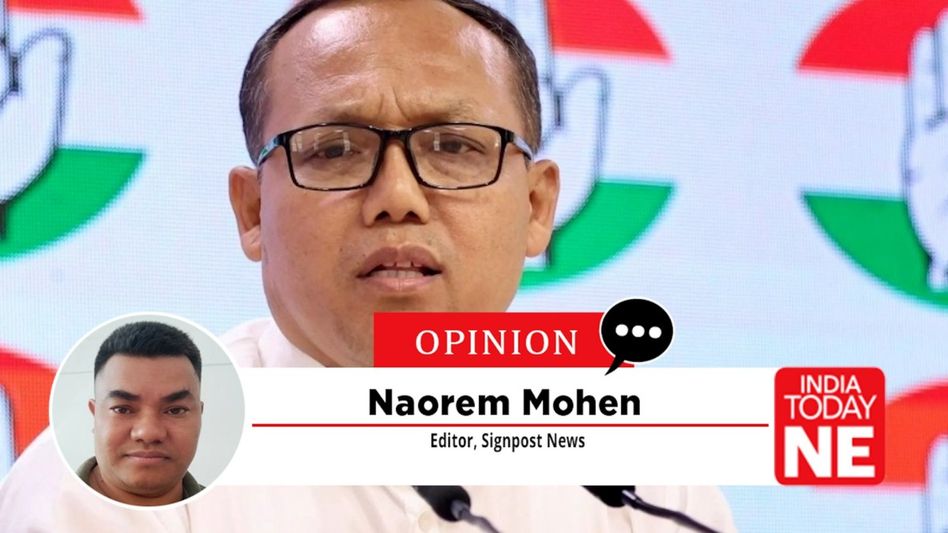
In the midst of Manipur's protracted ethnic crisis and mounting anxieties over demographic integrity, one leader has distinguished himself with unwavering clarity and courage. Keisham Meghachandra Singh, the Congress MLA and Leader of the Congress Legislature Party (CLP), emerged as the sole voice in the Manipur Legislative Assembly to forcefully champion the implementation of the National Register of Citizens (NRC) before any Census exercise.

- Mar 11, 2026,
- Updated Mar 11, 2026, 8:07 PM IST

In the midst of Manipur's protracted ethnic crisis and mounting anxieties over demographic integrity, one leader has distinguished himself with unwavering clarity and courage. Keisham Meghachandra Singh, the Congress MLA and Leader of the Congress Legislature Party (CLP), emerged as the sole voice in the Manipur Legislative Assembly to forcefully champion the implementation of the National Register of Citizens (NRC) before any Census exercise.
On March 11, 2026, as the 7th Session of the 12th Manipur Legislative Assembly continued amid intense debates on budget estimates and demands for grants, protests erupted outside in Imphal, led by the Campaign for Just & Fair Delimitation (JFD) in collaboration with Ima Lup groups, where demonstrators carried placards declaring “No NRC, No Census” and clashed with security forces, resulting in injuries from tear gas shells.
Amid this charged atmosphere, CLP leader K Meghachandra seized the Assembly floor to articulate a principled demand that resonated deeply with the grassroots sentiment, proving he alone truly understood and represented the pulse of the people and civil society organizations (CSOs).
Further highlighting his commitment during the Assembly proceedings, Keisham Meghachandra Singh moved a Cut Motion in the Manipur Legislative Assembly today stating that conducting the Census without first ensuring the proper resettlement and rehabilitation of internally displaced families in their original places, and without identifying illegal immigrants, would distort the true demographic reality of Manipur.
He therefore demanded that the Census operation be deferred until these crucial issues are adequately addressed. This bold legislative move, raised amid ongoing budget discussions and policy cut motions in the session, directly linked the unresolved displacement crisis (with thousands of IDPs still unable to return home safely) to the risks of a flawed Census, reinforcing his earlier points on NRC and SIR limitations.
By moving the Cut Motion, Meghachandra not only amplified CSO demands but also pressured the government to prioritize genuine rehabilitation and citizenship verification over hasty enumeration, highlighting how premature Census data could perpetuate distortions in population counts, resource distribution, and future delimitation exercises.
His intervention was not opportunistic but deeply informed and principled, as Meghachandra clearly informed to the media in an interview with India Today NE. Speaking candidly, he dismantled the notion that the Special Intensive Revision (SIR) of electoral rolls could serve as a substitute for proper verification.
He elaborated that while SIR might remove bogus voters from electoral lists, those same individuals, often alleged to be illegal immigrants, would still be enumerated and counted in the Census, thereby inflating the state's population figures and undermining the accuracy of official data.
This distinction is crucial and cannot be overlooked: electoral rolls govern voting rights and ensure fair elections, whereas the Census forms the foundation for central resource allocation, sectoral development planning, and the future delimitation of constituencies to reflect genuine demographic realities.
Without updating the National Register of Citizens, ideally with 1951 as the base year, a persistent demand from many in Manipur, a Census in the present context risks legitimizing undocumented populations, distorting statistics, and entrenching inequities that could deepen ethnic divisions and prolong conflict in an already fragile state.
By articulating these points with such precision and force, not only on the Assembly floor but also through candid media engagements like his interview, Meghachandra effectively bridged the outrage on the streets with legislative action.
His words struck a chord with indigenous communities, women's groups such as the Ima Lup organizations, and civil society bodies that see unchecked enumeration as an existential threat to their rights, representation, and demographic integrity.
In exposing the limitations of SIR and insisting on NRC safeguards, he gave powerful expression to steering the conversation toward root causes rather than temporary patches. His principled communication to lawmakers and the public alike reaffirms why he remains the leader most attuned to Manipur's ground realities.
Meghachandra's stand is all the more remarkable amid the broader political reticence or superficial responses to this issue. While CSOs like the JFD have persistently campaigned for NRC-first approaches, through memorandums, consultations, and warnings that a Census amid displacement and restricted mobility would produce unreliable data, few elected representatives are still silent on the issue.
Many have sidestepped the matter or endorsed SIR as adequate, ignoring its inherent constraints. Meghachandra rejected such evasions outright. By linking NRC-before-Census and deferment until IDP resettlement in his Cut Motion, during the very session that overlapped with violent protests at Ima Keithel, he validated the demonstrators' demands and thrust them into official proceedings at a decisive juncture.
This advocacy flows naturally from Meghachandra's longstanding commitment to confronting Manipur's core challenges. As a veteran MLA, former Manipur Pradesh Congress Committee President, and persistent critic of administrative failures, he has consistently spotlighted shortfalls in IDP rehabilitation, questioned women's empowerment schemes, and demanded transparent remedies for ethnic violence and displacement.
A flawed Census would entrench rather than resolve inequities; only NRC verification combined with genuine IDP resettlement can guarantee that official data mirrors legitimate residents, paving the way for fair representation and balanced development.
Critics may dismiss this as partisan opposition, yet Meghachandra's position rises above party lines, grounded in logic, endorsed by diverse CSOs, and shared across communities. His solitary prominence in the Assembly highlights his independent resolve: he leads where others falter, wielding his platform for the common good rather than fleeting advantage.
Keisham Meghachandra Singh stands as a beacon of genuine leadership in Manipur's darkest hours. Through his Cut Motion and unwavering advocacy for NRC before Census, echoed both in the House and in media, he embodies the empathy, foresight, and integrity the state urgently requires.
As tear gas filled the streets and injured voices cried for justice, his resolute stand within the Assembly kindled hope that principled representation still survives. Manipur's journey toward fair governance, reliable enumeration, and eventual reconciliation hinges on such clarity.
For truly hearing the people, connecting street demands to legislative power, and placing enduring welfare above expediency, Meghachandra deserves profound praise and steadfast support.