Not Just an Award, But a Stage for Hope: The Stirring Boong BAFTA Speech for Manipur
Manipuri film Boong has won the BAFTA Best Children's & Family Film award, surpassing major Hollywood releases like Disney's Lilo & Stitch and Zootopia 2 (also known as Zootropolis 2 in some markets), as well as other strong contenders.

- Feb 23, 2026,
- Updated Feb 23, 2026, 9:39 AM IST

Manipuri film Boong has won the BAFTA Best Children's & Family Film award, surpassing major Hollywood releases like Disney's Lilo & Stitch and Zootopia 2 (also known as Zootropolis 2 in some markets), as well as other strong contenders.
This Manipuri-language coming-of-age comedy-drama, written and directed in her feature debut by the deeply sensitive Lakshmipriya Devi and produced by Farhan Akhtar and Ritesh Sidhwani's Excel Entertainment along with other collaborators, achieved something extraordinary on February 22, 2026, at London's Royal Festival Hall.
The BAFTA triumph of Boong at the 2026 EE BAFTA Film Awards feels like a radiant, almost miraculous blessing for the displaced people of Manipur, especially the internally displaced persons (IDPs) whose lives have been upended by prolonged ethnic conflict, the children whose innocence has been stolen far too early, and every community quietly longing for reconciliation, normalcy, and the simple joy of living side by side once more.
For a small, heartfelt regional Indian film from a state often overlooked or reduced to headlines of strife, this historic first, becoming the inaugural Indian winner in the category has transformed a tender story of childhood resilience into a powerful global voice for empathy, hope, and healing.
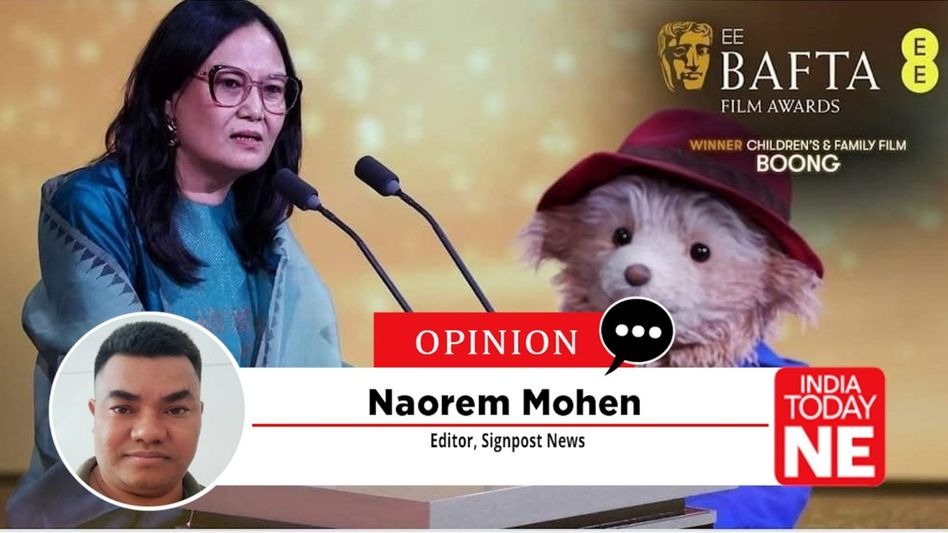
The most stirring part of this blessing came during Lakshmipriya Devi's acceptance speech—a brief, yet extraordinarily powerful moment that transformed the glittering BAFTA stage into a platform for prayer and advocacy.
Greeting the world with a heartfelt Manipuri "Khurumjari," she expressed profound thanks and then spoke directly from the heart: "The walk up till here felt like the last few steps to reach a summit of a mountain we never knew we were climbing in the first place... Just want to use this opportunity to say that we pray for peace to return to Manipur, we pray that all the internally displaced children, including the child actors in the film, regain their joy, their innocence and their dreams once again. We pray that no conflict is ever formidable enough to destroy the one superpower that all of us have as human beings, that is forgiveness... So thank you BAFTA for giving us not only an award but this stage to express our hope."
Delivered with quiet dignity amid Hollywood glamour and presented by none other than Paddington Bear himself, her words cut through the ceremony's spectacle like a gentle yet piercing call. She spotlighted the forgotten internally displaced children like Gugun, who deserve childhoods filled with laughter, learning, and safety, not endless uncertainty.
This was advocacy wrapped in grace, turning statistics into faces, pain into shared humanity, and inviting genuine global empathy for a region far too often sidelined
At its warm, gentle heart, Boong follows the spirited young schoolboy Boong (portrayed with raw, authentic charm by child actor Gugun Kipgen, himself a real-life IDP from the Kuki community) as he embarks on a determined yet whimsical journey from the valleys of Imphal to the border town of Moreh, even catching glimpses across into Myanmar, all in pursuit of bringing his absent father home as the perfect surprise for his resilient single mother, Mandakini (beautifully played by Bala Hijam).
Seen through this child's clear, unjaded eyes, the film quietly unveils the everyday realities of a divided Manipur. Simmering ethnic tensions, border restrictions, lingering shadows of insurgency, class divides, cultural limitations, and the quiet struggles of migrant families or single-parent homes.
But it never lingers in despair, instead, it bursts with humor, warmth, and an unbreakable thread of hope, reminding us that even amid fracture, life finds ways to persist, children laugh, friendships endure, and small acts of love can light the darkest paths.
What elevates Boong into something truly healing is its loving celebration of the rich ethnic diversity of Manipur and the natural, everyday harmony that once defined life among its communities—Meitei, Naga and Kuki alongside vibrant migrant groups from Tamil, Nepali, Marwari, and more.
Set in a time before the 2023 escalation of violence between Kuki and Meitei groups deepened displacement and division, the film captures coexistence as something organic and beautiful. Bustling markets where people trade and share stories freely, shared schools and neighborhoods, the cultural melting pot of Moreh blending traditions from across communities, and the effortless, prejudice-free friendships that children build instinctively.
Boong's unbreakable bond with his best friend Raju (from a Marwari migrant family), their mischievous slingshot adventures, whispered secrets, and loyal support embodies this perfectly, showing how young hearts bridge divides that adults too often reinforce.
The story also weaves in vivid glimpses of Manipur's multicultural splendor. The vibrant transgender community (nupi manbi), diverse languages echoing through daily life, migrant workers along the border, and the interplay of customs that once made the state feel like a shared, living home.
Through this lens, Boong becomes a bittersweet time capsule, a nostalgic tribute to a Manipur where Meitei, Naga, Kuki and others lived in relative peace, trading goods, sharing spaces, and building connections that transcended ethnic lines.
The film's message to the global audience about Manipur's conflict and the profound impact on internally displaced children arrives with subtle emotional power rather than overt preaching.
By rooting everything in a child's innocent perspective, Lakshmipriya Devi humanizes the cold numbers. Families separated by violence, schools closed indefinitely, play replaced by fear, dreams deferred in relief camps. Gugun Kipgen's own lived experience as a displaced children infuses his performance with undeniable truth, he isn't just portraying displacement; he embodies it.
The narrative gently shows how conflict erodes ordinary childhood joys, family reunions, carefree days, learning without anxiety, while highlighting the resilience that refuses to be extinguished, proving that hope, connection, and the human spirit can endure even the harshest trials.
For Manipur's displaced communities, this night offers layers of profound blessing. It delivers unprecedented global visibility to a conflict rooted in complex issues of land rights, identity, reservations, and historical grievances between Meitei and Kuki groups—a struggle that rarely sustains long-term international focus.
Boong's win demands attention, proving that authentic stories from the Northeast region of India can resonate universally and potentially attract aid, journalistic interest, and support from organizations dedicated to child welfare and peacebuilding.
In relief camps where daily life revolves around survival, this victory surges with pride and hope: it honors resilient mothers like Mandakini raising children alone, boys like Boong chasing dreams despite overwhelming odds, and talents like Gugun transforming hardship into international recognition.
It whispers to every displaced child that their story is seen, their pain acknowledged, and their future still full of possibility.
Above all, the film celebrates ethnic unity and shared beauty, gently countering narratives of inevitable division by reminding the world and Manipur itself that coexistence is not a distant dream but a lived reality and an achievable future.
Lakshmipriya Devi has shared how screenings in cities like Delhi and Bengaluru brought Meiteis and Kukis together to watch, laugh, and celebrate as one. Such moments could spark quiet conversations, rebuild trust, and sow seeds for genuine healing.
We pray earnestly that the differences, the mistrust, the violence, the displacement end soon, allowing old wounds to heal and everyday life to flourish again.
Boong plants those very seeds. A vision of Manipur where ethnic lines fade in friendship, children play freely across valleys and hills, and families reunite not just on screen but in homes filled with warmth.
This BAFTA is more than an award, it's a gift of validation, visibility, and deep, enduring hope. It affirms that Manipur's creativity shines brightly on the world stage, its people are resilient and richly multifaceted, and peace is a dream worth pursuing collectively.
For every internally displaced child dreaming of home, this moment declares: You are not forgotten. May it spark conversations, support, and the day when diverse communities watch Boong together, not divided by conflict, but united in joy, pride, and healing.
A soul-stirring, historic embrace for a beautiful, wounded homeland. May peace return soon.