Reclaiming the Legacy of 24 Brave Sons of the Soil by EMA Trust in Andamans
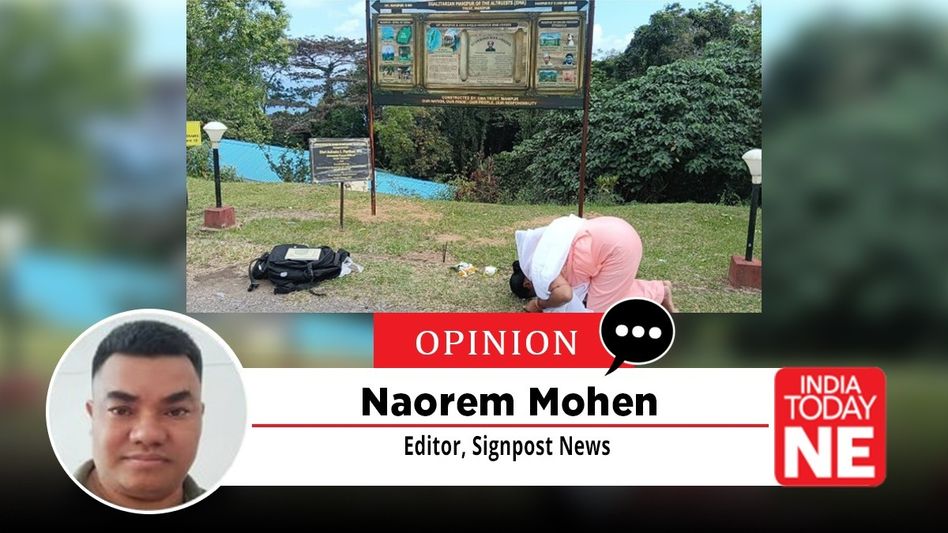
The recent initiatives by the Egalitarian Manipur of the Altruists (EMA) Trust in the Andaman and Nicobar Islands stand as a powerful and overdue act of historical reclamation. By installing a commemorative board at Mount Manipur (formerly Mount Harriet) on January 6, 2026, and placing a poignant painting at the infamous Cellular Jail in Port Blair shortly after, the Trust has taken concrete steps to honor 24 unsung heroes from Manipur—brave warriors exiled to the Andaman Islands as penal settlements by the British colonial regime.

- Jan 18, 2026,
- Updated Jan 18, 2026, 2:47 PM IST

The recent initiatives by the Egalitarian Manipur of the Altruists (EMA) Trust in the Andaman and Nicobar Islands stand as a powerful and overdue act of historical reclamation. By installing a commemorative board at Mount Manipur (formerly Mount Harriet) on January 6, 2026, and placing a poignant painting at the infamous Cellular Jail in Port Blair shortly after, the Trust has taken concrete steps to honor 24 unsung heroes from Manipur—brave warriors exiled to the Andaman Islands as penal settlements by the British colonial regime.
These actions are more than symbolic gestures. Infact, they represent a vital effort to correct a long-standing erasure in the chapters of India history, though Manipur was merged as part of Independent India as late as 1949.
The story begins with the Anglo-Manipur War of 1891, a fierce resistance against British interference in Manipur's sovereignty. Following the conflict, Maharaja Kulachandra Dhwaja Singh and 22 other Manipuri leaders were sentenced to life transportation to the Andamans.
The historical records from Manipur archives and British-era documents confirm 23 exiles after the 1891 war, figures like Prince Angousana Singh and others who endured unimaginable hardship far from home.
Many were initially held at Mount Harriet (now Mount Manipur) before transfers to the Cellular Jail, which was first constructed in 1896. Adding to this legacy is Prince Sana Chahi Ahum (also known as Prince Narendrajit or Ranjit), son of Maharaja Chourjit Singh, who was deported in 1858 for his role in leading resistance during the Sepoy Mutiny (the First War of Indian Independence in 1857) in the Cachar region. This brings the total to 24 Manipuri heroes who suffered in the Andamans' brutal exile system.
For far too long, these patriots have remained "unsung"—their names rarely appearing in mainstream Indian history textbooks, overshadowed by more prominent figures from other regions. The British renaming practices and colonial documentation often obscured regional contributions, leaving Manipur's role in the broader freedom movement undervalued.
However, the Central Government's decision in October 2021 to rename Mount Harriet as Mount Manipur was a welcome official acknowledgment, honoring these exiles and recognizing Manipur's defiance against imperial overreach.
Yet, renaming alone is insufficient without active remembrance and education.This is where the EMA Trust's work shines as both inspirational and necessary.
For generations spanning the last six to seven decades, family members of soldiers who fought and fell during World War II, particularly those from Japanese, British, and Allied forces have made poignant pilgrimages to Manipur's sacred battlegrounds and memorials.
Drawn by an unbreakable bond of remembrance, they journey to sites like the Imphal War Cemetery, the India Peace Memorial at Red Hill (Maibam Lokpa Ching), and the hills where fierce clashes unfolded in 1944, to pay solemn respect to their forefathers who endured unimaginable hardship in these very valleys and mountains.
These visits, often organized through war remembrance tours, bone recovery missions, or personal quests for closure, reflect a timeless human impulse: to stand where loved ones fought, suffered, and sacrificed, offering prayers, laying wreaths, and seeking connection with the land that became their final resting place.
These families find not just graves and relics, but a quiet acknowledgment of shared humanity amid the scars of war, turning foreign soil into a place of enduring honor and reconciliation.
In this same spirit of reclaiming forgotten valor, the EMA Trust has emerged as a beacon of unity, tirelessly working to rewrite Manipur's history through the lens of shared sacrifice and coexistence.
By honoring these unsung heroes—brave Meitei and Naga warriors exiled to the Andamans after the Anglo-Manipur War of 1891 and earlier resistances in 1857—the Trust bridges divides that have too often fractured our society. These patriots, from diverse communities within Manipur, stood united against colonial oppression, their courage transcending ethnic lines in defense of a common homeland.
The Trust's commemorative efforts at Mount Manipur and Cellular Jail do more than preserve memory; they forge a powerful narrative of harmony, reminding us that Meitei and Naga blood mingled in the fight for dignity and freedom.
In an era when unity is our greatest strength, the Trust's non-commercial dedication inspires a renewed commitment to coexistence, ensuring that Manipur's proud, pluralistic heritage becomes a source of collective pride rather than division. Through such acts, history is not merely revisited—it is healed, strengthened, and passed forward as a legacy of one indivisible people.
Historical records from Manipur archives and British documents consistently affirm these 23 exiles, many of whom endured brutal conditions at Mount Harriet, now rightly renamed Mount Manipur in their honor.
The 23 unsung heroes of Manipur—brave warriors who stood firm against British colonial aggression in the Anglo-Manipur War of 1891—were sentenced to lifelong exile in the Andaman Islands, a punishment designed to break their spirit far from their homeland. Led by Maharaja Kula Chandra Singh (Kulachandra Dhwaja Singh), the deposed king who ascended amid crisis and resisted imperial overreach, the group included valiant military leaders and loyalists such as Angousana Singh (Senapati and general), Lokendra Birjit Singh (Wangkheirakpa, Duke of Wangkhei), Colonel Samu Singh (Luwang Ningthou, King of Luwang Salai), Major Chongtham Nilamani Singh (Chongtha Aya Purel, External Affairs Minister and Major), Major Chongtham Mia (Chongtham Iboton Singh, commander at the fierce Battle of Khongjom), and others like Ingudum Ghana Singh (Jemadar), Chingsubam Ningthouba Singh (Jemadar), Thouba Singh (Jemadar), Mangshatabam Tonjao Singh (Jemadar), Heikrujam Chaobaton (Subedar), Ghowkami and Gowho (Naga warriors), Abungjao Yenkhoiba (Lalup Chingba), Laishram Khamba Singh (Machahal), Usham Aru Singh (Lalup Chingba), Khomdram Ghana Singh (Lalup Chingba), Hidam Chaobi (Machahal), Mayengbam Dhojo (Machahal), Nepram Noni Singh (Machahal), Nongthonbam Trilok Singh (Executioner), Sagolsem Dhono Singh (Executioner), and Ashangbam Paradhumba Singh (Kut, Havildar).
The commemorative board at Mount Manipur, inaugurated by Divisional Forest Officer Aswin J. Parihar and attended by local stakeholders like Rajshekhar from Experience Andamans Tours, bears the fitting theme: "Andaman & Nicobar Islands and Manipur: Separated by Distance but Connected Through History of Courage and Sacrifice."
It revives the profound link forged in shared suffering and resistance, part of the Trust's broader program to foster cultural and youth development by revisiting these historical figures.
Then, the subsequent placement of a painting at Cellular Jail artistically captures the emotional and cultural bonds, serving as an educational tool to remind visitors—tourists, students, historians, and citizens alike—of the indomitable spirit that fueled India's independence.
These non-commercial efforts deserve praise for their focus on national integration, heritage preservation, and youth inspiration. They highlight values of courage, patriotism, and selfless service while promoting tourism at these sites in a meaningful way—turning places of colonial oppression into beacons of pride and reflection.
Moreover, beyond ceremonies and plaques lies a deeper, more stirring truth. The Andamans and Manipur are eternally bound, not merely by geography or colonial maps, but by the blood, sweat, and unyielding resolve of our courageous forefathers.
This is the very soil, those distant, unforgiving islands where Manipuri warriors, torn from their beloved kingdom, endured the harshest tortures of Cellular jail for daring to defend Manipur's freedom and dignity against an empire that sought to crush every spark of sovereignty. They suffered in silence, far from the valleys and hills they loved, so that future generations might breathe the air of independence.
Today, as we stand on the shoulders of such giants, it is our sacred duty as a nation—and especially as Manipuris—to ensure their sacrifices are never forgotten. The youth of Manipur, and indeed of all India, must carry their stories in their hearts like sacred flames.
As a proud son of Manipur and someone who has long admired these efforts to honor our forgotten heroes, I extend my sincere and profound thanks to the Andaman & Nicobar Administration, the Divisional Forest Officer Aswin J. Parihar, the authorities at Cellular Jail, and all officials involved.
The unwavering support in facilitating the installation of the commemorative board at Mount Manipur and the placement of the painting at Cellular Jail has not only made these meaningful tributes possible but has also strengthened the invisible yet unbreakable bond between our distant lands.
Today, these 24 Manipuri patriots—Meitei prince, nobles, officers, and Naga allies—embodied unbreakable defiance, their shared suffering forging bonds across communities in the fight for sovereignty and dignity. Their names, long overshadowed in national narratives, deserve eternal remembrance as symbols of courage that transcended ethnicity in defense of Manipur's honor.
Let no child grow up unaware of these 24 heroes who chose chains over surrender, exile over submission. Let schools echo their names, let pilgrims to Mount Manipur and Cellular Jail pause in reverence, and let every Manipuri heart beat with pride knowing that our land's valor once shook the foundations of colonialism.
To forget them would be to dim the light of our own history; to remember them is to fuel the fire of patriotism for generations yet unborn. The EMA Trust has lit the path—now it is for us all to walk it, ensuring these brave souls are never again left in the shadows. Jai Hind, Jai Manipur!