Slaughtering the Manipuri Pony is an Assault on Manipur’s Civilisation
The reported theft and butchering of sagol must not be treated as an ordinary animal crime. It is a direct attack on Manipur’s history, polo, arambai, pena and civilisational memory.

- Aug 04, 2026,
- Updated Aug 04, 2026, 2:28 PM IST

The reported theft and butchering of sagol must not be treated as an ordinary animal crime. It is a direct attack on Manipur’s history, polo, arambai, pena and civilisational memory.
For centuries, the Manipuri pony has been far more than a horse. Sagol is not an ordinary animal in Manipur’s imagination. It carries the memory of kings, warriors, games, music, rituals and collective pride. It stands inside the story of Manipur itself.
This is why the recent reports of Manipuri ponies being stolen, slaughtered and allegedly sold for meat have caused deep anger and pain. To butcher a pony in Manipur is not merely to kill an animal. It is to wound a civilisation.
Several organisations associated with Manipuri Pony and Polo have demanded stringent action against the theft and butchering of ponies. Speaking to media persons at the Manipur Press Club on August 2, representatives of seven organisations, including the Manipuri Pony and Polo Welfare Association, Manipuri Pony Owners’ Association and Manipur Horse Riding and Polo Association, urged the State Government and authorities concerned to take strong action to protect the endangered Manipuri pony from slaughter.
Manipur Horse Riding and Polo Association general secretary K Dhanachandra reportedly stated that, according to figures of the Directorate of Veterinary, there are a little over 1,000 Manipuri ponies in the state. He also warned that the actual number may now have fallen below 1,000 after many ponies were allegedly stolen.
This is not a minor decline. It is a civilisational warning.
The Manipuri pony is inseparable from the history of Manipur. With sagol came arambai, the mounted martial tradition that defended the kingdom for generations. The pony carried warriors, protected sovereignty and became part of the political and military imagination of the land. Those who played with sagol were not merely riding an animal. They were participating in the defence and dignity of the kingdom.
With sagol also came Sagol Kangjei, the traditional game from which modern polo is widely believed to have evolved. Manipur did not merely play polo. Manipur gave polo to the world. That global sporting legacy was born from the strength, agility and intelligence of the Manipuri pony. To celebrate polo while allowing the pony to disappear would be a betrayal of that inheritance.
The pony also lives in the sound of pena, the traditional instrument so deeply associated with the spiritual, artistic and cultural life of Manipur. The tail hair of the pony is used in making the instrument. Through pena, sagol enters song, devotion, performance and memory. It is therefore not confined to the polo ground or the battlefield of history. It is present in music, ritual and identity.
This is why the reported butchering of ponies for meat is so disturbing. Those who treat the Manipuri pony as ordinary meat either do not understand Manipur or have chosen to show contempt for its heritage. Those who steal, slaughter and sell this animal are not merely committing cruelty against a rare breed. They are playing against the civilisation of Manipur.
The allegations placed before the public are serious. Polo associations, pony owners and equestrian organisations have claimed that ponies are being systematically stolen, slaughtered and sold for meat. They have alleged that more than 80 Manipuri ponies were stolen and slaughtered between September 2025 and January 2026. A recent survey conducted by these groups reportedly uncovered around 150 previously unreported cases of theft and loss.
If these claims are correct, Manipur is not dealing with isolated incidents. It is looking at an organised pattern of theft, illegal slaughter and possible trade in meat from an endangered indigenous breed. Such a pattern requires immediate police action, veterinary verification, food safety inspection and prosecution under relevant laws.
Representatives of the associations have also stated that several suspects allegedly involved in stealing and slaughtering ponies have already been identified and complaints have been lodged at various police stations. According to them, no concrete legal action has followed so far. This alleged inaction is unacceptable. When complaints are filed, when names are identified, and when an endangered cultural animal is involved, delay from law enforcement becomes deeply troubling.
The organisations have decided to ban the identified individuals from participating in tournaments and horse-related activities organised by them. This may be necessary as a community-level disciplinary step. But it cannot substitute formal legal action. Civil society bodies can raise alarm, protect their events and mobilise public opinion. Only the State can investigate, prosecute and punish.
The irony is painful because the Government of Manipur has already recognised the importance of the Manipuri pony. The State had approved the Manipuri Pony Conservation and Development Policy, 2016, acknowledging the urgent need for structured conservation and development of this rare breed. The policy framework also envisaged institutional mechanisms involving departments and organisations connected with veterinary care, tourism, sports, agriculture, polo and pony welfare.
But a policy that remains weakly implemented cannot save an endangered breed. Conservation cannot survive only on paper. It must be visible in fields, grazing grounds, veterinary support, police enforcement and public awareness.
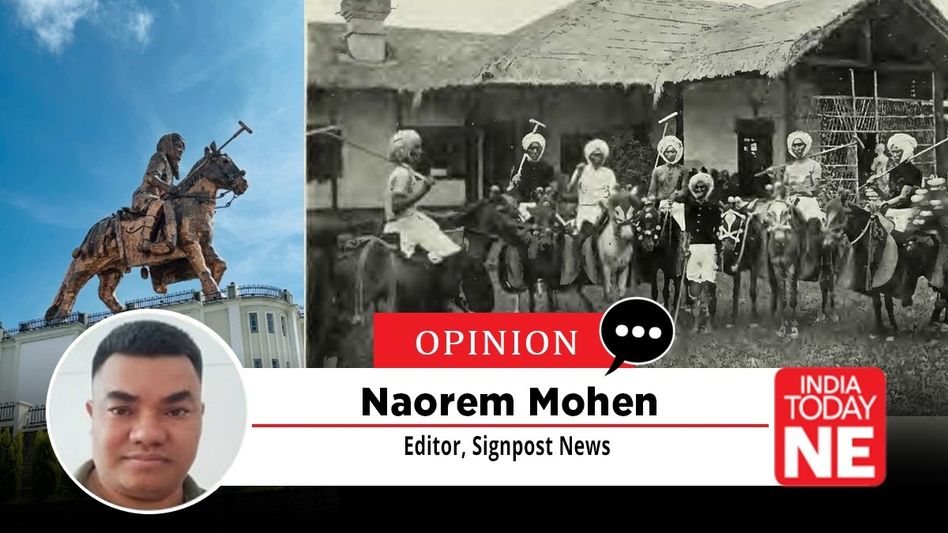
During the tenure of former Chief Minister N Biren Singh, the Government also sought to project the Manipuri pony as a living emblem of Manipur’s identity. The Marjing Polo Complex at Heingang became one of the most visible expressions of that effort. The 122-foot Marjing Polo Statue, depicting a Sagol Kangjei player mounted on the Manipuri pony, was inaugurated in January 2023 by Union Home Minister Amit Shah in the presence of Chief Minister N Biren Singh.
That statue was not merely a tourist attraction. It was a public declaration that Sagol Kangjei, Marjing and the Manipuri pony occupy a sacred space in Manipur’s cultural memory. It gave monumental visibility to a living heritage. It told visitors that the history of polo and the history of Manipur cannot be separated from the pony.
The N Biren Singh government also promoted initiatives to revive Sagol Kangjei and connect pony conservation with public awareness. The Chief Minister’s Sagol Kangjei Championship, organised during the Sangai Festival 2022, carried the message of saving the Manipuri pony, saving grazing fields and reviving Sagol Kangjei. Such efforts showed that the State understood the pony not as a decorative animal but as the foundation of Manipur’s sporting heritage and cultural diplomacy.
But symbolism must now meet governance. A magnificent statue at Marjing honours the Manipuri pony before the world. The living pony must not be left unsafe in fields, roadsides and private holdings. It would be a civilisational contradiction if Manipur celebrates the mounted polo player at Marjing while failing to protect the actual sagol from theft and butchery.
The statue preserves memory. Law must preserve life.
The reported move towards a stronger legal framework, including a dedicated Pony Act or statutory protection mechanism, must therefore be pursued with urgency. Manipur needs a law that gives the pony specific and enforceable protection. Such a law must provide strict penalties for theft, illegal transport, slaughter and sale of pony meat. It must require mandatory registration and tracking of ponies. It must protect grazing grounds. It must support genuine pony owners. It must fix responsibility on institutions entrusted with conservation.
Earlier, the crisis reached Parliament. Former Rajya Sabha MP Leishemba Sanajaoba has raised serious concern over the rapid decline in the population of the Manipuri pony through a Special Mention, urging immediate intervention for its protection and conservation. He described the Manipuri pony, a rare indigenous breed of Equus caballus, as an integral part of Manipur’s cultural and historical identity.
Leishemba Sanajaoba informed Parliament that despite the existence of the Manipuri Pony Conservation and Development Policy, 2016, ineffective implementation and other factors have led to a sharp decline in the pony population, which has now fallen below 1,000. His statement gives national voice to what pony owners, polo associations and conservation groups have been warning for years.
He also drew attention to recent reports of ponies being slaughtered and sold for meat, stating that such incidents have caused widespread public concern and distress in the state. He termed such acts unacceptable and called for strict action. This is important because the issue can no longer be dismissed as a private grievance of pony owners or a narrow concern of polo associations. It has become a question of public morality, cultural survival and legal accountability. These repeated interventions show that the decline of the Manipuri pony is not sudden. It is a long-neglected crisis that has now reached a dangerous stage.
The legal dimension is equally important. Leishemba Sanajaoba also pointed out that acts of hunting, killing or selling the pony for meat may violate provisions under the Bharatiya Nyaya Sanhita, the Prevention of Cruelty to Animals Act and the Food Safety and Standards Act. This means the matter is not only about heritage or emotion. It is also about law. If ponies are being stolen, slaughtered and sold as meat, the State has a clear duty to investigate, prosecute and prevent recurrence.
The Union Government must take note of this parliamentary intervention and issue necessary directions to the State Government for strict implementation of the Manipuri Pony Conservation and Development Policy, 2016. At the same time, the State Government must not wait for public outrage to peak before acting. Protection of the pony must become an urgent administrative priority.
The crisis is not only about theft and slaughter. The Manipuri pony has long suffered because of shrinking grazing grounds, habitat loss, urban expansion and neglect. Official records reportedly showed that Manipur once had around 44 grazing grounds for ponies. Today, only a few important spaces remain visible in public use and memory, including Mapal Kangjeibung, Hapta Kangjeibung and Manung Kangjeibung, which also function as polo venues.
A conservation policy that only reacts after theft cannot save the breed. Manipur needs a complete pony protection mission. It must include restoration and legal protection of grazing grounds, scientific breeding support, veterinary care, financial assistance to genuine pony owners, secure shelters, community-based monitoring and integration of pony conservation with polo, tourism, cultural education and heritage policy.
The proposed special drives by pony organisations at meat shops reflect public frustration. But such efforts must be supported and accompanied by lawful enforcement agencies. The fight against illegal horse meat sale cannot be left only to pony owners and polo lovers. It must involve the police, veterinary department, food safety authorities, municipal bodies, local clubs and the State Government.
For pony owners, the crisis is deeply personal. Many of them spend money, time and emotion to maintain ponies in extremely difficult conditions. When a pony is stolen, they do not merely lose property. They lose a companion, a sporting partner and a link with family and cultural tradition. The fear now spreading among pony owners is therefore understandable.
The moral question before Manipur is simple. Can a society claim pride in Sagol Kangjei while allowing sagol to be stolen and butchered? Can it celebrate polo while failing to protect the pony that gave the game its soul? Can it speak of culture while ignoring the destruction of a living cultural symbol? The answer must be no.
Every Manipuri pony saved is a fragment of Manipur’s civilisation preserved. Every pony lost to theft and slaughter is an injury to history. This is why the present reports must not be allowed to fade as another passing controversy. The government must act. Society must stand united behind conservation.
Sagol belongs not only to pony owners or polo players. It belongs to Manipur’s civilisational memory. It belongs to the story of arambai, Sagol Kangjei, pena, kingship, courage and cultural dignity. To protect the Manipuri pony is to protect Manipur itself.
The Marjing Polo Statue gave the Manipuri pony monumental visibility. A strong Pony Act must now give it legal protection.