The Wealth We Cannot Replace: Divine Panthou’s Message on Children
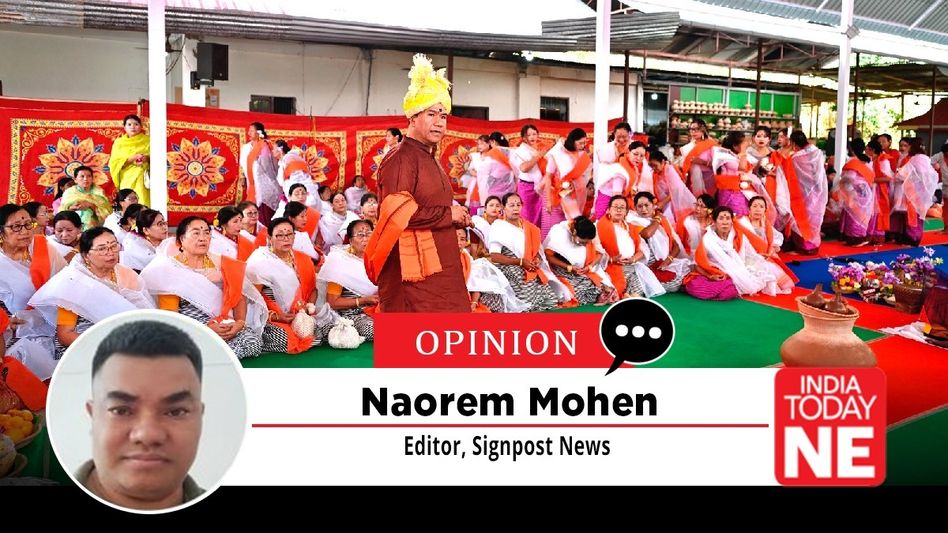
Divine Panthou addressed parents and children during the sixth-day Mera observance at Panthou Sanglen. His teaching stressed mutual care, forgiveness, cultural continuity and affection beyond material inheritance.

- Oct 18, 2026,
- Updated Oct 18, 2026, 12:29 PM IST

- Parents were urged to listen patiently and forgive mistakes without humiliation
- Comparisons based on examination marks can leave young people feeling inadequate
- Families should nurture mother tongues, traditions and intergenerational memories at home
Children are a wealth that cannot be divided, exchanged or replaced. Gold, silver, money and property may be shared among family members, but no possession can take the place of a child in a parent's life.
This was the central message of Divine Panthou's teaching on the sixth day of Mera, delivered during the observances at Panthou Sanglen, at Meitei Laikol in Selloi Langmaiching. His words carried a reminder for every parent: children are not merely heirs to the wealth we accumulate. They are themselves the most precious part of our lives, deserving our love, patience and attention while they are growing up beside us.
The teaching raises a question that deserves serious thought. We spend much of our lives preparing for our children's future, but how much attention do we give to their present? Parents work to build a house, acquire land, save money and provide an education that may spare their children the hardships they themselves have endured. Behind these efforts are years of sacrifice, postponed personal wishes and worries that children may never fully understand. Yet, amid all this preparation, we can sometimes forget that a child's need for affection, understanding and reassurance cannot wait until tomorrow.
Divine Panthou's words ask us to look beyond what we intend to leave behind and consider what we are giving our children today. A house may provide shelter, money may offer security and education may open opportunities. But none of these can replace the trust a child develops in a parent who listens, the comfort of being forgiven after a mistake or the confidence that comes from knowing one is loved without comparison or condition. If children are truly our greatest wealth, that belief must be reflected in the way we speak to them, guide them and treat them in the ordinary moments of family life.
Every parent knows something of sacrifice. A father may continue working despite exhaustion because school fees are due. A mother may put aside something she needs so that her child can have what is necessary. Parents often carry worries that their children never see, hoping to protect them from the difficulties of life. Divine Panthou speaks of children as born of their parents' blood and as the source of a deep and enduring love. His words recognise the bond that keeps parents going through years of hardship. Children, too, need to understand how much their parents have done for them. But there is another side to this relationship. Do our children always feel the love that we believe we are giving them?
Providing food, clothing and education is part of raising a child, but these alone do not meet every need. A child may have everything necessary for school and still have nobody to approach when frightened or troubled. Sometimes parents are so occupied with earning a living and managing the household that they have little patience left for their children's questions. A small mistake brings a harsh response. A disappointment is dismissed as unimportant. A child who wants to explain something is told to keep quiet.
To an adult, such incidents may seem ordinary and soon forgotten. For a child, they can remain painful memories. We may not remember the words we spoke in anger, but our children may remember them for years. Listening before scolding, noticing when a child has become unusually quiet and allowing children to explain their mistakes are simple acts of care. They cost nothing, yet they can make a child feel safe enough to speak openly.
We also need to think about the expectations we place on our children. Every parent wants a son or daughter to study well, develop discipline and become capable of standing on their own feet. There is nothing wrong with such hopes. Parents who have struggled through life naturally want their children to have better opportunities. The difficulty begins when a child's worth is judged mainly by examination marks, achievements or comparisons with others.
How often do we hear parents asking why their child cannot perform like somebody else's son or daughter? Such comparisons may be intended as encouragement, but they can leave a child feeling inadequate. Not every child learns at the same pace or possesses the same abilities. Some need more time, while others may discover their strengths in areas their parents had never considered. Divine Panthou's teaching that children are irreplaceable should remind us that each child deserves to be understood as an individual, not measured against another family's expectations.
His message also reaches beyond the family. He speaks of children as those who will plant the trees and bamboo of the future and carry forward the land, religion and culture inherited from earlier generations. There is much to reflect upon in this image. We plant a tree knowing that its shade may be enjoyed by people who come after us. We care for it while it is young, even though we may never see its full growth. Raising children demands a similar patience.
What children learn from us is not limited to what we deliberately teach them. They watch how we speak to elders, how we treat neighbours, how we respond to disagreement and how we behave towards people who need help. They notice whether we practise the honesty, kindness and discipline that we ask of them. Our habits, good and bad, can travel into the next generation through the examples we set at home.
For families in Manipur, and elsewhere across the Northeast, this responsibility is closely connected with the survival of language, culture and religious traditions. Children do not learn to love their mother tongue simply because they are told that it is important. They develop that attachment when the language is spoken naturally at home, when grandparents tell stories, when parents share memories and when children discover that their language belongs to their everyday lives.
The same is true of family history and religious customs. Elders may possess knowledge that has passed through generations, but that knowledge cannot survive through instruction alone. Children need opportunities to listen, ask questions and understand why certain practices matter. A tradition explained with patience and affection is more likely to find a place in a young person's life than one imposed without explanation. If we want children to preserve what we have inherited, we must first help them understand and appreciate it.
Divine Panthou also speaks of children remembering their parents after death, including through the offerings of Langban Luklen. His reference reminds us of the relationship between the living and those who have gone before them. Children who once depended entirely on their parents eventually become the keepers of family memories. They remember names, stories, sacrifices and the customs through which one generation remains connected with another.
But what will our children remember about us?
Will they remember only the discipline we demanded and the expectations we placed upon them? Or will they also remember that they could come to us when they were afraid, that we listened when they were troubled and that a mistake did not make them less loved? Parents naturally wish to be remembered with affection and respect. The memories that make this possible, however, are being formed now, in the ordinary conversations and experiences of family life.
One of the most touching parts of Divine Panthou's message is his appeal to parents to forgive their children when they make mistakes. At the same time, he urges children to regard their mother and father with the reverence they offer to the divine. These two responsibilities belong together. Parents must guide their children with love, while children must recognise the care and sacrifices through which they have been raised.
Respect for parents should not remain merely a matter of words or ritual. It should be visible in the way children speak to them, listen to their concerns and care for them as they grow older. A mother or father who once worked tirelessly to protect a child may eventually need that child's patience, company and assistance. The relationship changes with age, but the responsibility to care for one another remains.
Parents, too, must remember that forgiveness is not a weakness. Children will make mistakes. They may disobey instructions, fail to meet expectations or take decisions that cause disappointment. Guiding them does not mean accepting every action without question. There must be boundaries, discipline and an understanding of consequences. But correction should help a child recognise a mistake and learn from it, rather than leave the child ashamed or afraid.
When children fear humiliation, they may begin hiding their problems. A mistake that could have been discussed openly becomes something they feel compelled to conceal. Parents may then lose the opportunity to understand what their children are going through. Patience does not remove the need for discipline. It makes discipline more meaningful because the child knows that correction comes from concern rather than rejection.
Divine Panthou's reflection on the uncertainty of human life gives these responsibilities an added urgency. When we are healthy and occupied with daily work, we often assume there will be enough time for everything. We can speak to our children tomorrow. We can settle a disagreement another day. We can visit our parents when work becomes less demanding.
But life does not always give us the time we expect. Illness can change the circumstances of a family without warning. The strength on which we depend today may not remain with us forever. At such moments, the presence of those we love becomes more important than many of the possessions we have spent our lives accumulating. His teaching reminds us not to postpone affection until circumstances become more convenient.
Divine Panthou also connects family responsibility with the care we take of our own lives. In his spiritual teaching, he speaks of a human lifespan of 108 years bestowed by the Creator and urges people to avoid food that harms the body so that they may complete their life's journey.
This teaching carries a message for parents as well. Looking after our health is not only a personal responsibility. Our children need our presence, guidance and companionship as they grow. We want to see them become adults, share what life has taught us and remain beside them through difficulties they may face. Caring for ourselves is therefore also a way of caring for the family relationships that give our lives meaning.
As I reflect on Divine Panthou's words this Sunday, my thoughts return to the ordinary life of a household. There may be a child waiting for a parent to listen to a story. There may be a question we dismissed because we were busy, a family memory we have never shared or a harsh remark for which we still owe an apology. These are not extraordinary matters. They are part of the everyday relationship between parents and children, yet they often receive less attention than they deserve.
We cannot always give our children everything we wish to provide. Financial difficulties, work and family responsibilities place limits on what parents can do. But even within those limits, we can make time to listen, speak with kindness, correct mistakes patiently and show affection without making children feel that they must first earn it through achievement.
A house, land or savings may help our children when we are no longer there to provide for them. Education may open doors that remained closed to us. These are important things to leave behind, and parents are right to work for them. But children will carry something else into their adult lives: the memory of how they were treated at home, whether their voices were heard, whether their mistakes were forgiven and whether they grew up knowing that they were loved.
Divine Panthou's sixth-day teaching of Mera should therefore be more than a message we listen to during a religious observance. It should make us examine our own conduct as parents and children. Parents must ask whether their love is felt as deeply as their sacrifices are made. Children must learn to recognise the care they have received and show gratitude and respect to those who raised them. The responsibility belongs to both generations, and it begins within the family.
We need not wait for a special occasion to put this teaching into practice. Speak to your children today. Listen to what troubles them. Forgive a mistake without humiliating them. Share a family story, teach them the language and traditions they will one day carry forward, and give them the confidence to approach you without fear. Children, too, should make time for their parents, listen to their concerns and offer them the affection and care they deserve while they are still together.
We cannot recover the years that have passed, nor can we be certain how many more we will share. But we can decide how we treat one another from this day forward. If children are truly the wealth we cannot replace, let us stop measuring our love only by what we hope to leave them. Let us show that love in the way we live with them today. For the greatest inheritance we can give our children is not merely what remains after us, but the love, understanding and memories they carry throughout their lives.
(The views expressed in this article are those of the author and do not necessarily reflect the views of India Today NE or its affiliates)