Tragic Fate of Abujam Ongbi Ibemhal, First Meitei Victim of 2023, and Husband Abujam Sajou's Death in Exile
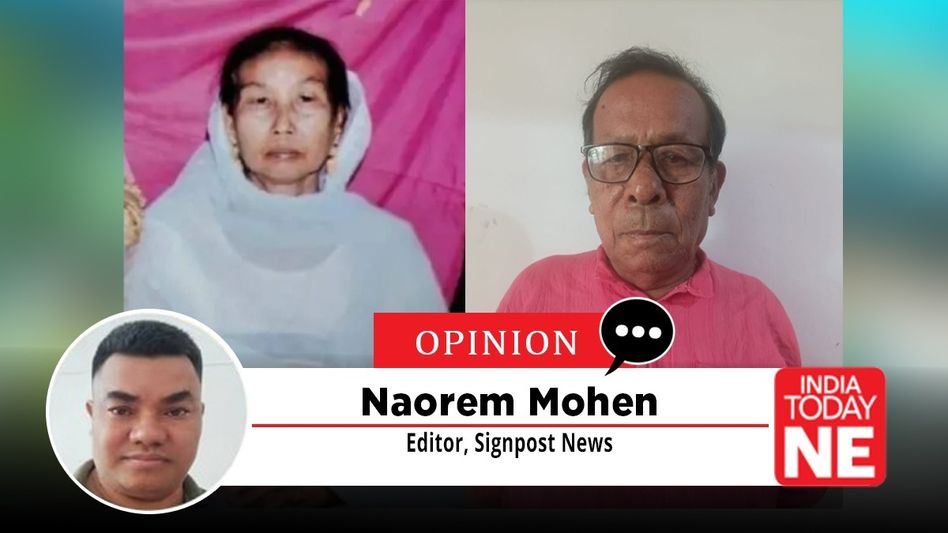
The ethnic violence that erupted in Manipur on May 3, 2023, tore through communities with ruthless speed, claiming lives and uprooting families in an instant. The first Meitei casualty in Churachandpur was Abujam Ongbi Ibemhal, a 64-year-old Meitei woman from Khuga Tampak Meitei Leikai, who collapsed and died while fleeing marauding mobs with her family.

- Feb 15, 2026,
- Updated Feb 15, 2026, 2:11 PM IST

The ethnic violence that erupted in Manipur on May 3, 2023, tore through communities with ruthless speed, claiming lives and uprooting families in an instant. The first Meitei casualty in Churachandpur was Abujam Ongbi Ibemhal, a 64-year-old Meitei woman from Khuga Tampak Meitei Leikai, who collapsed and died while fleeing marauding mobs with her family.
Her death marked the tragic beginning of a prolonged nightmare for the Abujam household. Nearly three years later, on February 13, 2026, her husband Abujam Sajou succumbed to the cumulative toll of grief, displacement, and exile, unable to return home or find closure after months of separation from his wife's body.
This is the tragic fate of a Meitei couple whose ordinary lives were shattered by ethnic strife, their story a painful reminder of how violence lingers far beyond the initial flames, claiming even the elderly in slow, unrelenting sorrow.
The night of May 3, 2023, shattered the fragile peace of Khuga Tampak Meitei Leikai in Churachandpur, a settlement where the Abujam family had lived for more than 100 years. Abujam Sajou (80), a lifelong farmer tending the land that sustained his household, shared his modest home with his wife Abujam Ongbi Ibemhal, then 64, and his widowed daughter-in-law Abujam Ongbi Pemita, who ran a small pan dukan to help care for the elderly couple.
Their life was rooted in routine, fields, family, quiet evenings. Sajou and Ibemhal had raised six children, two sons and four daughters in this place, watching grandchildren play in the lanes. Their elder son, Abujam Manglem, now 50, ran an auto workshop nearby; their second son, Abujam Robin, had passed away in 2020, leaving behind a widow and two children.
Together, the couple had seven grandchildren, five from Manglem, two from Robin whose laughter once filled their days.That evening, as ethnic violence erupted across Churachandpur, mobs and militants targeted Meitei homes in the hills. Gunfire rang out, houses burned, and terror swept through the minority Meitei pockets.
The Abujam family fled in haste, joining the desperate exodus from Khuga Tampak. In the chaos of flight along rugged paths, Ibemhal, exhausted and frail collapsed. She died there on the unforgiving ground, the first Meitei victim claimed by the violence that would consume Manipur.Her family could not leave her behind. With hearts breaking and arms straining, they carried her lifeless body onward, eventually reaching the safety of Tubong 27 Sector, where they sought shelter under Army protection alongside other displaced Meitei families.
But dignity in death was denied. Within just two days, Ibemhal's unembalmed body began deteriorating rapidly in the heat and open conditions of the camp. The sight became unbearable, a grotesque symbol of everything stolen from them. Manipur police intervened, taking the body away and placing it in the Churachandpur District Hospital morgue. The family was left separated from their matriarch, unable to perform the last rites that tradition and love demanded.
Seven long, tormenting months dragged on. Appeals, paperwork, and bureaucratic indifference delayed the return of Ibemhal's remains. Only after relentless waiting was her body finally released to the family, too late for proper mourning in the home she had nurtured.
By then, the ethnic divide had hardened into impenetrable lines. Blockades along the Highways, security forces, militant patrols, and civil society organizations enforced separation, only to create a new species known as Internally Displaced Person (IDP).
Khuga Tampak, once home for over a century, lay unreachable, its houses likely looted, burned, or leveled in the systematic expulsion of Meiteis from the district.The survivors—Sajou, Manglem, Pemita and the scattered children became refugees in their own state. They ended up in the Bishnupur Old DC Loukoipat Relief Camp, surviving on meager rations amid overcrowding, uncertainty, and grief.
Sajou, already elderly at 80 when the violence began, bore the heaviest toll. The trauma of watching Ibemhal die, of carrying her body, of waiting months to reclaim it, eroded him from within. His health declined steadily. Age-old ailments worsened by shock, depression, malnutrition, and the relentless strain of camp life. Pemita, once the steady hand running the pan shop and caring for her in-laws, now found herself jobless, her small business destroyed or inaccessible, her days consumed by survival and tending to Sajou.
Almost three years later, on February 13, 2026, Sajou's struggle ended. As his condition deteriorated critically, he was shifted for a brief week to a relative's house, his brother's daughter's home in Phubala for medical care outside the camp. There, at 83, he passed away quietly, without ever returning to the fields he farmed or the home where he raised his family.
His death was not sudden like Ibemhal's; it was a slow extinguishing, fueled by unrelenting sorrow, displacement, and the denial of peace.The couple's surviving children carry the burden forward.
Manglem, at 50, scrapes by doing odd jobs in the relief camp to survive, yet every day he quietly wishes to return home and resurrect whatever remains of his auto workshop.
Pemita (34) , widowed and now without livelihood, faces an uncertain future in the camp or beyond. The four daughters, the seven grandchildren, five young lives from Manglem, two from the late Robin, grow up knowing loss layered upon loss.
She shares her pain in a trembling voice: "My father-in-law still remembers my husband every single day, his laughter, his care, the way he held our family together before he left us in 2020. And my mother-in-law... she couldn't bear the shock of the violence and the loss; she collapsed at the camp and passed away soon after, her body left in the mortuary for days.
The memories haunt him, and they haunt me too, every quiet moment in this camp brings back their faces, their absence sharper than any wound."
Premita also makes an emotional plea to the present government to make every effort to ensure the safe and timely resettlement of Meiteis in Khuga Tampak within the promised deadline. For every single day spent in the relief camp is a horrible, unending moment of suffering, uncertainty, and longing for home.
No memorials honor Sajou and Ibemhal; their names rarely appear in headlines anymore. The first Meitei victim of the 2023 violence and her husband fade into the background noise of a conflict that has claimed hundreds, displaced tens of thousands, and entrenched divisions perhaps for generations.
This is the quiet horror of tragedy brought by Manipur violence, not just the burning homes and gunfire, but the slow theft of dignity from the elderly, the denial of rites to the dead, the transformation of rooted families into perpetual refugees.
Abujam Sajou and Ibemhal, who had lived over a century's worth of ties to Khuga Tampak, died as outsiders, denied return, denied rest, denied even the simple closure of burial near their home.Security cordons block roads, militants guard invisible boundaries, civil society hardens ethnic lines, no passage exists for bodies or souls to reclaim what was home.
Yet perhaps, in the end, their spirits drift back unhindered, to the familiar lanes, the fields Sajou tilled, the small house where grandchildren once played. There, beyond checkpoints and hatred, they may finally find the peace so cruelly withheld.
For those left behind, the children, grandchildren, the Meitei community still languishing in relief camps like Loukoipat, the pain endures. The wound festers not in grand battles but in stories like this.
Ordinary lives extinguished by ethnic fury, bureaucratic neglect, and the failure of humanity to bridge divides. Sajou and Ibemhal embody the deepest cost, the elderly who deserved to die at home, surrounded by love, not lost to chaos and separation.
Their unfulfilled dream of return haunts the land, a silent plea for remembrance amid the ongoing silence of unresolved grief.
The views expressed in this article are those of the author and do not necessarily reflect the views of India Today NE or its affiliates.