Unity is no longer optional — it is survival for native peoples of Manipur
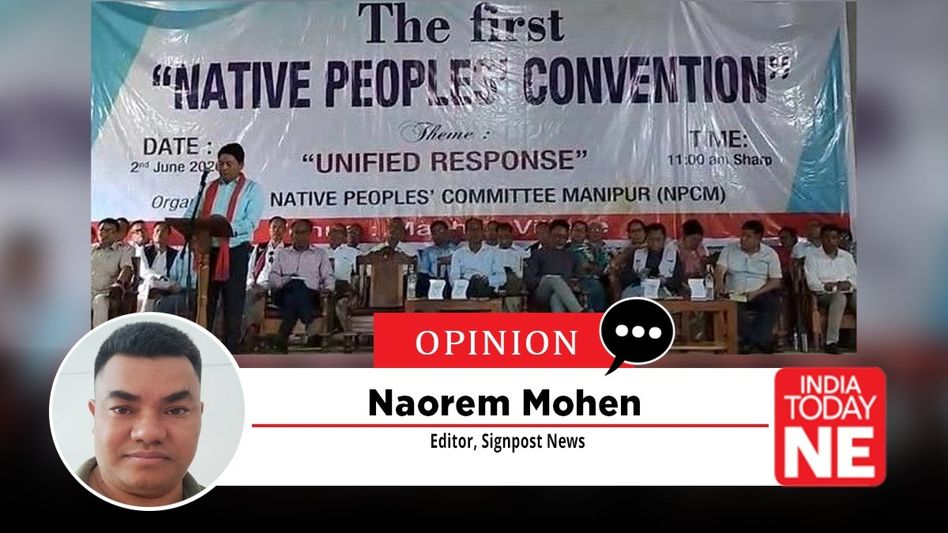
The birth of the Native Peoples’ Committee, Manipur (NPCM) at the recent Native Peoples’ Convention in Makhan Village is not just another civil society body. It signals a profound awakening among indigenous communities that the crisis gripping our state has outgrown tribal, district, or ethnic silos.

- Jun 03, 2026,
- Updated Jun 03, 2026, 3:06 PM IST

The birth of the Native Peoples’ Committee, Manipur (NPCM) at the recent Native Peoples’ Convention in Makhan Village is not just another civil society body. It signals a profound awakening among indigenous communities that the crisis gripping our state has outgrown tribal, district, or ethnic silos.
Valley or hills, Meitei or Naga — the threats are now common: unchecked demographic change, narco-terrorism, illegal immigration, land grabs, and the steady erosion of our traditional institutions.
Look at what disunity has cost us in the last three years. Because we remained divided along ethnic lines, every community has bled badly. If we had stood together as one indigenous force from the very beginning, our homes would not have been reduced to ruins. No single community could have been targeted so easily had the others risen in collective defence. Instead, our disunity gave outsiders and vested interests the perfect opportunity to strike one group after another, weakening all of us in the process. Every burnt village is proof that when natives stay divided, the land itself suffers.
The answer that rang out from Makhan on June 2 is clear and urgent: we can no longer afford to stand divided.
Leaders, intellectuals, elders, and representatives from different native communities gathered not to push narrow ethnic agendas, but to confront a shared reality. For too long, we have framed the crisis as “their problem” versus “our problem.”
That illusion has become dangerously obsolete. The forces reshaping Manipur do not respect community lines. Illegal immigrants flood in and strain everyone’s resources. Poppy fields and drug money poison every district. Land encroachment swallows villages regardless of tribe.
This is why the NPCM’s push for genuine indigenous unity demands serious attention. One of its strongest resolutions was the call to review and terminate the Suspension of Operations (SoO) agreements with armed groups that have repeatedly violated the terms.
Many native communities have long seen these arrangements not as peace initiatives, but as enablers of instability and territorial expansion. Public faith in the existing security architecture has eroded badly — across hills and valley alike. When people stop trusting the very institutions meant to protect them, restoring that trust becomes the state’s most pressing duty.
Illegal immigration has moved beyond politics into a question of survival, identity, and political future. Across the Northeast, indigenous voices have warned about demographic swamping and its consequences. Manipur is no exception.
An updated National Register of Citizens (NRC) and firm border management are not bureaucratic luxuries — they are essential tools to safeguard indigenous rights, land ownership, and rightful access to resources and representation.
Narco-terrorism poses an equally lethal danger. Poppy cultivation and the drug economy fund militancy, destroy forests, devastate families, and prey on our youth. No single community can defeat this hydra alone. It requires a coordinated assault involving village authorities, women’s groups, youth, churches, and civil society.
The NPCM’s emphasis on a united front against narco-terrorism shows a mature recognition that some battles transcend ethnic politics.
What gives real hope is the convention’s commitment to sustained dialogue. For decades, misunderstandings — especially between Meitei and Naga communities — have been exploited by vested interests and outsiders. Institutionalising regular consultations is a welcome step toward replacing suspicion with understanding. Dialogue may not solve everything, but its complete absence guarantees perpetual failure.
The demand for justice over the six missing Naga civilians further proves the point: when one indigenous group suffers injustice, others cannot look away. Solidarity must mean action, not mere statements.
Therefore, every indigenous community must come forward and join the Native Peoples’ Committee, Manipur without hesitation. Those who truly love this land, who want to protect our shared identity, secure our children’s future, and save Manipur from further ruin must step up now.
This platform is open to all who put the survival of our homeland above narrow interests. Your voice, your strength, and your participation are urgently needed.The message from Makhan is blunt.
Our problems are deeply interconnected. Security, demography, governance, identity, and land cannot be tackled in isolation. We do not need to erase all differences or forget historical grievances. But we must agree on the fundamentals: protecting indigenous rights, stopping illegal immigration, crushing narco-terrorism, safeguarding traditional lands, and defending our shared social and cultural fabric.
History rarely offers societies easy choices. This is one of those defining moments for Manipur. The question before every native community is simple: if we cannot unite around these core survival issues today, then when?
The conversation that began in Makhan must now echo through every valley, every hill, and every village of Manipur. The time for hesitation is over.
The future of our homeland will not be decided by silence or division, but by whether we, as native peoples, have the courage to stand together, forever!
(The views expressed in this article are those of the author and do not necessarily reflect the views of India Today NE or its affiliates.)