Was the Kuki-Zo Council Statement on the Saiton Bomb Blast Prepared Before the Blast?
How could the Kuki-Zo Council prepare a press release for an incident which never occurred? It is hard to find that even after 24 hours is about to end and we could not find any news of the "bombing incident" at Gamnomphai village near Seitol in Churachandpur district.

- Jan 06, 2026,
- Updated Jan 06, 2026, 2:09 PM IST

How could the Kuki-Zo Council prepare a press release for an incident which never occurred? It is hard to find that even after 24 hours is about to end and we could not find any news of the "bombing incident" at Gamnomphai village near Seitol in Churachandpur district.
The question arises: did the Kuki-Zo Council prepare the PR before the Saiton Nganukon bombing which happened in the early mornings at around 5.45 am of January 5, 2026? Did they have intel that something was going to occur at Gamnomphai village?
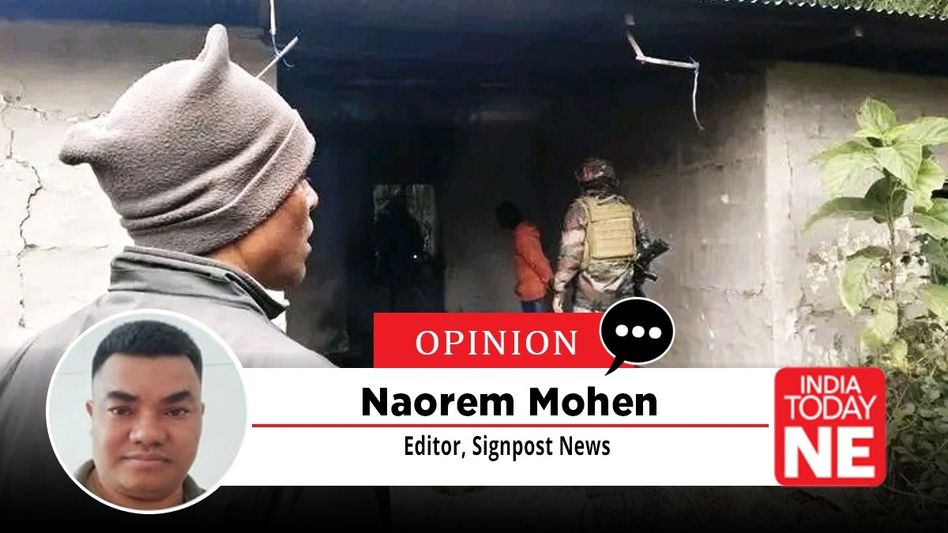
In the early morning of January 5, 2026, Manipur witnessed a disturbing resurgence of violence when a series of IED blasts targeted an abandoned Meitei house in the Saiton-Nganukon area of Bishnupur district.
The explosions, occurring between approximately 5:45 a.m. and 8:45 a.m., injured two Meitei civilians—Nongthombam Indubala Devi (37) and Soibam Sanatomba (51)—who had approached the site to inspect initial damage. Reports from multiple credible sources, including India Today NE, NDTV, The Times of India, Northeast Live, and several local news outlets, consistently locate the incident in Bishnupur district, along the sensitive Bishnupur-Churachandpur district border.
The blasts were widely attributed to Kuki militants, with the intent appearing to destroy abandoned Meitei properties and lure responders into secondary explosions.
Yet, in a bizarre twist, the Kuki-Zo Council (KZC), a Churachandpur-based body representing Kuki-Zo interests, issued a condemnation press release on the same day describing a completely different event: a "bombing incident" by "unknown miscreants" at Gamnomphai village near Seitol in Churachandpur district, with blasts at similar times (5:40 a.m. and 8 a.m.) and "several people" injured.
This false statement, shared on their WhatsApp channel around 11:34 a.m., emphasized violations of the buffer zone, disruption during the festive season, and appeals for investigation.
Extensive searches across national media, regional outlets, and international media reveal no trace of any bombing or explosion in Gamnomphai, Seitol, or anywhere in Churachandpur on January 5, 2026. All reported violence that day centers exclusively on the Saiton-Nganukon blasts in Bishnupur.
Condemning a phantom incident in their controlled territory while the real attack targeted Meitei civilians on the opposite side suggest something is cooking within the Kuki-Zo Council.
This fabrication is not a minor factual error amid chaos. By mid-morning—social media buzzing from around 9 a.m. and mainstream reports from 9:40 a.m.—accurate details were widely available: the Bishnupur location, abandoned Meitei house of Salam Mani, sequence of blasts to maximize harm, and named Meitei victims.
Former Saiton Gram Panchayat Pradhan M. Ibomcha publicly described the intent to destroy the Meitei property.
A genuine condemnation from the Kuki-Zo Council would necessarily involve a meticulous process: first obtaining verification of the incident from reliable ground sources or security forces, followed by internal consultation or an emergency meeting among its officials to deliberate on the facts, and finally drafting a statement grounded firmly in confirmed details rather than speculation or preconceived narratives.
This process reasonably takes several hours, with other CSOs issuing statements later I'm the evening or calling protests for January 6. Yet the KZC produced a polished, referenced release (KZC/SIP/PR/033) by 11:34 a.m., inventing an event in Kuki territory with eerily similar timings but reversed victimhood.
The implications are grave. The statement's language—framing buffer zone violations, festive disruption, and calls for vigilance—mirrors the actual Saiton incident but relocates it to portray Kuki areas as under threat. This suggests pre-drafting, possibly anticipating or planning a narrative where their side appears victimized.
Did they anticipate an incident in Gamnomphai that, for whatever reason, failed to materialize? Or was the fabricated condemnation a deliberate disinformation tactic designed to deflect growing suspicion from Kuki militants responsible for the actual blasts in Saiton-Nganukon, to preemptively counter Meitei narratives of targeted ethnic cleansing against abandoned Meitei properties, and to sow confusion while diluting attention from national and governmental quarters toward the real victims and perpetrators?
The KZC has previously been accused of bias, justifying actions or downplaying violence against Meiteis. Here, inventing an entire incident while ignoring Meitei injuries smacks of a hidden agenda to malign the Meitei community and manipulate perception.
The rapid release, despite hours of accurate reporting, and refusal to correct or address the real event, points to foreknowledge or premeditation.
If sincere, why no acknowledgment of the Bishnupur victims? Why fabricate a parallel attack?This is not mere incompetence; it erodes the fragile trust needed for peace.
The Manipur government rightly handed the twin bomb blast attack on Meitei villagers in Saiton Nganukon to the NIA, recognizing its terror implications. That probe must extend to the KZC's misleading statement: Who authored it? On what "information"? Why the discrepancies?
The actions of the Kuki-Zo Council in issuing a detailed condemnation for a non-existent bombing in Gamnomphai village raise profound and unsettling doubts: Was this press release prepared as a contingency narrative for a provocation that ultimately failed to occur, or is it simply another instance of routine deflection in a deeply polarized conflict?
Either possibility is deeply troubling and demands rigorous scrutiny from authorities, independent investigators, and civil society. Manipur, already scarred by years of ethnic violence, deserves unvarnished truth rather than carefully tailored narratives designed to manipulate perception.
This fabricated statement cannot be dismissed lightly—it must be thoroughly probed, including questions about its authorship, timing, and sources.
Moreover, by publicly claiming an attack on Gamnomphai that never materialized, the Council has created a dangerous precedent: if any incident were to occur there in the future, who would now bear responsibility for potentially staging or exploiting it to fit their pre-written script?