What a College in Kangpokpi Can Teach Manipur About Rebuilding Trust
At Sorshia Christian College, Naga, Meitei and Kuki students still share classrooms and a stage. The work that has kept them together deserves a place in Manipur’s discussion on peace and development.

- Nov 11, 2026,
- Updated Nov 11, 2026, 1:47 PM IST

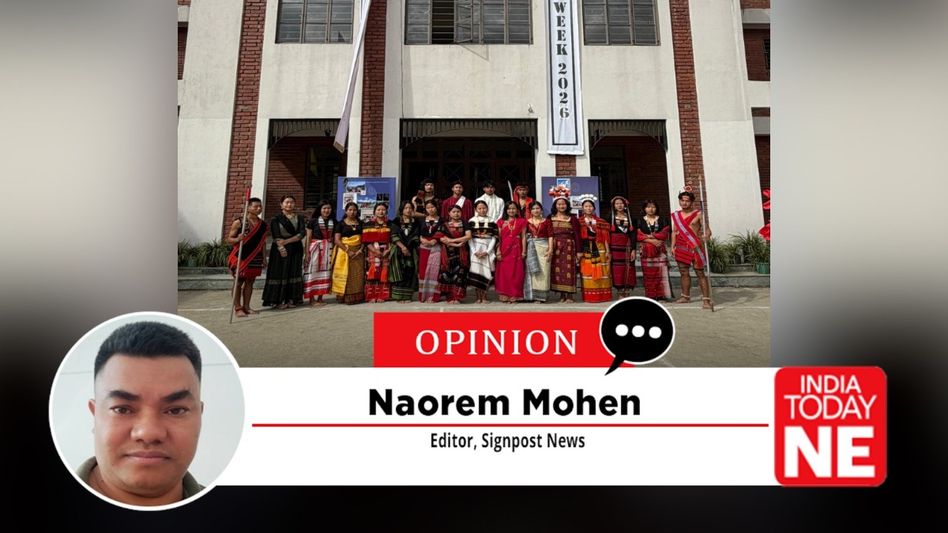
The Royals and the Trailblazers were formed to compete against each other at Sorshia Christian College’s second College Week. At the opening on November 9, the two teams stood on the same stage and sang together. At most colleges, a joint performance by rival teams would barely merit a mention.
At Mapao Zingtun in Manipur’s Kangpokpi district, it draws attention to something the conflict has made harder to sustain. Naga, Meitei, Kuki and other students continue to study together, take part in the same competitions and make friends across community lines. For them, the performance grew out of a relationship that already existed in the classroom.
Bringing communities divided by violence into regular contact remains one of the most difficult tasks before Manipur’s government. What this college has managed within its own grounds deserves to be taken seriously precisely because such contact has become so difficult elsewhere.
The College Week, held from November 9 to 11 under the theme “Beyond Rivalry, United in Excellence,” gives students ordinary reasons to spend time together. They have debates to prepare for, matches to play and dances to rehearse. A student who first knows a classmate by the name of their community may come to know them better as the person who helped finish a rehearsal or stood beside them in a difficult match. Those relationships take time to form, and the college has given them somewhere to grow.
Mapao Zingtun has been doing this work for some time. In January 2025, media reported that Meitei and Kuki children at the neighbouring Needy Home Academy continued to live, study and play together even as the conflict separated communities elsewhere. Sorshia Christian College has extended that experience into higher education.
The partnership also has roots in the village itself. On December 4, 2025, the college, the academy and the Mapao Zingtun Village Authority jointly organised a peace programme at the academy. Meitei, Kuki, Naga and Pangal students shared a stage through songs and dances, while college students used drama and poetry to express the pain of separation and the possibility of rebuilding trust. The village authority’s participation matters because families need confidence in the people and institutions around a campus before they can send their children there.
That work reached Imphal on November 4 this year, when the college and the academy organised A Hymn for Peace at Tangkhul Baptist Church. Meitei, Kuki and Naga students took part in choral performances, drama and personal testimonies. Rev. R. Ayui, who had unveiled a peace stone at the December gathering, also delivered a message at the Imphal event. In less than a year, the two institutions helped bring students together in a hill village and in the state capital. Each occasion gave young people another chance to meet in public and speak for themselves at a time when adults often speak of their futures in the language of separation.
When violence broke out between Meiteis and Kukis in 2023, it was easy to assume that Sorshia Christian College could keep students from both communities together because it stood in the Tangkhul Naga village of Mapao Zingtun. That explanation became harder to sustain when deadly Kuki–Naga clashes reached Kangpokpi itself in 2026. Even as talk of who would prevail made the violence sound like a contest between communities, the college held to the same commitment it had made during the earlier clashes. Naga, Kuki and Meitei students continued to learn together. For the government, civil society organisations and NGOs working for peace, the lesson is to keep institutions open to all communities precisely when fear and pressure to take sides are greatest.
The college’s contribution to development also deserves attention. In November 2025, a Manipur University team visited the campus to assess its facilities, the proposed expansion into the second year of its BA programme and the renewal of its temporary affiliation. It was reported that the college gave first-generation learners in the area an opportunity to pursue higher education closer to home.
Earlier that year, the college brought students, teachers and neighbours together to plant saplings for World Environment Day. Its World Intellectual Property Day programme linked classroom learning with questions that matter to local creators, from copyright in Manipur’s film industry to how artisans can earn from their work. A college that widens access to a degree and connects students to the concerns of people around them gives a village a stronger stake in its own development.
The state’s responsibility is to make such contact possible for more young people. That means ensuring safe travel to campuses, helping displaced students continue their education and supporting institutions that families from different communities can trust. Those responsibilities belong alongside the government’s wider obligations to protect lives and deliver justice. If Manipur’s peace efforts are to change daily life, one measure of progress should be whether a family feels safe sending a son or daughter to study alongside children from another community.
When College Week ends, the students at Sorshia will return to class together. That ordinary act is what makes Mapao Zingtun worth paying attention to. It is also a reasonable thing for families across Manipur to expect for their own children.