What El Niño Could Mean for the Northeast's Monsoon
IMD forecasts have put the Northeast on alert as El Niño conditions emerge ahead of the 2026 monsoon. The outlook has raised concerns over farming, water supplies and the region's climate resilience.
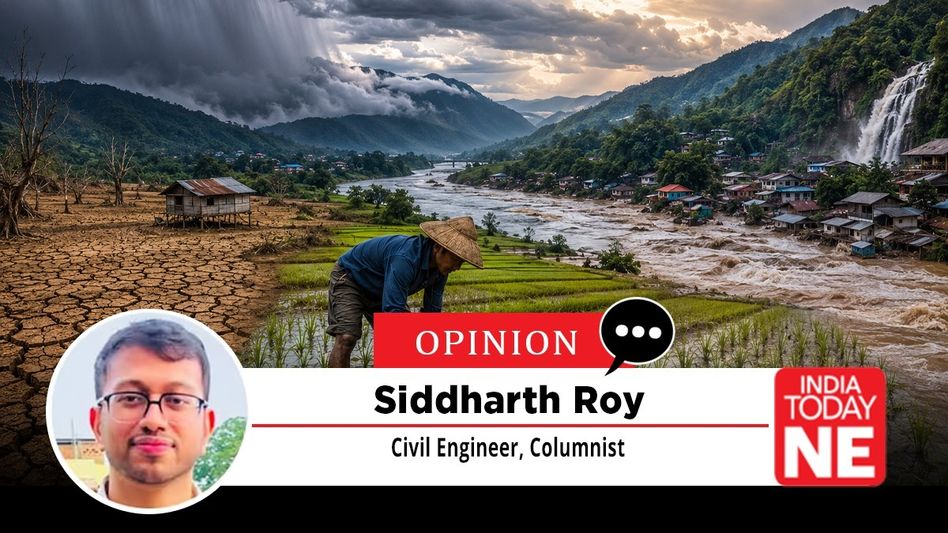

- Jun 27, 2026,
- Updated Jun 27, 2026, 5:41 PM IST

- The region relies heavily on rain-fed farming, forests and hydropower
- Rice sowing and yields may suffer from delayed rain and dry spells
- Assam's tea sector faces risks to both output and quality
For much of India, the arrival of the southwest monsoon is an annual event that determines agricultural output, water security and economic activity. In the Northeast, however, the monsoon is more than a weather system; it is the foundation of everyday life. The region receives some of the highest rainfall in the world, sustains unique ecosystems and depends heavily on rain-fed agriculture. It is therefore understandable that meteorologists and policymakers are closely watching the emergence of El Niño conditions in 2026 and their potential impact on the monsoon. Forecasts from the India Meteorological Department (IMD) suggest that the country could experience below-normal monsoon rainfall this year, with Northeast India among the regions likely to be affected.
While El Niño does not automatically translate into drought, its re-emergence raises important questions about the future of water resources, agriculture and climate resilience in the Northeast.
Understanding El Niño
El Niño is a naturally occurring climate phenomenon characterised by unusually warm sea-surface temperatures in the central and eastern equatorial Pacific Ocean. This warming alters atmospheric circulation patterns across the globe, influencing rainfall, temperatures and storm activity in distant regions.
Under normal conditions, trade winds push warm Pacific waters westward towards Southeast Asia. During an El Niño event, these winds weaken, causing warm water to shift eastward. The resulting disruption in atmospheric circulation affects monsoon systems worldwide, including India's southwest monsoon. Historically, many El Niño years have been associated with weaker-than-normal monsoon rainfall over India.
The relationship is not absolute, and factors such as the Indian Ocean Dipole can modify outcomes. Nevertheless, El Niño remains one of the strongest predictors of monsoon variability.
Why the Northeast Is Particularly Vulnerable
The Northeast occupies a unique geographical position. Moisture-laden winds from the Bay of Bengal interact with the region's hills and mountains, producing intense rainfall. This rainfall supports agriculture, hydropower generation, forests and biodiversity.
However, dependence on abundant rainfall also creates vulnerability. Even modest reductions in seasonal precipitation can have significant consequences. Unlike northwestern India, where irrigation infrastructure is relatively extensive, large parts of the Northeast continue to depend on rainfall for agricultural production.
Forecasts indicating below-normal rainfall in Northeast India during the 2026 monsoon season therefore warrant serious attention.
Agriculture Under Pressure
Agriculture remains one of the sectors most exposed to climatic variability. Rice cultivation, which dominates the agricultural landscape of Assam and several neighbouring States, depends heavily on timely and adequate rainfall.
An El Niño-induced weakening of the monsoon can affect sowing schedules, reduce soil moisture and lower crop yields. Delayed rainfall during the early stages of the monsoon may force farmers to postpone planting, while prolonged dry spells during critical growth periods can reduce productivity.
The impact extends beyond rice. Tea, one of Assam's most important economic sectors, is highly sensitive to changes in rainfall and temperature. Excessive heat combined with rainfall deficits can affect both yield and quality. Given that the tea industry supports millions of livelihoods directly and indirectly, weather-related disruptions carry broader economic implications.
Horticulture, fisheries and livestock production may also face challenges if water availability declines during the season.
The Flood-Drought Paradox
One of the most misunderstood aspects of El Niño is the assumption that it simply causes drought. In reality, climate variability often produces more complex outcomes.
The Northeast may experience a reduction in seasonal rainfall while simultaneously witnessing episodes of intense precipitation. Climate change has increased the tendency towards extreme weather events, making rainfall more erratic. As a result, the region could face a paradoxical situation in which periods of drought-like conditions are interrupted by short-duration, high-intensity rainfall events.
Such events can trigger flash floods, landslides and riverbank erosion without necessarily compensating for seasonal rainfall deficits. The result is greater uncertainty for farmers, planners and disaster-management authorities.
Water, Energy and Urban Challenges
The consequences of a weaker monsoon extend beyond agriculture.
Hydropower projects across the Northeast depend on sustained river flows. Reduced rainfall can affect power generation, particularly during periods of peak demand. Water availability for domestic and industrial use may also come under pressure in some areas.
Urban centres such as Guwahati face their own challenges. Although the city often experiences flooding during heavy rainfall, prolonged monsoon deficits can strain groundwater resources and water-supply systems. Climate variability is increasingly creating situations where regions face both flood risks and water scarcity within the same year.
This emerging reality highlights the need for integrated water-resource management rather than reliance on historical rainfall patterns.
Climate Change and a New Normal
The significance of the 2026 El Niño extends beyond a single monsoon season. Scientists increasingly warn that climate change is amplifying the effects of natural climate phenomena. Rising global temperatures can intensify heatwaves, alter rainfall patterns and increase the frequency of extreme weather events. Current forecasts suggest that the developing El Niño could interact with a warmer atmosphere, potentially producing more disruptive consequences than similar events in the past.
For the Northeast, this means that historical assumptions about monsoon behaviour may no longer hold true. Planning based solely on past experience is becoming increasingly risky.
Preparing for Uncertainty
The most important lesson from the emerging El Niño is not that catastrophe is inevitable but that preparedness is essential.
Governments must strengthen weather forecasting systems, expand climate-resilient agriculture and improve water-storage infrastructure. Crop diversification, drought-resistant seed varieties and efficient irrigation systems can help reduce vulnerability. Equally important is investment in flood management and landslide mitigation, given the growing unpredictability of rainfall.
The Northeast's ecological wealth has long depended on the monsoon. Yet the region now confronts a future in which rainfall patterns may become increasingly erratic. The challenge is not merely to survive a weaker monsoon in 2026 but to build resilience for a climate that is changing faster than many institutions are prepared to acknowledge.
El Niño may be a natural phenomenon, but its consequences need not become a developmental crisis. With informed policy, scientific planning and proactive adaptation, the Northeast can navigate the uncertainties of the coming monsoon while preparing for the larger climate challenges that lie ahead.