Why Kuki militants attack Meitei villages despite peace initiative by Centre?
It is deeply unfortunate and disheartening to witness the resurgence of violence in Manipur, particularly the reported attacks by Kuki militants operating from the hills—on Meitei villages in the border areas of Torbung, Kangvai, and Phougakchao Ikhai in Bishnupur district, bordering Churachandpur.

- Dec 17, 2025,
- Updated Dec 17, 2025, 5:01 PM IST

- Gunfire and explosions hit Meitei villages after DGP's security review.
- Attack follows resettlement of 389 displaced Meitei persons.
- Residents fear renewed violence despite peace efforts.
It is deeply unfortunate and disheartening to witness the resurgence of violence in Manipur, particularly the reported attacks by Kuki militants operating from the hills—on Meitei villages in the border areas of Torbung, Kangvai, and Phougakchao Ikhai in Bishnupur district, bordering Churachandpur.
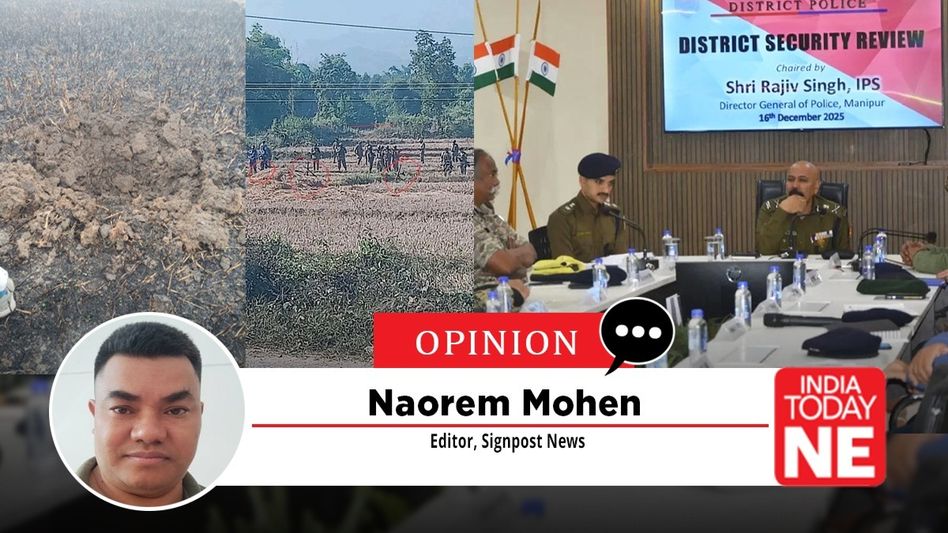
Around 8:40 pm, heavy gunfire erupted in these vulnerable Meitei settlement areas. Reports from the ground indicate that armed assailants fired several rounds of ammunition, along with bombs, from the hills overlooking the areas. Security forces responded, exchanging fire and rushing reinforcements to the scene to contain the situation. The clash lasted around one hour, triggering widespread panic among locals who had only recently begun to rebuild their lives. Homes were targeted, though fortunately, the damage was limited to property in many accounts, with no confirmed fatalities.
This attack comes at a particularly sensitive time. Just a day earlier—on December 15, 2025—around 389 internally displaced persons from the Meitei community, belonging to about 97 families and who had been living in relief camps for months, were resettled in Phougakchao Ikhai, Torbung, and surrounding areas as part of the government's phased rehabilitation efforts. These families had returned home with hope, supported by assurances of security and normalcy.
The sudden resumption of hostilities, barely 24 hours later, has shattered that fragile optimism. Residents now fear they may be forced to flee once again, abandoning their homes for a second time. Some have already begun expressing concerns about safety, with the incident triggering widespread anxiety and undermining the government's commitments to close relief camps by the end of the year.
The timing and nature of this assault raise serious questions about the commitment to peace in Manipur. For nearly a year, the state government—under President's Rule since February 2025—has made concerted efforts to restore order across both the valley and hill regions as a unified entity. Extensive operations have led to the recovery of looted arms and ammunition, the arrest of numerous outlaws, and initiatives to disarm communities on all sides.
The recent hosting of the Sangai Festival from November 21-30, 2025, was touted as a symbol of returning normalcy, a cultural celebration meant to signal that Manipur was healing despite calls for boycott amid ongoing displacement. Many in the Meitei community even surrendered weapons they had retained for self-defense during the height of the 2023-2025 ethnic clashes, demonstrating their faith in the government's promises.
Local voices from Phougakchao Ikhai and Torbung express profound frustration and betrayal. "We have cooperated fully with peace efforts, welcoming resettlement and trusting the process. The government claims progress—yet armed miscreants can strike at will. Where is this peace when our homes are targeted again?"
They point to a perceived imbalance: while the Meitei community has been disarmed in many areas to promote trust, armed elements among the Kuki attackers appear to operate with impunity. "Have the security forces disarmed the Kuki as thoroughly as they have us?" they ask. "Is the government inadvertently giving a free hand to certain groups to attack Meiteis whenever they please?"
This incident must be viewed in the broader context of Manipur's protracted ethnic crisis, which erupted in May 2023 and has claimed over 300 lives while displacing more than 70,000 people from both Meitei and Kuki communities. The border regions between Bishnupur (Meitei-majority) and Churachandpur (Kuki majority) districts, including Torbung, Kangvai, and Phougakchao Ikhai, have long been flashpoints. These areas were among the first hit in the initial waves of violence, with homes torched and families uprooted.
The recent resettlement of IDPs was a step toward reconciliation, yet this attack undermines it severely, marking the first major incident in these fringe areas in months.
It is crucial not to blame moderate voices within the Kuki community, such as the Kuki MLAs who recently attended a high-level meeting in Delhi to discuss peace and rehabilitation. Their participation was aimed at facilitating the return of Kuki IDPs waiting for months to go back to valley areas. The assailants, however, appear to be hardline elements opposed to any reconciliation—those pushing for separate administration or personal fiefdoms, often amplified by divisive voices.
These groups seem to place themselves above the law, disregarding ground rules and agreements.In a swift response on December 17, 2025, the Kuki-Zo Council issued a press release expressing "grave concern" over the incident, framing it as occurring in the "Torbung buffer zone" and blaming the resettlement of Meitei IDPs as "provocative." They accused the Deputy Commissioner of Bishnupur of irresponsibility and claimed provocative actions by Meiteis during the Christmas season aimed to disrupt peace.
It is deeply regrettable that the Kuki-Zo Council portrays itself as a victim, when multiple reports consistently indicate that firing originated from the Kuki side, targeting resettled Meitei villages. If their call for peace during the Christmas season is sincere, they should focus on maintaining vigilance in their own areas to prevent attacks on Meitei villages—villages that rightfully belong to the Meitei community.
This morning, combined security forces recovered approximately three Pompi (locally made bomb launchers) from nearby fields in Kuki-dominated areas, located barely 200 meters from the main road. These are believed to be the weapons used to fire bombs that landed on the Meitei side. Questions remain: How did security forces fail to check vehicles along the highway—a routine procedure at nakas (checkpoints) in the valley? Transporting these three Pompi along the highway exposes significant security lapses. Will the Kuki-Zo Council continue to deny or misrepresent yesterday's events?
Moreover, why not appeal directly to Kuki militants, who are fellow Christians, to observe peace during this sacred festive period, rather than resorting to violence against innocent people?
Areas such as Torbung and Phougakchao Ikhai remain historical Meitei settlements in Bishnupur district and are not under Kuki control. Repeated fact-distorting statements from such civil society organizations only erode trust, expose a pattern of deflection, and allow hardline elements to continue undermining stability..
Militant outfits under the Suspension of Operations (SoO) agreement are unlikely perpetrators, as they have benefited from extensions of the pact and have incentives to maintain peace. The attackers are more likely non-SoO elements or rogue factions intent on derailing progress. This assault is not just an attack on Meitei villages; it is a direct affront to the Ministry of Home Affairs (MHA) and the central government's efforts to stabilize Manipur.
Just days earlier, on December 12, 2025, the MHA held another round of tripartite talks in New Delhi with representatives of Kuki-Zo SoO groups—primarily the Kuki National Organisation (KNO) and United People’s Front (UPF)—and Manipur government officials.
These repeated engagements with Kuki SoO groups highlight a commitment of MHA to dialogue, yet the timing of the attack—mere days after the December 12 meeting—raises alarming concerns about the effectiveness of these pacts in curbing violence. It is high time for the Kuki SoO groups to honor their commitments fully and not allow any derailment of the peace process. These groups, having engaged in structured talks with the Centre, bear a responsibility to address and resolve the mess that has persisted in the hills, ensuring that hardline elements do not sabotage progress.
The peace desperately needed in Manipur should be driven by genuine efforts from all stakeholders, including the Kuki SoO signatories, to foster stability—not merely to enhance their own image or leverage in negotiations. The Centre has extended olive branches through renewed agreements and extensions; now, the SoO groups must demonstrate tangible action to rein in spoilers and contribute meaningfully to restoring normalcy for all communities.
If the SoO framework is to mean anything beyond periodic extensions and talks, it must translate into on-ground control over fringe elements that continue to fuel instability. The December 12 meeting was meant to build trust and address grievances, but incidents like this one expose the gap between dialogue and delivery, questioning whether the SoO groups are truly committed to peace or merely using the process to consolidate positions.
Responsibility must also lie with lapses in security oversight. The Security Advisor, Kuldiep Singh, along with the forces under his guidance, bears accountability for failing to thoroughly comb the hills adjoining these vulnerable Meitei villages. Amid growing public frustration, questions are being raised: Is the Security Advisor operating above the authority of Governor Ajay Kumar Bhalla?
Why were potential launch points for attacks not secured more robustly? Why allow armed Kuki militants—likely non-SoO—to position themselves for such strikes?
In other parts of India, similar incidents involving bombs and gunfire against civilians are swiftly labeled terrorist attacks. Why the hesitation here? India's citizens in Manipur deserve the same unequivocal condemnation and response when armed groups target them.
The silence from central leaders, including the Prime Minister's Office and MHA, in the immediate aftermath is distressing. This is no longer merely a Kuki versus Meitei issue—it has evolved into a battle between those committed to peace and unity versus forces of violence and hate. When bombs and gunfire disrupt resettled families, why no immediate statement of solidarity or assurance of action? India's leadership must speak out forcefully, condemning these acts and pledging swift justice in the Parliament session.
This is not the time for partisan games—Congress versus BJP rivalries or empty political speeches that ring hollow amid the suffering of ordinary people. The dream of forming a popular government, ending President's Rule, and restoring elected leadership will remain as elusive as a monsoon shower—promising relief but ultimately fleeting and unreliable—if leaders fail to nurture and protect the last flickers of hope, such as the recent IDP resettlements and fragile peace initiatives.
The Governor Ajay Kumar Bhalla has at least shown tangible effort by facilitating the return of IDPs to their homes, pushing forward rehabilitation despite immense challenges. Now, it falls upon party workers, civil society organizations, and leaders from both the valley and the hills to step up decisively. They must unite to rein in the "mad horses"—those extremist elements racing toward destruction and sabotage of the peace process. A handful of spoilers cannot be allowed to derail the aspirations of the entire state.
Leaders must decide: will they continue merely flying in and out of the state, offering superficial visits that fool innocent IDPs into false hope, or will they commit to genuine strategy? The recent Delhi meeting involving Kuki MLAs offers a potential pathway—build on that dialogue, forge cross-community strategies, and prioritize collective security over individual power grabs.
The central government must act decisively: intensify hill combing operations, ensure balanced disarmament, label and treat such attacks appropriately, and hold perpetrators accountable without favoritism. Only through impartial, firm action can true peace return to this beleaguered state. The IDPs who returned home barely a day before must not be forced to flee again.