Will SpiceJet’s Arrival Bring Relief to Stranded Manipur?
The recent announcement from SpiceJet is more than just another airline adding route. It's a lifeline for the people of Manipur, who have endured extraordinary hardships in mobility since the Manipur violence erupted on May 3, 2023.
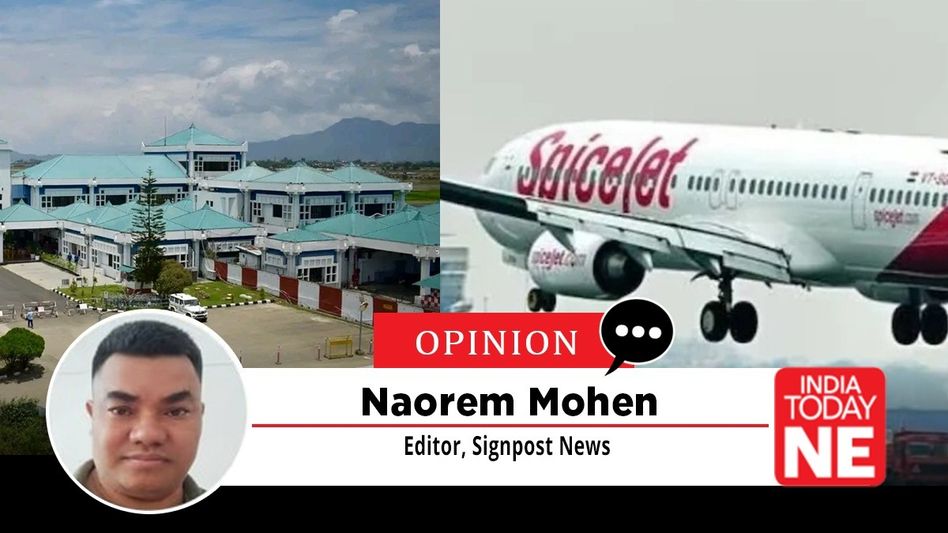

- Jan 24, 2026,
- Updated Jan 24, 2026, 12:47 PM IST

The recent announcement from SpiceJet is more than just another airline adding route. It's a lifeline for the people of Manipur, who have endured extraordinary hardships in mobility since the Manipur violence erupted on May 3, 2023.
SpiceJet's bold move, with its attractive introductory fares and daily operations, is a positive step toward ending the era of airfare extortion. It restores dignity to travel and opens doors that have been painfully shut for too long.
The two major national highways have remained severely restricted for free movement, particularly for the Meitei community in the Imphal Valley. Blockades, and ongoing tensions have turned what should be routine road travel into a near-impossibility, effectively isolating the valley from the rest of the state and beyond.
Surface transport has been unreliable, leaving air connectivity as the only realistic option for medical emergencies, education, business, family reunions, and essential supplies.Compounding this isolation has been the inconsistent and shrinking air services.
Limited flights by carriers like IndiGo—which has long been a primary operator on the Imphal-Guwahati sector—have struggled to meet demand, with schedules often reduced amid operational challenges.
More shockingly, Air India (the full-service arm) abruptly ceased all operations from Imphal's Bir Tikendrajit International Airport in June 2025, ending decades of reliable service. This withdrawal left a gaping hole in capacity, forcing passengers to rely on fewer options and driving fares even higher during peak needs.
The result is that ordinary people of the state faced not just inconvenience, but genuine crises like delayed medical evacuations, students unable to reach institutions outside the state, job interviews, families cut off, and economic activities strangled.
Just three months ago, in October 2025, Manipur was grappling with a painful air connectivity crisis. Ongoing violence had blocked highways, halting buses and trains, leaving air travel as the only viable option for many.
Airlines drastically cut services on the critical Imphal–Guwahati route—from five daily flights down to just two—driving one-way fares sky-high to ₹12,000–₹15,000 for a short 45–50 minute hop. This wasn't mere inconvenience; it was a humanitarian issue. Reports highlighted how passengers from Manipur paid up to 700% more than those from other Northeast cities for the same routes, exposing the isolation and exploitation felt by the state.
Into this challenging time steps SpiceJet, unveiling Imphal as the "Jewel of the Northeast" on its official X handle on January 23, 2026. The airline has already released tickets online for daily flights starting February 10, 2026, on the Kolkata–Imphal–Guwahati–Imphal–Kolkata sector. A non-stop Imphal to Guwahati ticket on the inaugural date is priced at just ₹3,961—one of the cheapest options compared to carriers like Air India Express or IndiGo.
This is a dramatic shift from the recent ₹15,000-plus fares that left people stranded. SpiceJet also offers one-stop connections from major cities like Mumbai, Delhi, Ahmedabad, and Chennai, with an Imphal–Delhi ticket (via Guwahati, including 5 hours layover) starting around ₹9,499—still far more reasonable than pre-crisis equivalents for longer journeys.
While final operational formalities between the Airports Authority of India (AAI) at Imphal and SpiceJet are ongoing, meaning passengers should await official confirmation before booking this proactive ticketing and announcement signal strong intent. Competition is the key here.
The arrival of SpiceJet adds vital capacity and pricing pressure on the route, promising to stabilize and lower fares overall.This development comes at a time when other new players like Akasa Air are also in discussions to enter Manipur's skies.
More carriers mean more seats, better schedules, and crucially, fares that reflect actual operational costs rather than scarcity-driven profiteering. For a state that has endured prolonged unrest, disrupted surface links, and inflated air travel, this influx of low-cost options represents empowerment. An easier access to healthcare, education, family, business opportunities, and the rest of India.
The announcement of SpiceJet isn't merely about cheaper tickets. It's about restoring dignity, mobility, and hope to a population that has suffered prolonged restrictions on land and sky alike.
However, in this moment of hope sparked by SpiceJet's entry into Imphal, it's worth acknowledging the broader challenges in India's domestic aviation.
According to DGCA data for FY25 (the financial year ending March 2025), the civil aviation regulator received a total of around 9,700 passenger complaints across all airlines—a sharp rise reflecting ongoing service issues nationwide.SpiceJet, in particular, faced 3,300 complaints during the year, marking a 37% increase from FY24.
This included issues stemming from flight disruptions. Approximately 1,500 passengers were impacted by cancellations, though this represented a significant 60% improvement over the previous year. Delays affected about 2.6 lakh passengers industry-wide for SpiceJet operations, a marked reduction from 6.9 lakh in FY24—indicating some progress in operational reliability despite the higher complaint volume.
These figures highlight that while no airline is immune to teething troubles, especially low-cost carriers managing tight margins and high utilization, SpiceJet has shown measurable improvements in reducing the scale of cancellations and delays compared to the prior year.
For passengers in Manipur, where reliable connectivity is a lifeline amid ground restrictions, the key promise lies in competition driving better service and accountability overall. Introducing more options like SpiceJet's affordable daily flights, can help shift the balance from scarcity and high fares toward greater reliability and passenger choice, even as the industry works through its systemic challenges.
Let the final agreement between the Airports Authority of India (AAI) at Imphal and SpiceJet be executed swiftly and without delay. Formalities must conclude promptly so that these flights can take off as planned, delivering the relief and normalcy the state so desperately needs. The skies should no longer be a privilege, they must become a reliable right for every Manipuri.