Women Deserve Assistance, Not a Test of Political Loyalty
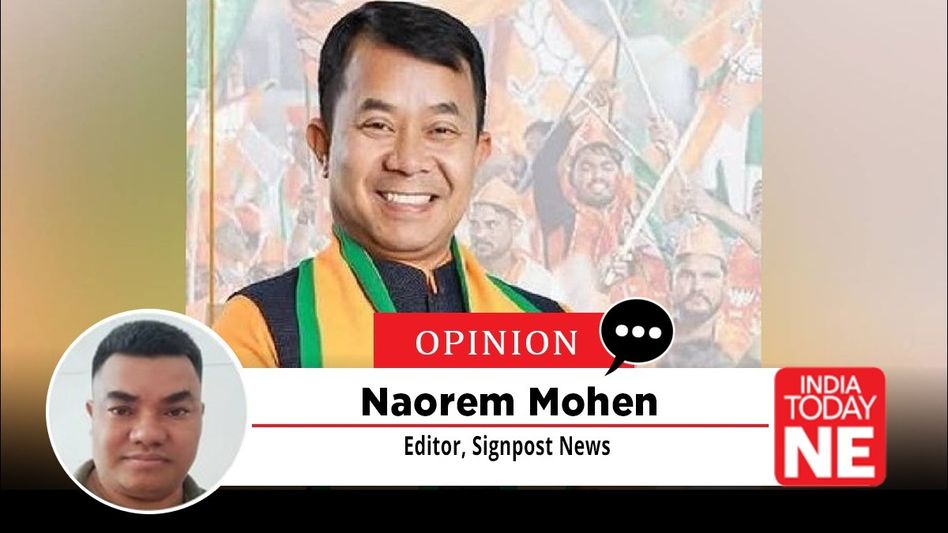
Thanga AC MLA Tongbram Robindro’s defence of the Rs.10,000 assistance raises a principle worth supporting: eligible women should receive government welfare regardless of whom they support or vote for.

- Oct 16, 2026,
- Updated Oct 16, 2026, 11:47 AM IST

- First-year grants target 3.5 lakh members of recognised self-help groups
- Interest-free loans are planned during the scheme’s second and third years
- Opposition scrutiny can examine selection, exclusions and timely beneficiary payments
For a woman struggling to keep her household running in Manipur, where conflict has disrupted everyday life for more than three years, Rs 10,000 can make a real difference. Its worth cannot be judged merely through the political arguments surrounding it. The money could help her restock a small shop, pay an overdue household bill or manage family expenses when regular income is no longer assured.
Of course, Rs10,000 cannot make up for the hardships families have faced since violence broke out on May 3, 2023. But that does not mean the assistance should be dismissed. Political parties may argue over the scheme and who deserves credit for it. In the process, however, they risk losing sight of the women for whom the assistance is meant.
Thanga AC MLA Tongbram Robindro’s defence of the announced assistance deserves support for the principle at its centre: a government welfare scheme belongs to every person who meets its eligibility conditions, irrespective of political affiliation. Responding to allegations that the assistance is an election gimmick or is intended only for BJP workers and supporters, he has called for evidence and argued that women’s welfare should come before political differences. This is a reasonable position. A woman should neither have to demonstrate loyalty to the ruling party to receive assistance nor feel that accepting it compromises her freedom to support the opposition.
Robindro’s appeal also deserves attention in constituencies represented by non-BJP MLAs, where complaints have emerged that BJP supporters are being denied access to welfare benefits because of their political affiliation. These allegations require verification, but the principle is clear: no elected representative or implementing authority should allow party differences to determine who receives government assistance.
An eligible woman who supports the BJP has the same entitlement as one who supports any other party. Robindro’s call to keep welfare above politics should therefore be understood as an appeal to ensure that assistance reaches eligible women even where local political rivalries threaten to stand in their way.
Precision about the scheme is essential. Reporting on the Cabinet’s approval of the Women Empowerment (WE)–Manipur scheme describes a Rs 10,000 first-year grant for 3.5 lakh women belonging to recognised self-help groups, followed by interest-free loans in the second and third years.
The announced programme therefore has a defined beneficiary category; it should not be presented as an unconditional payment to every woman in the state. Political leaders defending it and those questioning it have an equal responsibility to explain the applicable conditions accurately. Confusion about eligibility can create expectations that later turn into disappointment and distrust.
The strongest part of MLA Robindro’s argument is his insistence that political affiliation should have no bearing on access. That principle deserves to be repeated beyond this particular controversy because public welfare too often becomes entangled with the language of personal favour and party generosity.
Government assistance is financed through public resources and administered under public authority. Those receiving it are citizens with legitimate claims under the scheme’s rules. They are not acquiring a political debt, and their gratitude, if they choose to express it, cannot be treated as a promise of electoral support.
Opposition parties nevertheless have a legitimate role in examining how the programme operates. They can ask whether selection is fair, whether eligible applicants are being excluded and whether the money reaches beneficiaries on time. Such scrutiny can strengthen a welfare initiative by exposing weaknesses before they become entrenched.
But an allegation that assistance is reserved for BJP supporters is a serious charge of discriminatory administration and needs specific evidence. If there are documented cases, they should be brought forward and investigated. Repeating the accusation without substantiation risks discouraging eligible women from applying for support they may need.
Similarly, describing assistance as an “election gimmick” does not settle the question of its usefulness. Governments naturally seek political credit for their decisions, and voters are entitled to examine the timing of announcements.
However, political advantage and public benefit can coexist. The relevant questions are whether the need is real, whether the programme is properly funded and whether its delivery is fair. Women facing financial strain should not be expected to wait for a moment when their welfare can attract no electoral interpretation, because such a moment may never arrive.
For Chief Minister Yumnam Khemchand’s government, the most convincing response to criticism would be clear and accessible implementation. Eligibility conditions, application procedures and payment arrangements should be explained in language applicants can understand.
Women who face difficulties with documents or banking should have somewhere to seek assistance, while those who believe they have been wrongly excluded should have a workable route to complain. These are practical ways to give substance to Robindro’s assurance that the scheme is open to eligible women regardless of their political beliefs.
There must also be proportionality in the claims made for the assistance. A Rs 10,000 grant can be useful without being described as a complete answer to women’s economic insecurity. Families need dependable livelihoods, functioning markets and the security to rebuild their lives. Financial assistance should form part of that wider responsibility. Supporting this measure does not require anyone to abandon questions about rehabilitation, public safety or the government’s performance in restoring conditions in which women can earn with confidence.
Tongbram Robindro has put forward a principle that both the government and its critics should be willing to uphold. Let eligible women receive the assistance, let complaints be examined on evidence and let beneficiaries retain their full political independence.
A woman who supports the opposition should receive the same benefit as an equally eligible woman who supports the BJP. Likewise, an MLA from the opposition should be able to help eligible women in their constituency access the scheme, regardless of political affiliation.
Welfare assistance must not depend on which party a woman supports or which MLA represents her. The real test of this scheme will not be the speeches made in its defence or the accusations traded between political parties, but whether women receive the assistance fairly, without being asked whose side they are on.
(The views expressed in this article are those of the author and do not necessarily reflect the views of India Today NE or its affiliates)