Reporting Live review: A story worth telling, and a reminder of why journalism matters
A bridge collapses, a sand-mining racket emerges, and two journalists find themselves caught between the truth and powerful interests. Dhruv Tripathi’s Reporting Live explores the pressures of television journalism while making a case for the kind of investigative reporting that goes beyond the day's headlines.
- Oct 13, 2026,
- Updated Oct 13, 2026, 11:14 AM IST
The first thing Reporting Live gets right is a seemingly insignificant moment. When field reporter Sandhya Yadav introduces her colleague Vinod Sharma as a camera person, the distinction says more about newsroom hierarchies than a lengthy speech might. The person delivering the news on screen often receives greater recognition than the one capturing the footage, documenting the evidence and helping build the story.
Vinod, played by Deven Bhojani, is a video journalist who understands his craft and wants it to be recognised. Sandhya (Parineeti Chopra), meanwhile, dreams of becoming a prime-time anchor. Their ambitions differ, but their work is inseparable. The film establishes this relationship before placing the pair at the centre of an investigation that threatens to become bigger than either anticipated.
Beyond the race for breaking news
At Azaad Bharati, the television channel where they work, ratings and breaking news dictate much of the newsroom's priorities. The film's reference to “fast food journalism” captures an increasingly familiar problem: the race to publish first can leave little room for understanding a story in its entirety.
The distinction becomes apparent when a bridge collapses in Visargaon, Maharashtra, killing schoolchildren and others. While covering the tragedy, Sandhya and Vinod encounter villagers who question the explanations offered for the disaster. Shiva, played by Amol Palekar, and Mangesh (Pitobash Tripathy) point them towards illegal sand mining, alleging that excessive extraction has weakened the bridge's foundations.
Their investigation leads them towards powerful interests in the construction business. A local disaster becomes a story about accountability, unchecked extraction and the people who may benefit from keeping the truth hidden.
This is where the film finds its purpose. Rather than treating the collapse as a standalone news event, it follows the questions that emerge from it. The premise gives investigative journalism a tangible role, showing how a reporter's job extends beyond collecting reactions and delivering a bulletin. The investigation occasionally follows familiar thriller conventions, but the underlying story remains compelling because the stakes extend beyond the newsroom.
When the source becomes the story
The dangers confronting Sandhya and Vinod have real-world parallels. In March 2018, journalist Sandeep Sharma died after being hit by a truck in Madhya Pradesh. He had reported on illegal sand mining and reportedly sought police protection after expressing fears for his safety. In June 2020, Shubham Mani Tripathi, a reporter with a local daily, was shot dead in Uttar Pradesh after reporting on illegal sand mining and land disputes. In February 2023, Maharashtra journalist Shashikant Warishe died after an SUV struck him, shortly after he published a report concerning a local real estate figure and alleged land-related wrongdoing.
These cases underline the risks associated with investigating powerful interests. Sources may possess information that exposes wrongdoing, but speaking out can endanger their livelihoods and families. Protecting their identities is therefore not merely a professional obligation; it can be essential to their safety.
Reporting Live brings this vulnerability into its narrative without losing sight of the journalists themselves. Sandhya and Vinod are ambitious professionals, but their investigation forces them to confront the consequences of pursuing a story beyond the point at which it remains comfortable or safe. The film's suspense may not always be unpredictable, yet the danger surrounding the investigation gives its central conflict weight.
The problem with turning every story into content
The film's concerns also resonate with the changing media landscape, where independent digital platforms and individual media influencers can bring attention to protests, activism and issues that established newsrooms sometimes overlook. Their immediacy can be valuable, particularly when people need a platform to raise concerns.
But attention and sustained journalism are not necessarily the same thing. A protest can attract thousands of views, an incident can dominate social media for a few days, and an individual can build an audience around a developing controversy. What happens when public attention moves on? Who continues following the story, verifying claims, tracking legal developments and asking whether those responsible have been held accountable?
The concern is not about whether journalism happens on television, through a digital portal or on an individual's social media account. It is about whether the work is transparent, evidence-based and accountable. When coverage depends primarily on the popularity of an issue or the interests of the person presenting it, a story can disappear as quickly as it emerged.
That is the distinction Reporting Live invites viewers to consider. Investigative journalism requires more than making an issue visible; it requires the willingness to stay with it after the immediate attention has faded. The real test is not how many people watch a report, but whether the reporting helps establish facts and keeps the questions alive.
When the newsroom becomes part of the story
Adil Hussain's Vidur Dutt, a senior editorial figure at Azaad Bharati, attempts to defend journalistic integrity within a system shaped by commercial interests. His observation that journalism has become a circus because of certain individuals speaks to the growing distrust surrounding the profession.
The film does not suggest that journalism should be beyond criticism. Rather, it draws attention to the difference between reporting that seeks to establish facts and content that prioritises spectacle. When sensationalism dominates, the credibility of an entire profession can suffer, including that of reporters who continue to investigate difficult stories.
Shekhar Suman's Shyam represents the commercial interests that can influence editorial decisions, while Vidur struggles to preserve the channel's journalistic responsibilities. Saswata Chatterjee's JP establishes the stakes early: he is asked to leave the organisation after pursuing a story concerning a highway project that could expose the channel to a defamation case.
The conflict adds another dimension to the film's central investigation. Journalists must contend not only with the people they report on, but also with the institutions that decide which stories are worth pursuing and which risks are acceptable.
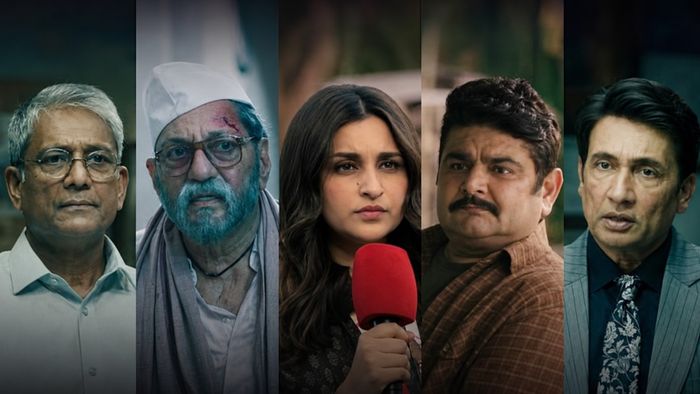
Chopra brings determination to Sandhya, while Bhojani gives Vinod a grounded presence that reinforces the importance of the work behind the camera. Hussain lends conviction to Vidur, and the supporting cast helps establish the competing interests within and beyond the newsroom. Together, they give the story a recognisable professional setting, even when some of its developments follow familiar dramatic patterns.
The verdict
Reporting Live is worth watching for the questions it raises and the way it brings the less visible parts of journalism into focus. Its investigation gives the narrative a clear purpose, while its attention to video journalists, editorial pressures and vulnerable sources broadens the story beyond the familiar image of an anchor confronting a guest in a studio.
The film will appeal particularly to viewers interested in media, investigative reporting and stories in which the pursuit of evidence brings ordinary people into conflict with powerful interests. For those looking for a tightly constructed thriller full of unexpected twists, it may feel more measured. For anyone curious about what happens before a story reaches the screen—and what it takes to keep asking questions after the cameras stop rolling—Reporting Live is worth watching.
ALSO READ: Besharam Aadmi: A man, a marriage and the things he never questioned