’A Thousand Dawns’ blends folklore and feminism
Review| ‘A Thousand Dawns’ is a reimagining of Bengali folklore and, by virtue of that alone, is bound to garner acclaim. Yet, the writing unmistakably bears the imprint of a teenage author.
- Jul 08, 2026,
- Updated Jul 08, 2026, 7:51 AM IST
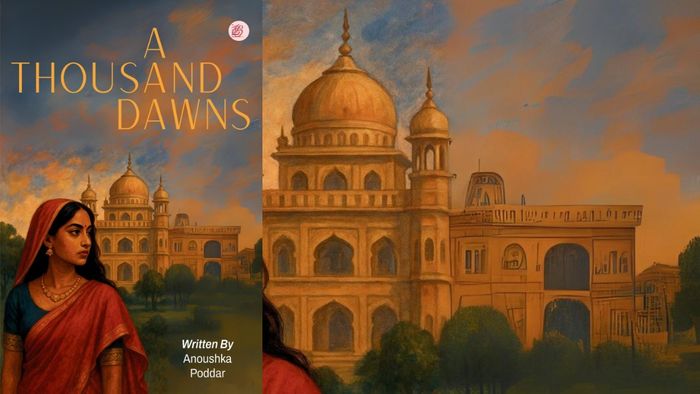
Stories written through a feminist lens have gained quite the following today; especially when the narrative is a contemporary one. Featuring similar themes and borrowing from a Bengali folklore is Anoushka Poddar’s ‘A Thousand Dawns’ – a book that revolves around two women who marry the same king and how their world changes in a matter of just a few months.
Sparked by jealousy, albeit softened by the bloom of friendship, and shaped by betrayal, power and motherhood – the two queens navigate a journey marked by a few ups and many downs. Despite the promise of camaraderie, Queens Aarin and Hemaprabha remain constantly at odds, with the centre of their conflict being two men – the king and later, an heir born out of a magical potion.
Undoubtedly, the story is portrayed with remarkable boldness and, given that it is authored by a 17-year-old, it naturally invites both praise and admiration.
‘A Thousand Dawns’ is a reimagining of Bengali folklore and, by virtue of that alone, is bound to garner acclaim. Yet, the writing unmistakably bears the imprint of a teenage author. While the book did not quite appeal to my preferred choice of genre, what certainly stood out was the narrative, which flowed with ease and confidence. The young author’s assured voice and her willingness to engage with mature themes of jealousy, betrayal, deceit and acceptance is surprising throughout.
Also Read: A Forbidden Love in Colonial India
Poddar smartly crafts two distinctly different women: one who is kind and wishes to be at the heart of everyone’s life, and the other who longs to fit in without disappointing those around her. Their emotional conflicts are convincingly drawn, making the characters feel authentic and, at times, deeply relatable. The portrayals are vivid and do not fail to strike a chord with women even today.
The book, though at times kiddish, carries a surprising emotional weight and, considering it is written by a seventeen-year-old - it deserves to be read. More than anything, it quietly reminds readers that, even today, women continue to struggle to be seen, heard, loved and accepted. In many ways, that is not merely the story of these queens, but the story of countless women, every single day.
‘A Thousand Dawns’ may not be a masterpiece or a book that leaves readers shaken, but it is undeniably confident and powerfully written. Poddar demonstrates a keen understanding of the conversations surrounding women today, weaving them into a familiar folktale with conviction and clarity. At its heart, the novel reminds readers that even the kindest and wisest of people can turn against one another when power, identity or belonging feels threatened. As a beginner-friendly feminist read, the book can certainly make for an engaging and thoughtful pick among young adults.